
Botswana Beyond the Delta: Why Explore Further?
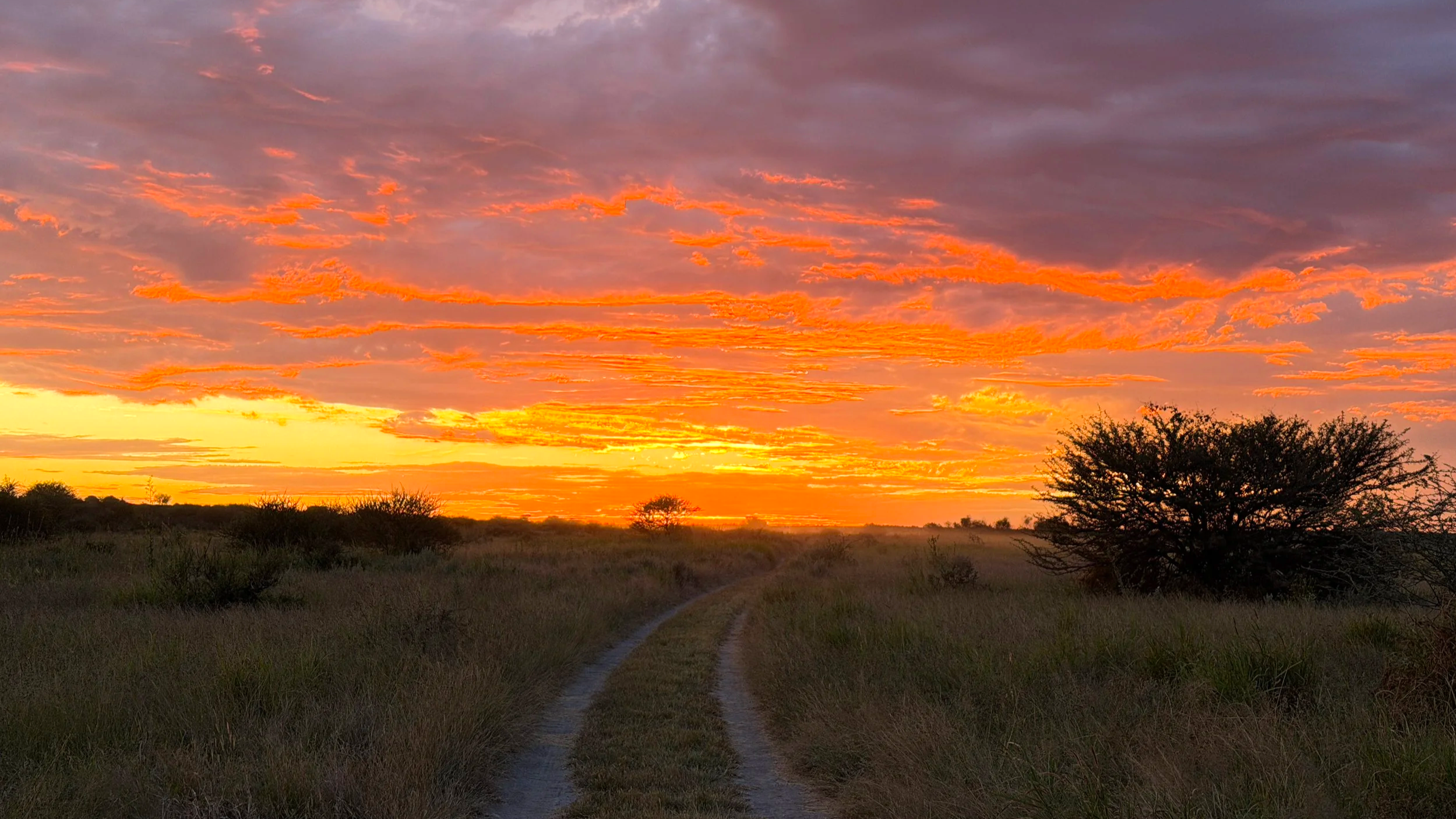
📸 A Kalahari sunset
There is a moment from my most recent Botswana recce that I keep coming back to. We had stopped for sundowners in our reserve on the edge of Deception Valley in the Kalahari dusk was falling fast when the marsh owls appeared. Not one or two, but maybe 20 or more, flying overhead and hunting in the tall grass around us, silent and completely indifferent to our presence. It was one of those sightings that reminds me why Africa keeps pulling me back.
I mention this not just because it was amazing, but because it illustrates something important: Botswana’s magic is not confined to the Okavango Delta. The Delta is, of course, world-class — I have been visiting and sending clients there for years and it never disappoints. But Botswana is a vast and ecologically diverse country, and those who venture further - into the Kalahari, the Chobe River, the Makgadikgadi Pans, the Savute Marsh and the Mababe Depression will find a safari experience that is every bit as compelling.
The Kalahari
Most people don’t associate Botswana with desert, and that is precisely why it deserves your attention. The landscape here is utterly different from the waterways and floodplains of the Delta — vast, semi-arid, ancient — with a silence and a scale that gets under your skin in a way that is difficult to describe.
The Central Kalahari Game Reserve is the second largest game reserve in the world, and one of the most remote wilderness areas in southern Africa. A handful of exceptional luxury camps sit both within the reserve itself and on private concessions along its northern border, offering exclusive access to this remarkable ecosystem with the kind of expertly guided experience that Botswana does better than anywhere. On my most recent visit I stayed at Deception Valley Lodge and Dune Camp, both on the Deception Valley Private Reserve on the CKGR’s northern boundary.
The Kalahari’s signature species is the black-maned lion, and I was fortunate enough to encounter one on this short trip. If you have only ever seen lions in classic bush or open savannah, a Kalahari male — darker, heavier, seemingly built for this harsher landscape — is something else entirely. The reserve also supports cheetah, brown hyena, meerkats and an extraordinary variety of raptors and other birdlife. It rewards curiosity and patience, and it tends to feel like a closely guarded secret among those who know Botswana well. It shouldn’t be.
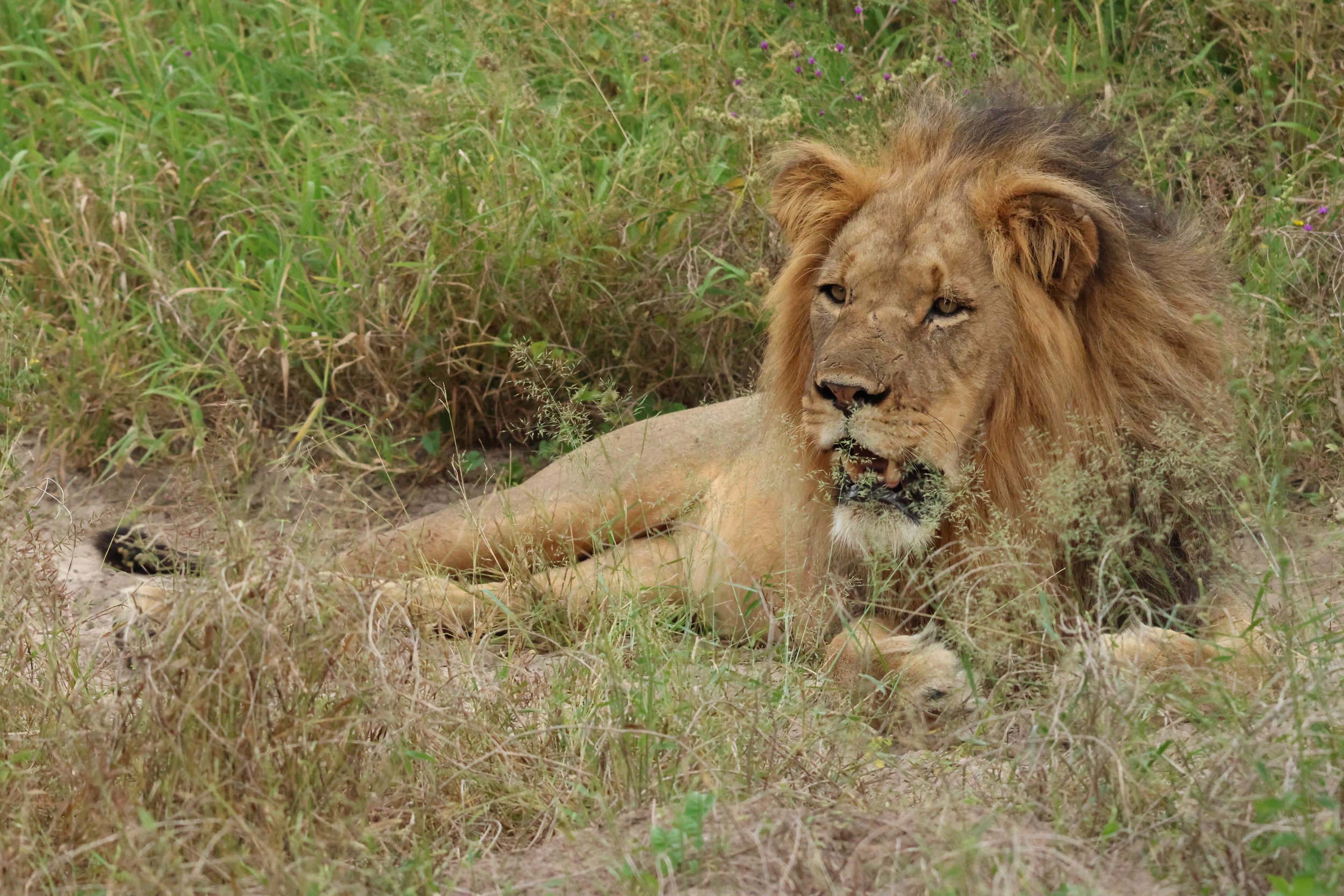
📸 A Kalahari Black Maned Lion
The Tuli Block: Botswana's Wild East
Tucked into Botswana's far south-eastern corner, where the borders of Botswana, South Africa and Zimbabwe meet, the Tuli Block is a genuinely different kind of Botswana safari. This is "the land of giants" — ancient baobabs, sandstone outcrops, and some of the largest privately protected wilderness in Southern Africa, centred on the Mashatu Game Reserve. There are no other vehicles crowding your sightings here, because there simply aren't that many camps.
Tuli is unfenced from its neighbouring reserves, which means genuinely free-roaming wildlife, and the terrain — open, rocky, sparsely vegetated in places — makes for outstanding game visibility. It's particularly well known for leopard sightings and for elephant herds that gather in large numbers along the Limpopo. Activities go beyond the standard game drive too: walking safaris, mountain biking, and horseback safaris are all part of the Tuli experience in a way they aren't elsewhere in Botswana.
Tuli works beautifully as both a stand alone safari destination or a shorter add-on to a longer Botswana itinerary, or can also be easily combined with South Africa, given how easily it's reached by road or light aircraft from Johannesburg.
The Makgadikgadi Pans
If the Kalahari has a sense of ancient solitude, the Makgadikgadi takes that feeling and amplifies it to something almost otherworldly. These vast salt pans — remnants of a superlake that once covered much of central Botswana — stretch to the horizon in every direction, the bleached white surface shimmering in the heat, the sky enormous overhead. It is one of the most surreal and humbling landscapes on the African continent, and one that I find myself recommending to clients more and more.
I have been fortunate to visit the Makgadikgadi several times, staying San Camp on my last visit, but there are another couple of stand out properties that between them cover a range of styles and price points while all delivering the authentic Makgadikgadi experience. Jack’s Camp is the original and iconic choice, with an opulent style and atmosphere unlike anything else in Botswana. San Camp is the more intimate, pared-back option — just six tents, extraordinary stillness, and a sense of being genuinely alone in one of the world’s great wildernesses. Camp Kalahari is more simple, priced accordingly and is a particularly good choice for families.
One of the most remarkable experiences available here is walking with the San Bushmen — the indigenous people of the Kalahari who have called this region home for tens of thousands of years. Walking alongside a San guide across the pans, learning to read a landscape that appears empty but is in fact full of meaning, is one of those travel experiences that stays with you long after you’ve come home. There is simply nothing else like it in Africa.
The pans also host extraordinary wildlife depending on the season. The zebra and wildebeest migration that moves through during the green season is one of Africa’s great but underappreciated wildlife events, and the area is exceptional for meerkats year round.
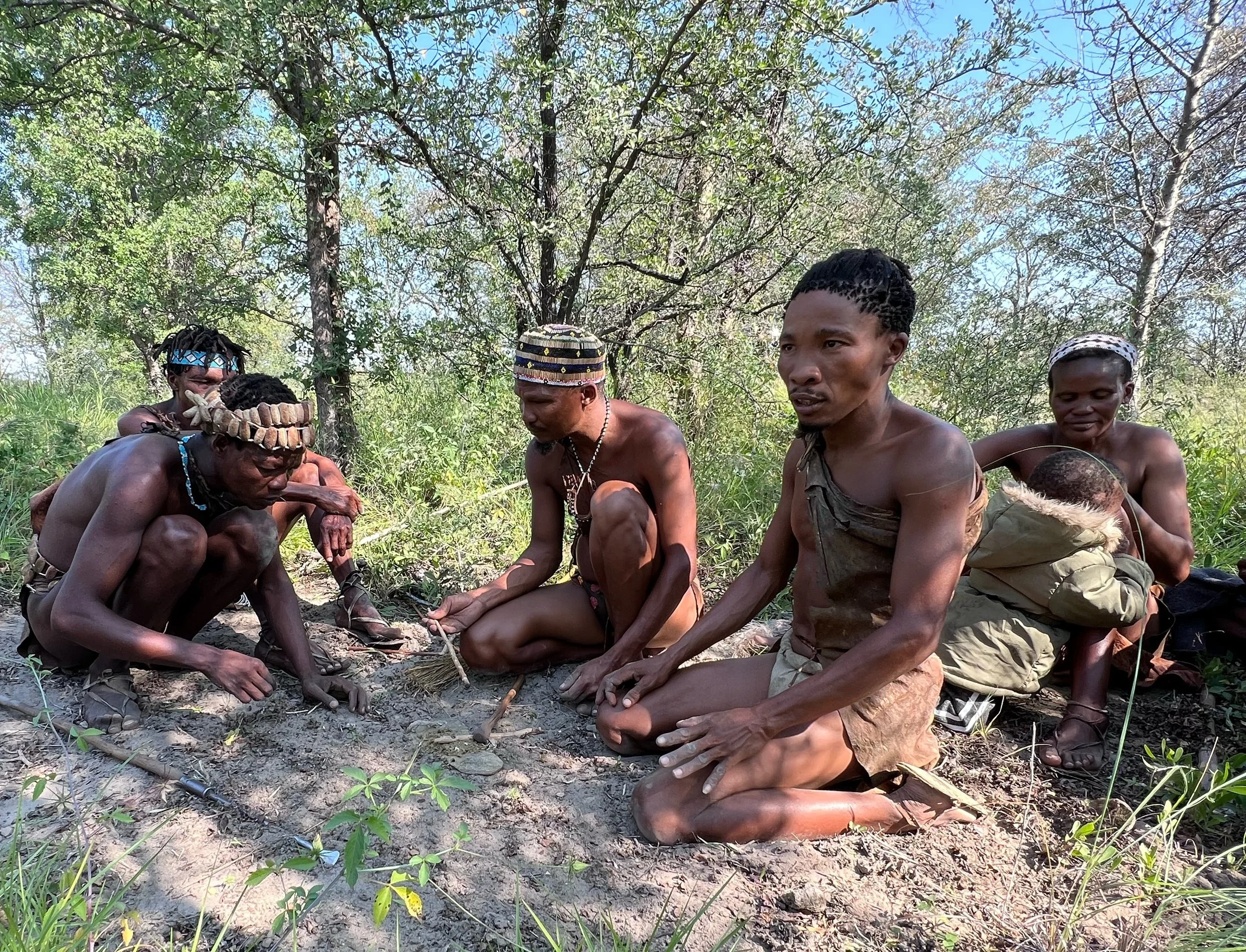
📸 Botswana’s San people have an amazing culture and spending time with them is a rewarding experience
The Mababe Depression
The Mababe Depression is one of Botswana’s lesser-known landscapes — a vast ancient lake bed that sits between the Okavango Delta and Chobe, now a seasonal floodplain supporting remarkable concentrations of wildlife. It rarely appears on standard itineraries, and that is a significant part of its appeal.
On my most recent visit the wildlife did not disappoint. We encountered very full cheetah – obviously following a successful hunt - and came upon a pack of wild dogs, one of Africa’s most endangered and electrifying sightings, never guaranteed anywhere on the continent. To find them in the Mababe, in such an unspoiled and uncrowded setting, was one of the highlights of the trip. For clients who want to move beyond the well-trodden circuit and experience a Botswana that few visitors ever see, the Mababe Depression belongs in the conversation.
The Savute Marsh
The Savute is Botswana’s great predator arena — a place with a reputation for dramatic wildlife viewing that it consistently lives up to. The marsh, fed by the mysterious Savute Channel whose flow has started and stopped multiple times throughout history, supports concentrations of game that attract lion, leopard, cheetah and wild dog alongside vast numbers of plains animals.
It is elephant country on a grand scale, but it is the buffalo that have stayed with me most vividly. The herds I encountered in the Savute Marsh were enormous — a great dark mass of animals moving across the floodplain. Buffalo in these numbers are an amazing sight, and the predator activity that follows such herds inevitably produces the kind of sightings that make a safari exceptional.
The Savute is not a subtle destination. It is bold, dramatic and sometimes confrontational — and for the right client, it is absolutely unmissable.
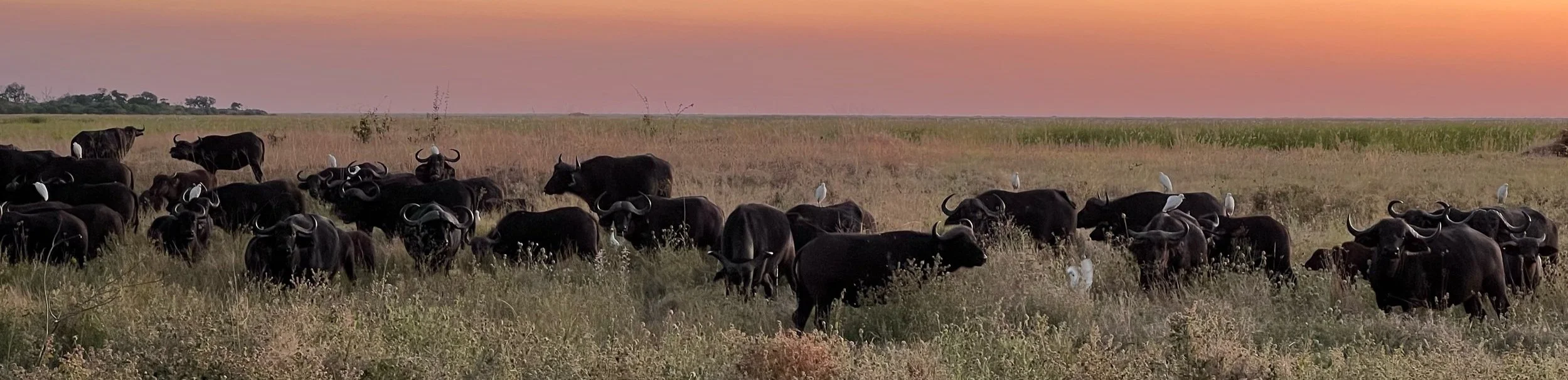
📸 The marshes of Savute and Linyanti support large herds of Buffalo
The Chobe River
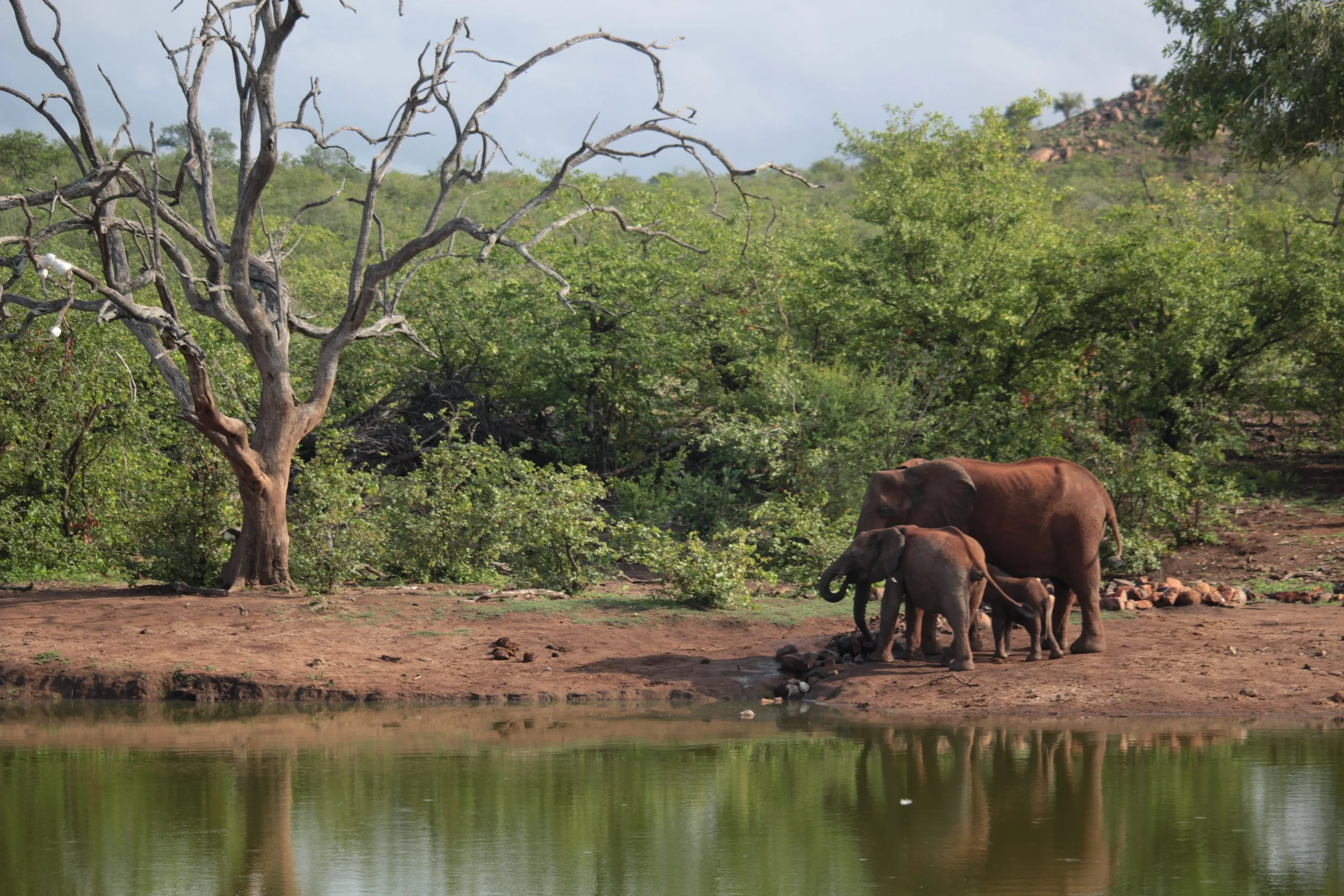
If the Savute is about predators and plains, the Chobe River is about elephants and water. The Chobe supports one of the largest elephant populations on the continent, and seeing these herds come down to drink and bathe along the riverfront is a wonderful experience on a large scale! Big breeding herds of elephant moving through the riverside woodland, the young ones splashing in the shallows, the matriarchs keeping watchful guard — it is Africa at its most joyful.
The best way to experience the Chobe is from the water. A boat safari along the river puts you at eye level with the wildlife in a way that no game drive can replicate — elephants swimming across the channel, hippos surfacing alongside the boat, a kingfisher on a low branch just metres away. The light on the Chobe in the late afternoon is extraordinary, and for photographers in particular this is one of the great safari experiences anywhere on the continent.
Who Is This Trip Right For?
A Botswana itinerary that ventures beyond the Delta — adding stays in the Kalahari, the Makgadikgadi, the Mababe or the waterways — is for the traveller who wants to understand this country fully: its variety, its scale and its capacity to surprise. It suits returning visitors who have already experienced the Delta and are ready to go deeper, and it is equally compelling for the first-time visitor who arrives with an open mind and enough time to do it justice.
It is not a destination that rewards rushing. Botswana at its best is experienced slowly, with space between the sightings and silence between the game drives. Those who give it that time will find that the country gives back in extraordinary measure.
Marsh owls hunting at sundowners, a black-maned lion on the Kalahari sand, a pack of wild dogs in the Mababe floodplain. All of them unexpected, all of them wonderful sightings.
Planning Your Botswana Safari
Botswana is primarily a fly-in safari destination — light aircraft connections between regions are part of the experience, and the distances make road travel between areas impractical. A well-constructed itinerary combining two or three regions will typically run to ten to fourteen nights, though shorter focused trips are perfectly viable.
Peak season runs from June to October, when the dry conditions concentrate wildlife around water sources and the Chobe and Savute are at their most productive. The green season from November to May offers its own rewards — the Makgadikgadi migration, extraordinary birdlife across all regions, and significantly lower rates at many properties.
If you would like help building a Botswana itinerary that goes beyond the obvious, I would love to hear from you, please get in touch!
Frequently Asked Questions
What is there to do in Botswana beyond the Okavango Delta?
A great deal. The Kalahari offers a completely different landscape and wildlife experience, including the famous black-maned lions and exceptional birdlife. The Mababe Depression is a rewarding destination for predator sightings including cheetah and wild dogs. The Makgadikgadi Pans are one of Africa’s most extraordinary landscapes, with the added dimension of walking with San Bushmen guides. The Savute Marsh is renowned for its dramatic predator and buffalo activity, and the Chobe River offers some of Africa’s finest elephant viewing and boat safaris. It’s also really easy to nip over to Victoria Falls from here and finish of a trip witnessing one of Africa’s greatest natural wonders.
What is the Kalahari like for a safari?
The Kalahari is a semi-arid ancient landscape — vast, silent and visually dramatic — that feels completely unlike any other safari environment. Wildlife is abundant but often requires patience and a skilled guide to find. The black-maned Kalahari lion is the signature species, but the area also supports cheetah, brown hyena, meerkats and exceptional birdlife. Luxury camps sit both within the Central Kalahari Game Reserve itself and on private concessions along its northern border.
What is the Makgadikgadi like and what can you do there?
The Makgadikgadi Pans are vast salt flats — remnants of an ancient superlake — that stretch to the horizon in an almost surreal expanse. One of the most remarkable experiences is walking with San Bushmen guides, who bring this apparently empty landscape to extraordinary life. You can also make a Quadbike expedition to the middle of the pans for an overnight sleepout. The area is also excellent for visiting habituated meerkats year round and hosts a significant zebra and wildebeest migration during the green season. Properties range from the iconic Jack’s Camp to the intimate San Camp and the family-friendly Camp Kalahari.
What is the Mababe Depression?
The Mababe Depression is a vast ancient lake bed between the Okavango Delta and Chobe, now a seasonal floodplain that supports significant concentrations of wildlife. It is one of Botswana’s lesser-visited areas and a genuinely rewarding destination for travellers looking for something beyond the well-trodden circuit. Wild dogs, cheetah, lion and large elephant herds are all regularly encountered here.
What wildlife can you see in the Savute area?
The Savute is one of Botswana’s premier predator destinations, regularly producing sightings of lion, leopard, cheetah and wild dog. It is also famous for its large elephant population and its buffalo herds, which can number in the thousands and attract significant predator activity. The Savute Channel’s mysterious on-off flow has shaped the ecosystem in ways that make it one of the most dynamic safari environments in southern Africa.
Is a boat safari on the Chobe River worth it?
Absolutely. A boat safari on the Chobe is one of the great African wildlife experiences — it puts you at eye level with elephants, hippos and extraordinary birdlife in a way that a game drive cannot replicate. The Chobe supports one of the continent’s largest elephant populations, and watching large herds come to drink and bathe along the riverfront from the water is an experience of remarkable scale and beauty.
What is the best time to visit Botswana’s different regions?
Botswana rewards visitors across a wider range of months than many people realise, and the shoulder seasons of March, April, May and November deserve far more attention than they typically receive. April and May in particular are worth highlighting — many experienced safari travellers consider these the finest months of the year for game viewing across the country, with the dry season just beginning, landscapes still showing some green and the crowds of high summer yet to arrive. Visitors during these transitional months enjoy good wildlife, cooler temperatures and significantly lower rates.
The Kalahari is something of a special case: unlike most other Botswana regions, the Central Kalahari Game Reserve comes into its own during the green season from November through to April, when the rains transform the landscape and wildlife — including the zebra migration — becomes highly active. March and November are particularly good entry points into this season, combining rewarding game viewing with more manageable temperatures than the height of summer.
The Chobe and Savute are most productive during the dry season from June to October, when large herds concentrate around permanent water sources. The Makgadikgadi is excellent during the green season when the zebra and wildebeest migration is under way, making it a natural complement to a Kalahari visit in the same trip.
How do you get between regions in Botswana?
Botswana is primarily a fly-in safari destination. Light aircraft connections between camps and regions are the standard means of travel, and the flights themselves — low over the Delta, the pans or the Kalahari — are often a highlight in their own right. A good specialist will build an itinerary that sequences the regions logically and minimises unnecessary travel time.