
Zambia Safari Holidays
Bespoke Zambia safaris, expertly planned by a UK specialist with over 28 years of on-the-ground experience.
Zambia is, for many seasoned safari travellers, the finest safari destination in Africa — wild, unhurried, and deeply rewarding in ways that are difficult to articulate until you have been. Whether you are dreaming of your first walking safari in South Luangwa, drifting by canoe past elephants on the Lower Zambezi, or tracking wild dog through Kafue's remote Busanga Plains, I can plan a Zambia safari built around exactly who you are as a traveller. Every trip I arrange is completely bespoke, ATOL protected, and backed by 20 years of personal experience travelling and planning safaris in this extraordinary country.
Why Choose Zambia for Your Safari?
This is the country where the walking safari was born, pioneered in the 1950s by Norman Carr in the Luangwa Valley, and it remains the world's greatest destination for experiencing Africa on foot. To walk quietly through the bush at dawn with a highly trained guide — reading tracks, following scent, navigating the landscape on its own terms — is an experience of a completely different order to anything you will have from a vehicle.
Zambia also offers outstanding conventional game viewing. South Luangwa has one of the highest leopard densities in Africa. The Lower Zambezi's river corridor produces extraordinary concentrations of elephant, buffalo, and hippo. Kafue's remote Busanga Plains hold the largest population of red lechwe in the world and excellent predator sightings. And Victoria Falls — shared with Zimbabwe on Zambia's southern border — is simply one of the great natural wonders of the world.
Beyond the parks, Zambia is an easy country to travel in — English-speaking, politically stable, with well-run camps and consistently excellent guiding. It is a destination I recommend with complete confidence to a wide range of clients, from first-time safari-goers to those who have been everywhere and are looking for something that will genuinely move them.
Zambia’s Key Safari Areas
South Luangwa National Park - Valley of the Leopards
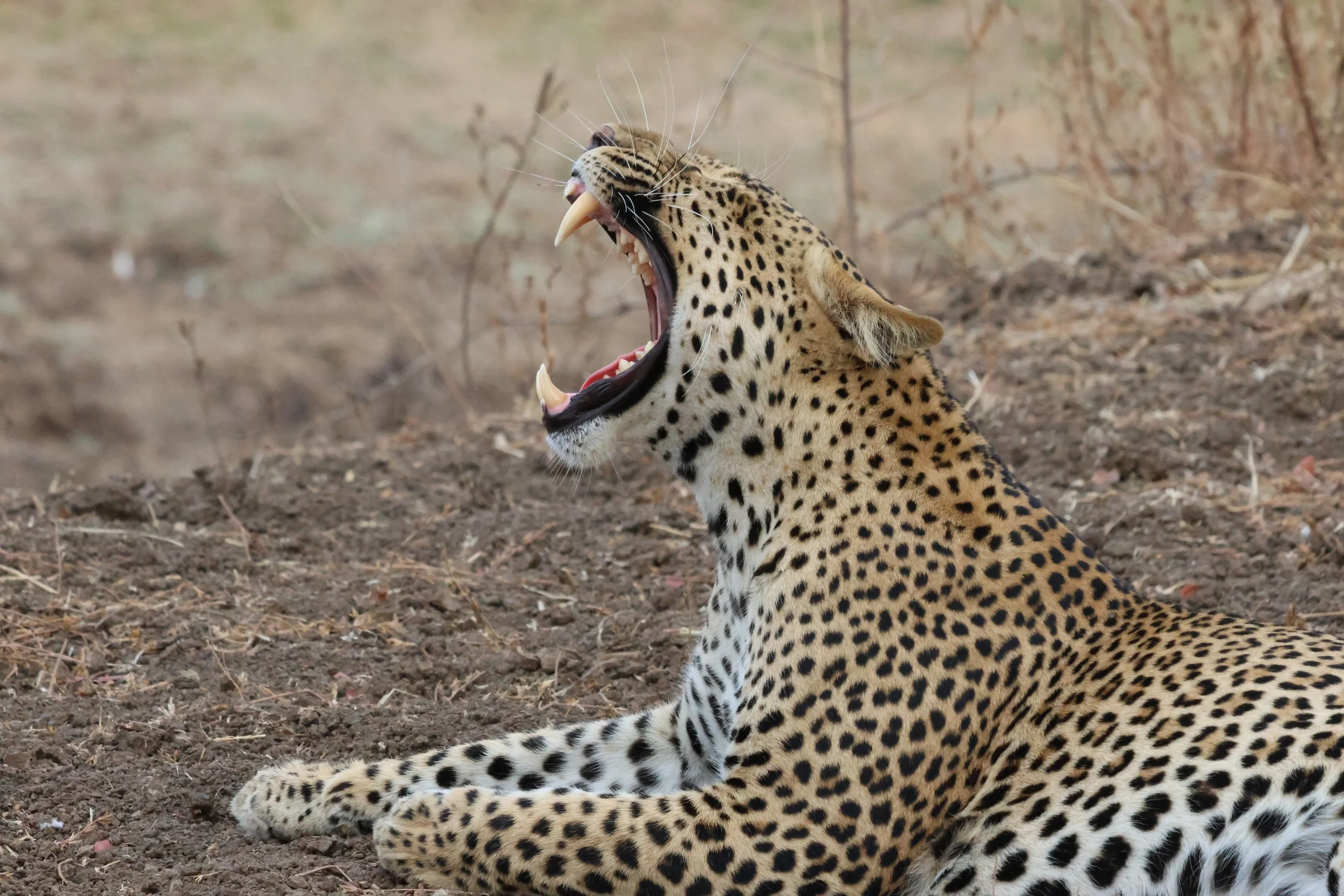
South Luangwa is the jewel of Zambia's safari circuit and, for many people, the finest game park in Africa. The park occupies the floor of the Luangwa Valley, a dramatic rift in the earth's surface defined by the winding, oxbow-rich Luangwa River and its surrounding floodplain. In the dry season, as water retreats, the river and its lagoons become magnets for extraordinary concentrations of wildlife — pods of hippo so densely packed they seem to defy physics, crocodile in vast numbers, elephant coming and going in family groups, and the predators that follow them.
This is the birthplace of the walking safari, pioneered here in the 1950s by Norman Carr, and walking safaris in South Luangwa remain the finest in Africa. To walk quietly through the bush with an experienced guide, reading tracks and following game by scent and sound, is a completely different experience to anything you will get from a vehicle, and South Luangwa is the best place in the world to do it.
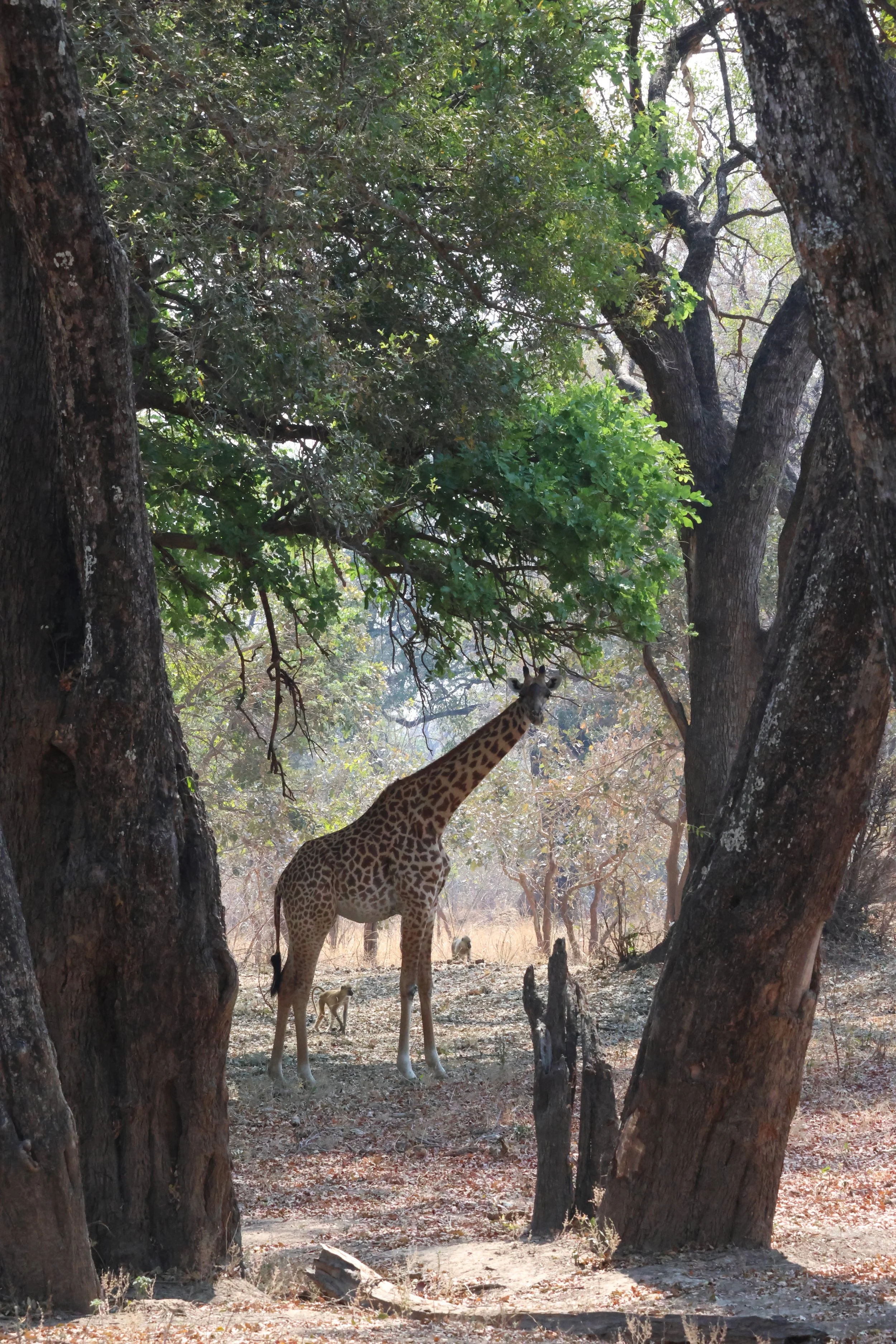
The park is also exceptional for night drives, which are permitted here and offer a completely different cast of characters — leopard, civet, genet, and the spectacular abundance of the river at night. Thornicroft's giraffe, an endemic subspecies found only in the Luangwa Valley, is another highlight. South Luangwa also has one of the highest densities of leopard of any park in Africa, and is the best place on the continent for wild dog denning season from June to August.
Lucie's recommendation: I recommend staying in the South Luangwa for at least 4 nights, there is a wide range of accommodation to suit all travellers, from the lovely family friendly Flatdogs Camp to luxury options such as Time+Tide’s Chinzombo Camp. To fully experience the park stay longer, dividing time over two areas. Lion Camp is located deep in the park in a game dense area and allows vistors to experience a more remote, quieter area of the park.
The Lower Zambezi: The River That Defines Zambia
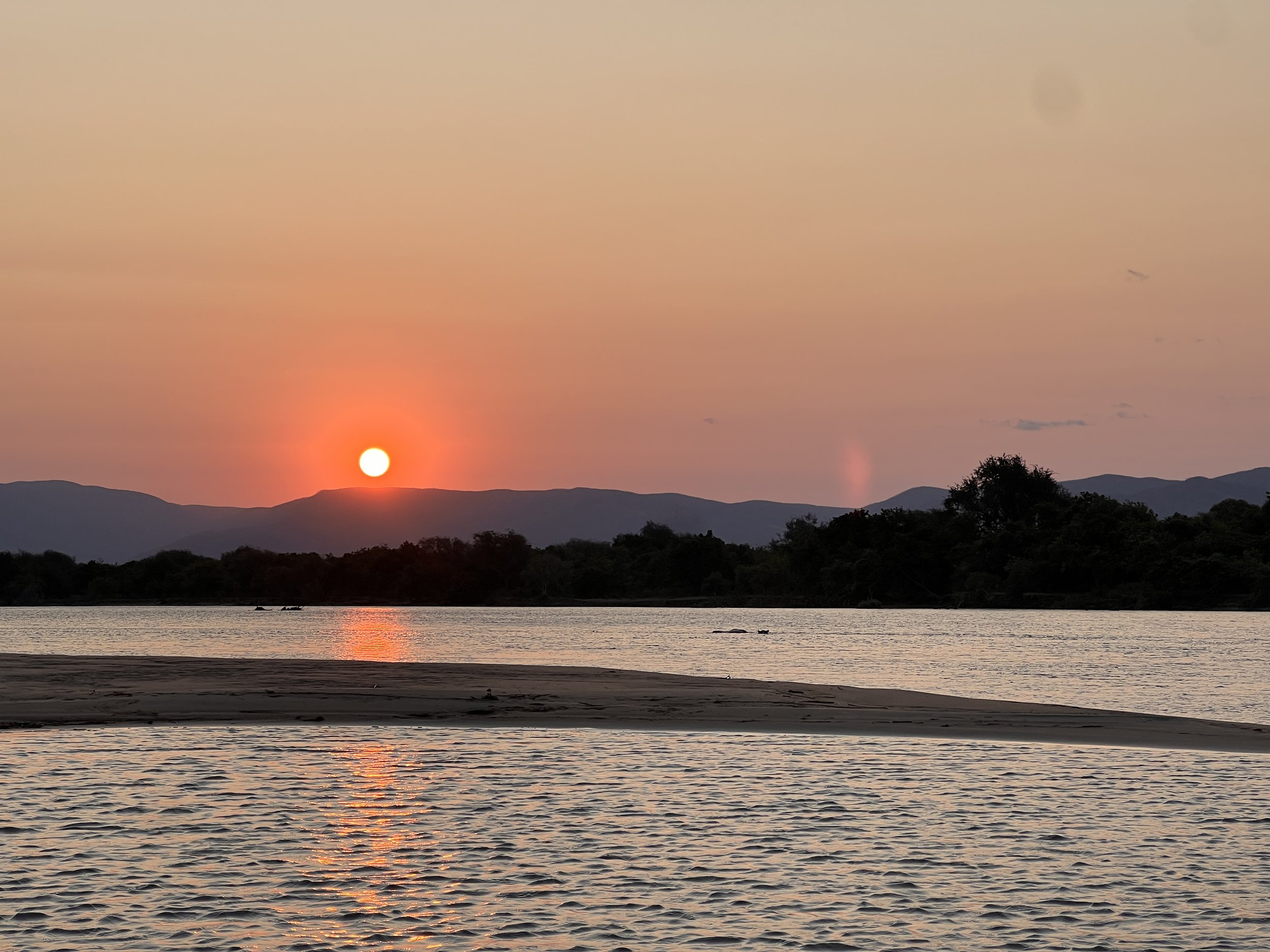
The Lower Zambezi is one of Africa's most beautiful safari settings — a narrow strip of wilderness hugging the north bank of the Zambezi River, with the Zimbabwean escarpment rising dramatically on the far shore. A handful of intimate camps sit directly on the riverbank, and the variety of safari activities here is exceptional: game drives through riparian forest and open floodplain, walking safaris, boat safaris, fishing for tigerfish, and the Lower Zambezi's signature experience — canoe safaris drifting silently past elephants drinking at the water's edge.
The wildlife list is impressive — lion, leopard, elephant, buffalo, hippo, crocodile, and wild dog are all regularly seen — and the extraordinary intimacy of the river setting gives encounters a quality that is hard to find in drier parks. The Lower Zambezi sits opposite Zimbabwe's Mana Pools National Park, and the shared river corridor creates one of the most productive wildlife ecosystems in southern Africa.
Most clients combine the Lower Zambezi with South Luangwa on a single Zambia itinerary — a short charter flight connects the two parks, and the contrast between the Luangwa Valley and the Zambezi corridor gives the trip a pleasing variety of landscapes and activities.
Lucie's recommendation: Stay three nights or more in the Lower Zambezi to fully appreciate the range of activities available. Get out on the water as much as possible, try fishing for the renowned Tiger Fish and make sure you take a sunset boat safari.
Kafue National Park: Africa's Great Unsung Wilderness
Kafue is one of the largest national parks in the world — bigger than Wales — and one of Africa's great unsung wilderness areas. Its sheer scale means that even at peak season it never feels crowded, and the variety of habitats across its vast territory produces an extraordinary diversity of wildlife. The Busanga Plains, accessible only from around August when the seasonal flooding recedes, are Kafue's headline act — a vast, open floodplain holding the largest population of red lechwe in the world, along with oribi, sitatunga, roan antelope, and excellent predators. Cheetah sightings on the plains are among the most reliable in Zambia, and the sense of space here — endless sky, no other vehicles, the plains stretching to the horizon — is something experienced safari travellers rate as unlike anywhere else.
Kafue is also, by population, the strongest park in Africa for African wild dog. The Greater Kafue ecosystem holds more wild dog than any other national park on the continent, present year-round across both the woodland and riverine areas on either side of the Kafue River. Sightings are never guaranteed — wild dog are wide-ranging and unpredictable wherever you are — but the sheer size of the population makes Kafue a genuinely outstanding destination for them alongside South Luangwa.
Kafue rewards those who make the effort to get there. It’s possible to transfer by road from Lusaka and fly-in access is straightforward. Several outstanding camps offer an experience that those in the know rate as highly as anywhere in Africa.
Victoria Falls: The Smoke That Thunders
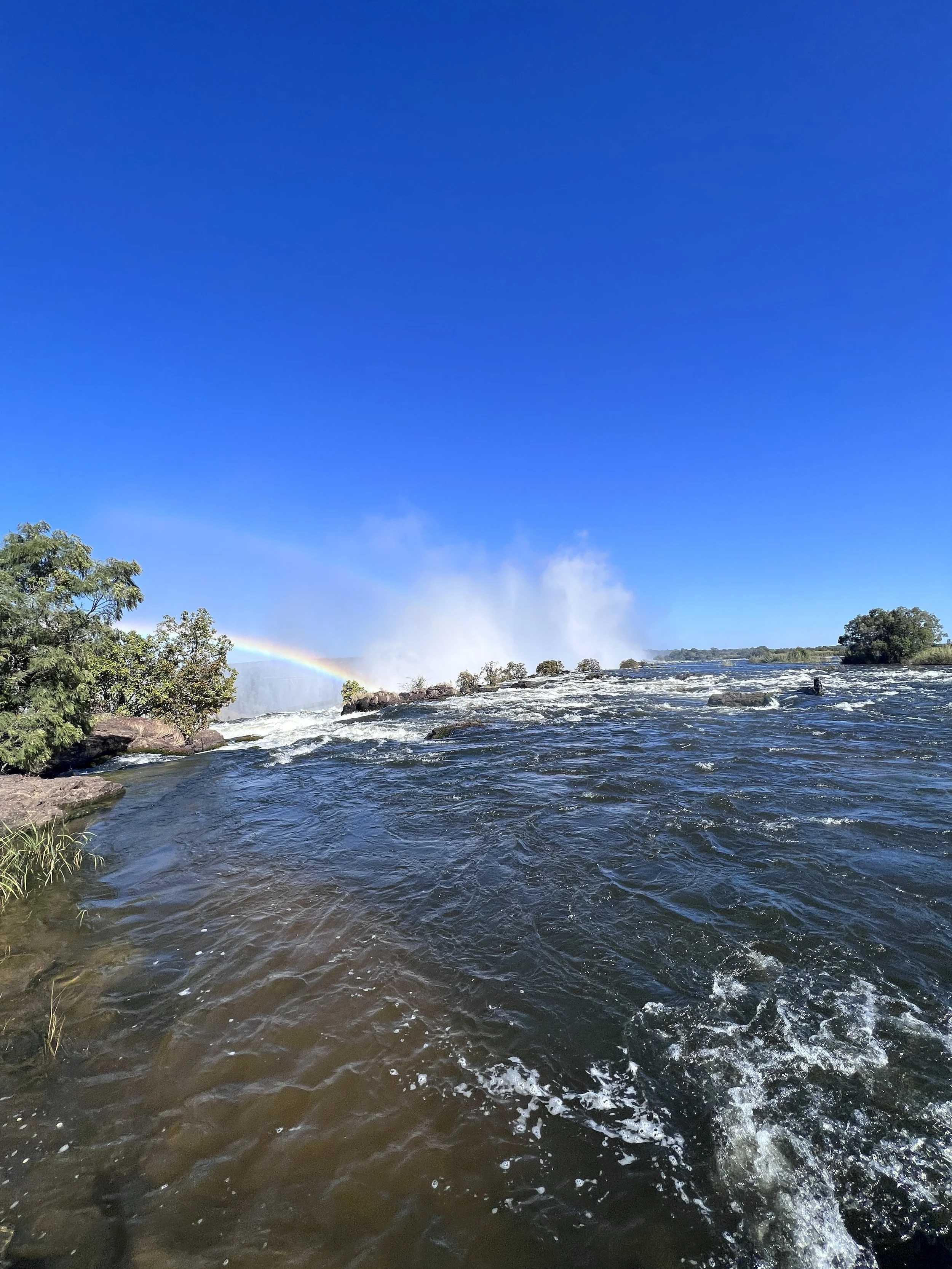
Victoria Falls — Mosi-oa-Tunya, 'the smoke that thunders' — is one of the Seven Natural Wonders of the World and a genuinely breathtaking sight. At peak flood (February to May), over 500 million litres of water per minute plunge over the 108-metre-high basalt cliff, creating a spray cloud visible from 50 kilometres away. In the dry season (September to November), the water level drops but the gorge becomes more visible — some prefer this for photography.
Livingstone on the Zambian side has developed into a lively, well-served tourist town with excellent restaurants, lodges, and activity operators. The range of activities is extraordinary: white water rafting in the Zambezi gorge, bungee jumping from the Victoria Falls Bridge, helicopter flights over the falls, sunset cruises on the river, and guided tours of the rainforest that flanks the Zambian side of the falls. Most Zambia safari itineraries include two or three nights at Victoria Falls as a finale, and there are some lovely lodges along the banks of the river for post-safari relaxation.
The KAZA UniVisa (see Practical Information below) allows easy crossings between Zambia and Zimbabwe, so the falls can be experienced from both sides — a worthwhile addition if you have the time.
Kasanka National Park: One of Africa's Greatest Hidden Spectacles
One of Africa's most extraordinary and least-known wildlife spectacles takes place in Kasanka, a small national park in central Zambia, every year from October to December. Between eight and ten million straw-coloured fruit bats — one of the largest mammal migrations on earth — converge on a tiny patch of riverine forest, creating a sight that defies comprehension: the sky darkening with bats at dusk, and the incredible noise and density of the roost by day.
Kasanka is not a Big Five destination, but it is a superb birding park year-round and holds sitatunga in its papyrus wetlands. For clients who can time a Zambia trip around the bat migration (October to December), it makes an extraordinary addition to a South Luangwa or Lower Zambezi itinerary.
Walking Safaris — Zambia's Defining Experience
No destination on earth does the walking safari better than Zambia. The country has more trained and licensed professional guides than anywhere else in Africa, and the culture of guiding here — meticulous, knowledgeable, deeply respectful of the bush — produces an experience that cannot be replicated elsewhere.
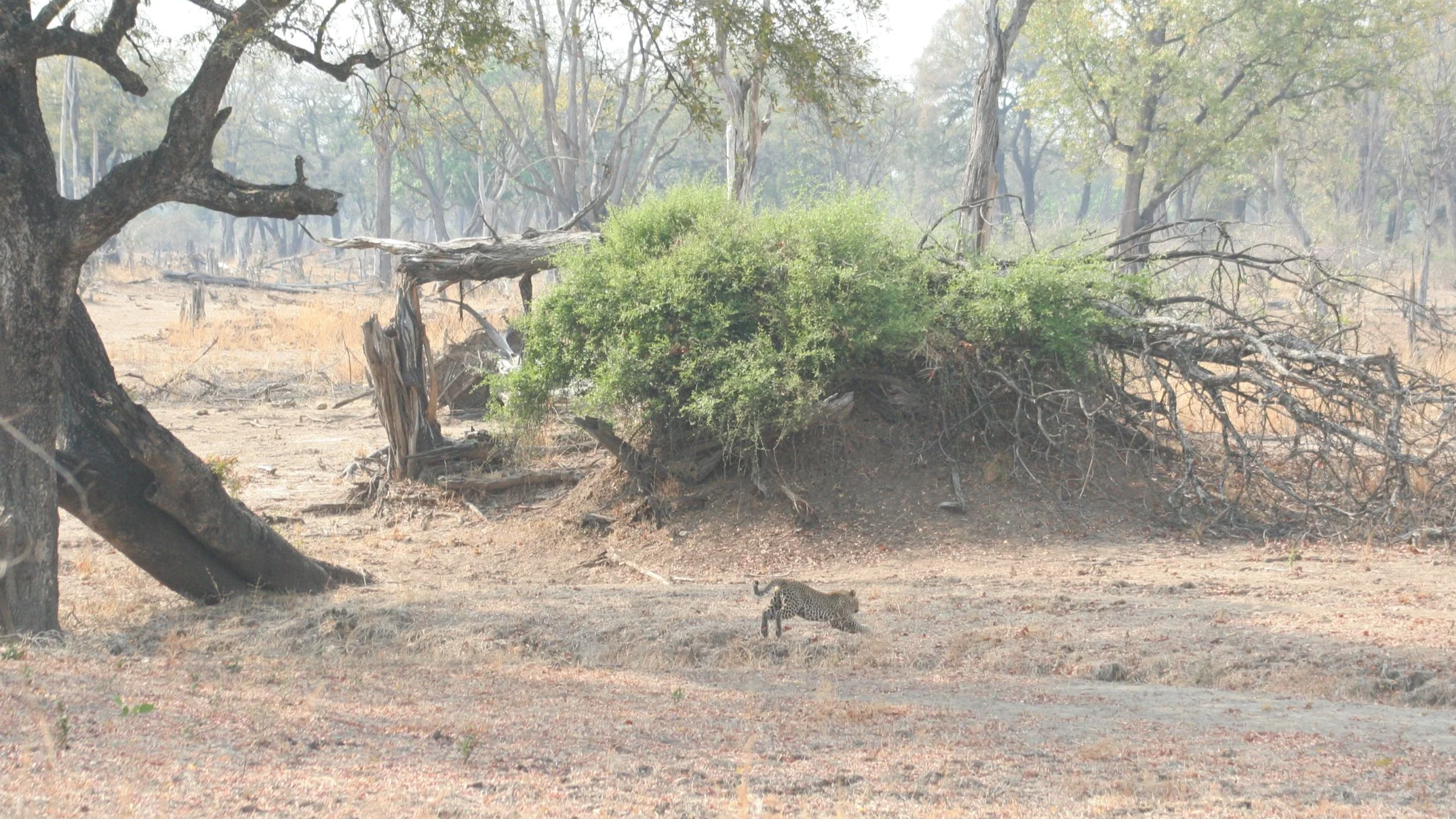
A walking safari is not a game drive on foot. It is a fundamentally different way of engaging with the wilderness — slower, quieter, more alert, and more present than anything a vehicle can offer. You read the landscape through its tracks and signs rather than by scanning for movement. You notice things that a game drive simply doesn't allow: the texture of soil, the detail of a spoor, the way a termite mound is constructed. And when you encounter large game on foot — which happens regularly in Zambia's parks — the experience is unlike anything else in the world. The picture below was taken during a memorable leopard encounter on a walking safari in South Luangwa.
Walking safaris in Zambia are conducted by licensed walking guides accompanied by armed scouts, and are completely safe when conducted properly. I will always discuss fitness levels and expectations before recommending a walking-focused itinerary, and there are camps that offer a mix of walking and driving for those who want both.
When to Visit Zambia — Season by Season
Zambia's seasons are shaped by a single, pronounced wet season from November to April and a dry season from May to October. The dry season is peak safari time; the wet season — known as the Emerald Season — offers a completely different and increasingly valued experience.
| Region | Jan – Mar | Apr – May | Jun – Oct | Nov – Dec |
|---|---|---|---|---|
| Wet / Emerald Season | Transition / Green | Peak Dry Season | Early Rains | |
| South Luangwa | Wet season — most camps closed. Emerald season camps open: superb birding, newborn animals, lush scenery. Walking suspended. | Transition — camps reopening. Good value. Wildlife starting to concentrate. Walking safaris resume. | Walking safaris at their finest. Wildlife concentrated at the Luangwa River. Exceptional leopard, lion, wild dog. | First rains (Nov). Some camps closing. Good for emerald season camps offering walking in the green. |
| Lower Zambezi | Most camps closed Jan–Mar. River high. A handful remain open for specialist fishing and green season safaris. | Camps reopening from April. Canoe safaris beginning. Good value and quieter. | Canoe safaris, game drives, walking, and fishing all excellent. River drops to reveal sandbanks. Best wildlife. | First rains (Nov). Some camps begin closing. Still good through October. |
| Kafue NP | Busanga Plains flooded and inaccessible. Southern Kafue accessible for green season experience. | Busanga Plains drying. Sitatunga and lechwe visible. Good shoulder season value. | Busanga Plains (Aug–Oct): cheetah, lion, red lechwe, sitatunga. Remote and exceptional. | First rains. Some camps closing in north. Southern Kafue accessible longer. |
| Victoria Falls | Low water — Feb–Mar best for white water rafting (full gorge exposed). Falls still impressive. | Falling water — Apr–May still strong. Good conditions for all activities. | Activities excellent. Bungee, zip line, helicopter. Falls reduced but gorge dramatic. | Rising water (Nov). Full flood (Dec) spectacular but spray reduces viewpoint visibility. |
| Kasanka NP | Bat migration peaks Oct–Dec. Jan accessible — quieter after peak. | Green season. Few visitors. Shoebill stork in the wetlands. Excellent birding. | Dry season — good general wildlife. Sitatunga and puku around the wetlands. | Oct–Dec: the bat migration — 8–10 million straw-coloured fruit bats. One of Africa's great wildlife spectacles. |
Lucie's honest view: July to October is when most people visit, and for good reason — game viewing is at its most concentrated and reliable. But the green season (especially April and May) shows a different side, when the landscape is lush, baby animals are everywhere, and the camps are wonderfully quiet. The right time for you depends entirely on what you want from your safari — and that is exactly what I help you work out.
Is Zambia Right for You?
Zambia is ideal if you want to...
Do a walking safari — the finest in the world, by wide consensus
Experience a genuinely wild, uncrowded safari without the vehicle density of the more famous parks
See leopard reliably — South Luangwa has one of the highest densities in Africa
See African wild dog — Kafue holds Africa's largest wild dog population; South Luangwa is the best for denning season (June–August); the Lower Zambezi also holds good numbers
Combine safari with Victoria Falls, one of the world's great natural spectacles
Travel somewhere that rewards curiosity and those who take their time
You might consider alternatives if...
You want a malaria-free safari — consider South Africa's Eastern Cape, Madikwe or Namibia
You want the Great Migration — head to Kenya or Tanzania
You are travelling with very young children — Zambia's camps generally suit children aged 8 and above, and walking safaris require 16+
Combining Zambia with Other Destinations
Zambia + Botswana
One of the great safari combinations. Both countries share a commitment to low-density, high-quality safari, and the contrast between Zambia's walking culture and Botswana's water-based experiences in the Okavango gives the itinerary excellent variety.
Zambia + Malawi
A natural pairing for those wanting to add a beach or lake finale to a Zambia safari. Lake Malawi's clear, warm water and extraordinary freshwater diversity makes a deeply satisfying counterpoint to the bush. Flights connect Lusaka and Lilongwe easily.
Zambia + Mozambique
For those wanting a more adventurous Indian Ocean finish. The Bazaruto Archipelago's marine wildlife — dugong, whale sharks, pristine reefs — is extraordinary, and Mozambique's Gorongosa adds another great conservation story to the itinerary.
Planning Your Zambia Safari with Lucie
Zambia rewards careful planning. The choice between parks, the sequencing of camps, the timing of the walking versus game-drive balance, and the question of whether to include Victoria Falls or a lake extension all depend on your specific interests and time available. These are exactly the decisions I enjoy working through with clients.
Every Zambia itinerary I put together is built from scratch around the individual — no template, no standard package. I'll help you decide which combination of parks makes most sense for what you want, choose camps based on guiding quality and authenticity rather than commission, and handle all the logistics from international flights to bush transfers.
Practical Information for Zambia
Visas & Entry
British passport holders do not need a visa to enter Zambia. You can enter freely for tourism for up to 90 days in any 12-month period. You will need to show a valid return or onward ticket and evidence of sufficient funds for your stay. Your passport must be valid for at least six months from your date of entry and have at least two blank pages.
If you are also visiting Zimbabwe, the KAZA UniVisa ($50 USD) covers unlimited travel between Zambia and Zimbabwe and day trips into Botswana. It is valid for 30 days and can be applied for online in advance or obtained on arrival at Kenneth Kaunda International Airport (Lusaka), Harry Mwanga Nkumbula International Airport (Livingstone), and the main land border crossings.
N.B Always check the UK Government's foreign travel advice at gov.uk/foreign-travel-advice/zambia before travel, as entry requirements can change.
Health & Vaccinations
Zambia is a malaria destination throughout, including in the national parks. Antimalarial medication is strongly recommended for all areas. Consult a travel health clinic at least 6–8 weeks before departure. Yellow fever vaccination is required if arriving from a country with risk of transmission. Other recommended vaccinations typically include hepatitis A, typhoid, and tetanus.
Getting There
Most UK flights to Zambia route via Johannesburg (South African Airways, British Airways), Nairobi (Kenya Airways), or Addis Ababa (Ethiopian Airlines) to Lusaka's Kenneth Kaunda International Airport. Journey time is typically 12–16 hours. For South Luangwa, most clients fly from Lusaka to Mfuwe Airport. Internal transfers between parks are by light aircraft — I coordinate all logistics as part of your itinerary. Luggage restrictions apply on light aircraft: 15kg in a soft bag plus 5kg hand luggage.
Currency & Money
Zambia's currency is the Zambian Kwacha (ZMW). US dollars are widely accepted at lodges and for park fees. ATMs are available in Lusaka and Livingstone but unreliable in remote areas. Most camps are fully inclusive, so day-to-day spending in the bush is minimal. Tips for guides and camp staff are customary and appreciated.bBritish passport holders do not need a visa to enter Zambia. You can enter freely for tourism for up to 90 days in any 12-month period. You will need to show a valid return or onward ticket and evidence of sufficient funds for your stay. Your passport must be valid for at least six months from your date of entry and have at least two blank pages.
If you are also visiting Zimbabwe, the KAZA UniVisa ($50 USD) covers unlimited travel between Zambia and Zimbabwe and day trips into Botswana. It is valid for 30 days and can be applied for online in advance or obtained on arrival at Kenneth Kaunda International Airport (Lusaka), Harry Mwanga Nkumbula International Airport (Livingstone), and the main land border crossings.
N.B Always check the UK Government's foreign travel advice at gov.uk/foreign-travel-advice/zambia before travel, as entry requirements can change.
Zambia Safari: Frequently Asked Questions
-
No — British passport holders do not need a visa to enter Zambia. You can enter freely for tourism for up to 90 days in any 12-month period. You will need a valid return or onward ticket and evidence of sufficient funds. Your passport must be valid for at least six months from entry with at least two blank pages. If you are also visiting Zimbabwe, the KAZA UniVisa ($50 USD) covers both countries for 30 days and is available online or on arrival at main entry points.
-
A walking safari is a guided bush walk led by a licensed professional guide accompanied by an armed scout. It is not a game drive on foot — it is a fundamentally different, slower, more immersive way of experiencing the wilderness. Zambia is the world's finest destination for walking safaris. They are completely safe when conducted properly. The minimum age is typically 16 for full walking safaris although some camps allow 12 year olds to take part.
-
June to October is the dry season peak — wildlife concentrates at water sources, camps are open, and walking safaris are at their finest. July to September is peak for South Luangwa and the Lower Zambezi. The Busanga Plains in Kafue are best from August to October. The green season (November to April) offers excellent birding, newborn animals, lush scenery, and lower prices — an increasingly popular choice for those who know Zambia well.
-
Yes — Zambia is one of the world's best destinations for African wild dog, and all three main safari parks hold populations. Kafue has the largest wild dog population of any national park in Africa, present year-round across its vast woodland and riverine habitats. South Luangwa offers the best denning season experience from June to August, when packs are reliably located at a fixed den site. The Lower Zambezi also holds wild dog. Sightings are never guaranteed anywhere — wild dog are wide-ranging by nature — but Zambia as a whole gives you outstanding odds across the circuit.
-
Zambia is consistently rated one of Africa's most stable and safe countries for tourism. The national parks are well managed and violent crime against tourists is rare. The main health consideration is malaria — antimalarial medication is strongly recommended for all areas. Check the UK Foreign Office travel advice at gov.uk/foreign-travel-advice/zambia before travel
-
A minimum of five nights to do the country justice — ideally seven to ten nights across two parks. South Luangwa alone warrants four to five nights to experience it properly, including walking safaris. Adding Victoria Falls typically adds two nights. A combined Zambia and Botswana or Zambia and Malawi itinerary works best over ten to fourteen nights total.
-
The KAZA UniVisa is an optional visa covering both Zambia and Zimbabwe, costing $50 USD, available online in advance or on arrival at Livingstone Airport, Victoria Falls Airport (Zimbabwe), and major land borders. It is worth getting if you want to visit Victoria Falls from both sides of the border, as it allows unlimited crossings between Zambia and Zimbabwe for 30 days, plus day trips into Botswana. Note that UK citizens do not need any visa to enter Zambia itself — the KAZA UniVisa is only relevant if Zimbabwe is also part of your itinerary.
Ready to Plan Your Zambia Safari?
Whether you are drawn by the walking safaris, the Luangwa River at night, or the prospect of wild dog on the Busanga Plains — I'd love to help you plan it.
Get in touch for a no-obligation conversation. I'll ask a few questions about what matters most to you and come back with an itinerary built around you.
For a broader look at what drives safari costs across Africa, see my full safari costs guide.