

Uganda Safari Holidays
Bespoke Uganda safaris, expertly planned by a UK specialist with over 28 years of on-the-ground experience.
Home to nearly half the world's mountain gorillas, the thundering spectacle of Murchison Falls, chimpanzees in ancient rainforest, and some of Africa's most rewarding and least-visited wildlife — Uganda is the Pearl of Africa, and it more than deserves the title.
Why Choose Uganda for Your Safari?
Uganda is one of Africa's most extraordinary and underrated safari destinations. Winston Churchill famously called it the Pearl of Africa, and it is easy to understand why: this small, landlocked country straddles the equator with a landscape of extraordinary diversity — ancient montane rainforest, open savannah, crater lakes, mighty rivers, and the headwaters of the Nile.
But Uganda's headline act is the mountain gorilla. Bwindi Impenetrable Forest is home to nearly half of the world's remaining mountain gorilla population — approximately 500 individuals across 17 habituated groups — and a gorilla trek here is, by near-universal agreement, one of the most profound wildlife encounters on earth. Sitting in the forest, a matter of metres from a 200kg silverback, watching a family group go about their morning — it is an experience that it is an experience that stays with you for the rest of your life.
Beyond the gorillas, Uganda offers a genuinely complete safari: chimpanzee tracking in Kibale's cathedral-like forest, lion and elephant in Queen Elizabeth National Park, the drama of Murchison Falls where the entire Nile is forced through a seven-metre gap in the rock, and the remote wilderness of Kidepo Valley — one of the last truly wild places in East Africa.
Lucie's Take on Uganda: I finally made it to Uganda in April 2025 and I was genuinely surprised by how much I like the country. The gorilla trekking was obviously an amazing experience (but TBH I prefer chimps) but the rest was amazing. Queen Elizabeth NP had outstanding wildlife encounters with species that were new to me, and the Shoebills storks on the Nile were an absolute ‘lifer’ sighting for any birder.
Mountain Gorilla Trekking — The Essential Guide
Gorilla trekking is unlike any other wildlife experience. It is physical and sometimes challenging — but the one-hour encounter with a habituated group, once you find them, is worth all the sweat & effort.
Bwindi Impenetrable Forest National Park
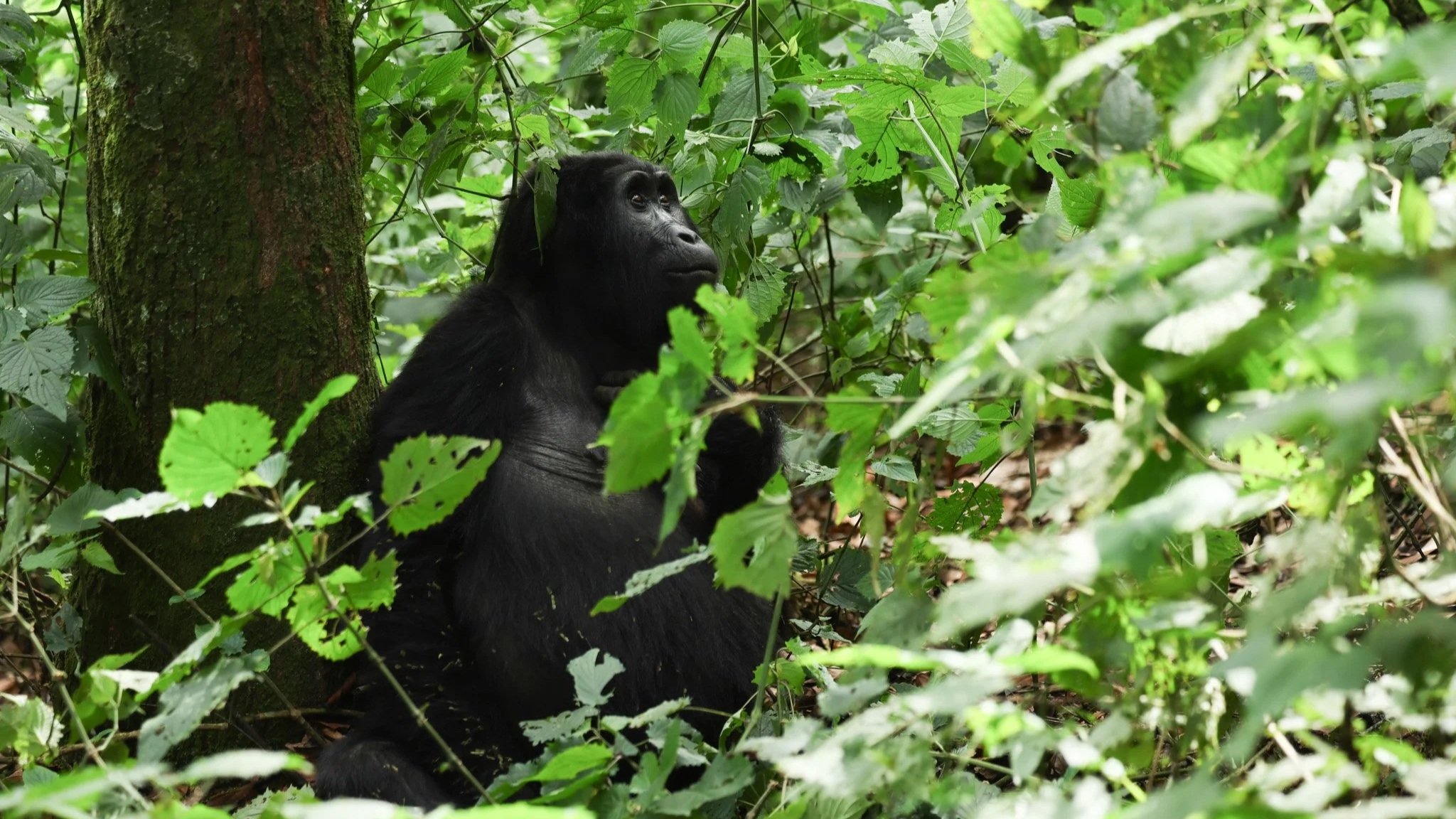
Bwindi is a UNESCO World Heritage Site covering 331 square kilometres of ancient montane rainforest in southwestern Uganda, on the edge of the Albertine Rift Valley. The forest is dense, steep, and spectacularly biodiverse — home to over 120 mammal species, 350 bird species, and 1,000 flowering plant species, as well as its 17 habituated gorilla groups.
Trekking begins at one of four sector trailheads — Buhoma in the north, Ruhija in the east, and Rushaga and Nkuringo in the south — each offering access to different gorilla groups. Trek duration varies enormously: some groups are found within 30 minutes, others require four to six hours of steep, dense forest hiking. There is no way to predict in advance, which is part of what makes it such an adventure. When you do find the group, you have one hour with them — trackers and guides managing the distance (seven metres minimum) and ensuring the encounter is safe for both gorillas and humans.
The physical demands are real: Bwindi's terrain is steep and the vegetation is thick. Porters are available to carry bags and provide support on difficult sections, and I always recommend hiring one — both for the practical help and because porter fees go directly to local community members. The minimum age for gorilla trekking is 15. I’ve written a frank blog on my gorilla trekking experience if you’d like to read more about my experience!
Lucie's Recommendation — Bwindi Camps
I stayed at the luxurious Bwindi Lodge during my visit and loved it, guest Bandas are nestled at the foot of the steep slopes and it’s very close to the trailhead and visitor centre. I also visited and really liked the simpler Buhoma Lodge and nearby Mahogany Springs, both solid options for a Bwindi trek.
Gorilla Permits — What You Need to Know
N.B. Permit prices are set by the Uganda Wildlife Authority and subject to change. Always confirm current pricing when planning — this information is accurate as of early 2026.
Gorilla trekking permits cost $800 USD per person for foreign non-residents during peak season (June–October, December–February). The Uganda Wildlife Authority introduced a low-season discount in 2026: permits are reduced to $600 USD for April, May, and November — making the wet season a genuinely attractive option for budget-conscious travellers willing to trek in muddier conditions.
Permits are strictly limited — only eight trekkers per gorilla group per day — and peak season permits sell out months in advance. I strongly recommend booking at least six to twelve months ahead for June–October travel. I handle all permit procurement as part of your itinerary, so you never have to navigate the UWA booking system yourself.
Chimpanzee Trekking
Uganda is one of the best places in Africa to track chimpanzees in the wild, and a chimp trek makes an exceptional pairing with a gorilla experience — two of humanity's closest relatives, in two very different forest environments, within the same trip.
Kibale National Park
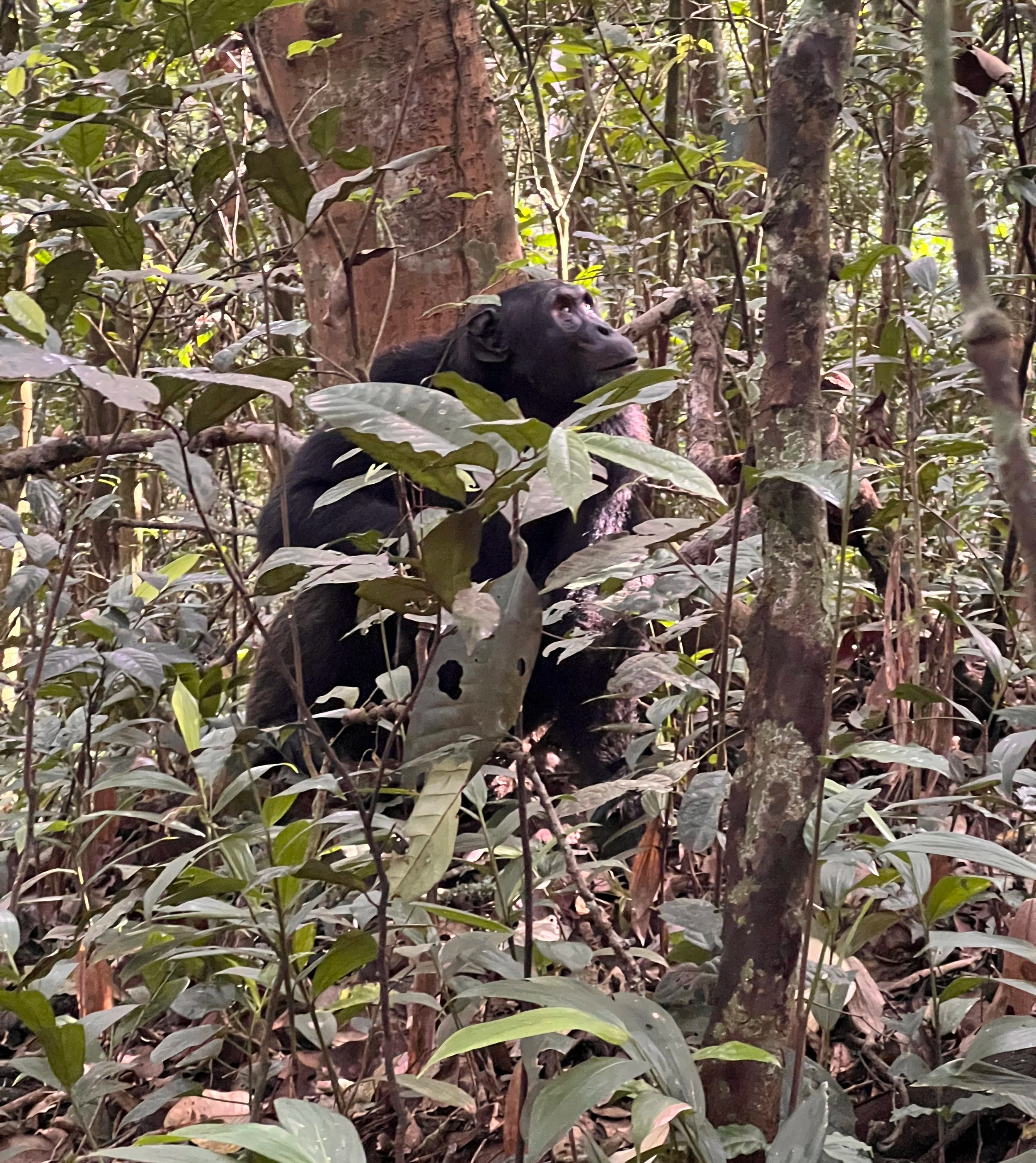
Kibale is the world's best destination for chimpanzee tracking. The park's forest holds the highest density of primates in Africa — 13 species in total — with a chimpanzee population of around 1,500. The habituated communities here are large and accustomed to human presence, making sightings extraordinarily reliable and the encounters prolonged and intimate. Tracking begins in the morning; chimps are vocal, fast-moving (hence my blurry photograph!), and very different in temperament to the calm, measured presence of the gorillas.
Kibale also offers a chimpanzee habituation experience — a full day spent with researchers as they work with a group in the process of becoming accustomed to human presence. This is a more intensive, participatory encounter that gives a deeper understanding of the process and the individuals involved.
Kibale pairs naturally with Queen Elizabeth National Park (a three-hour drive), and the two parks together form the backbone of a classic Uganda safari circuit.
Kyambura Gorge, Queen Elizabeth National Park
Often called the Valley of Apes, Kyambura Gorge offers a different kind of chimpanzee encounter. The habituated community here is small and sometimes elusive, but the setting — tracking chimps through a steep, forested gorge that cuts through the open savannah of Queen Elizabeth National Park — is spectacular and completely unique. The contrast between the lush gorge and the open plains above gives the experience a totally different quality to that of Kibale's dense interior.
Budongo Forest, Murchison Falls
For those visiting Murchison Falls National Park, the Budongo Forest Royal Mile offers excellent chimpanzee tracking as an add-on to the main Murchison wildlife experience. The forest is managed by the Budongo Conservation Field Station, one of the longest-running chimpanzee research sites in Africa, and the guiding reflects that depth of knowledge.
Wildlife Safaris Beyond the Primates
Uganda's game parks are less visited than their East African counterparts and offer a genuinely different experience — fewer vehicles, wilder landscapes, and plentiful wildlife.
Queen Elizabeth National Park
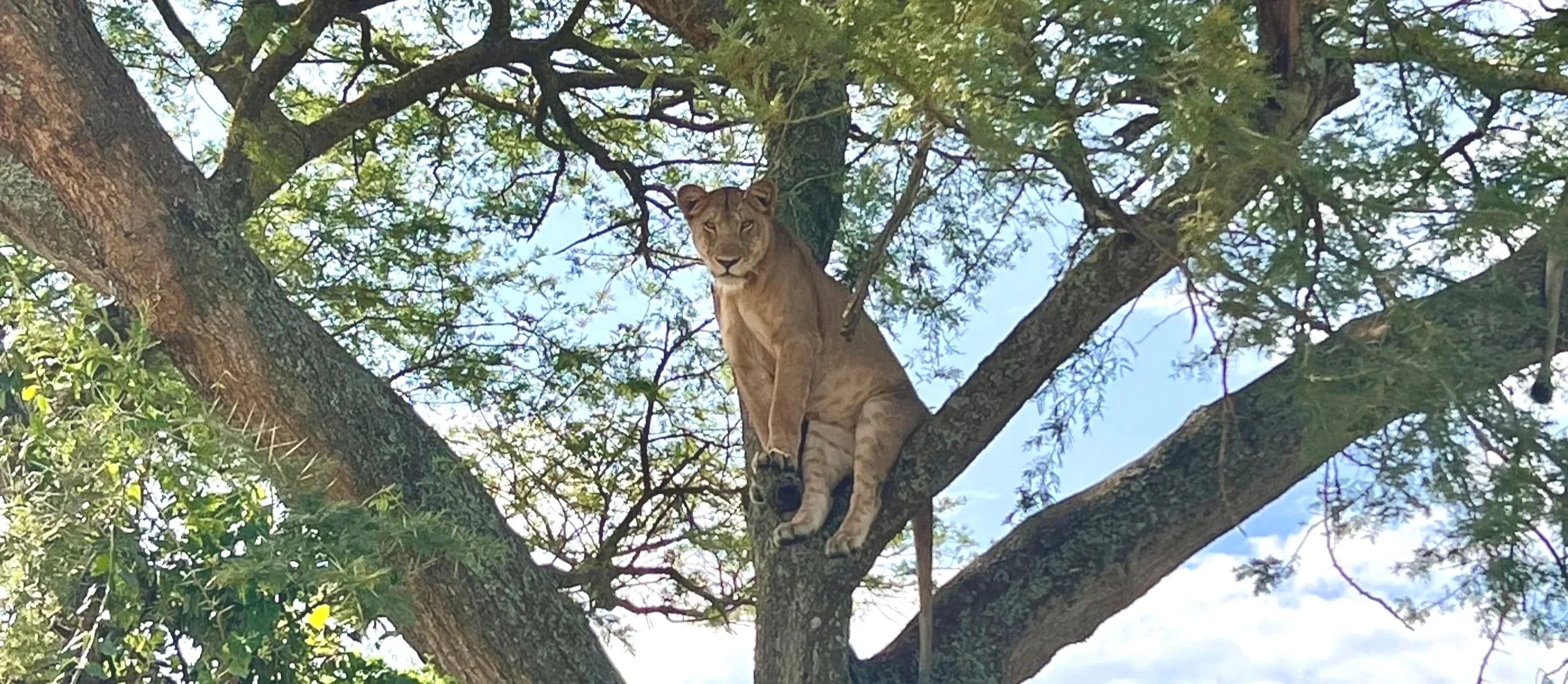
Uganda's most popular game park, Queen Elizabeth spans a remarkable range of habitats: open savannah, wetland channels, crater lakes, and the forest of the Maramagambo. The Kazinga Channel — a 40km waterway connecting Lakes Edward and George — is home to one of Africa's largest hippo concentrations and offers some of the best boat-based wildlife viewing on the continent. Elephant, buffalo, kob, and a remarkable diversity of waterbirds make the channel cruise a highlight of any Uganda itinerary.
The Ishasha sector in the south of the park is famous for its tree-climbing lions — prides that have developed the unusual habit of resting in the branches of fig trees, a behaviour shared with the lions of Tanzania's Lake Manyara. Sightings are not guaranteed but are frequent enough to make Ishasha a worthwhile half-day addition to a Queen Elizabeth visit, and the sector itself is quiet and scenically beautiful.
Queen Elizabeth also holds chimpanzees in the Kyambura Gorge, and the Maramagambo Forest supports a large population of forest elephant. With 600 bird species recorded, it is also one of Uganda's premier birding destinations.
Murchison Falls National Park
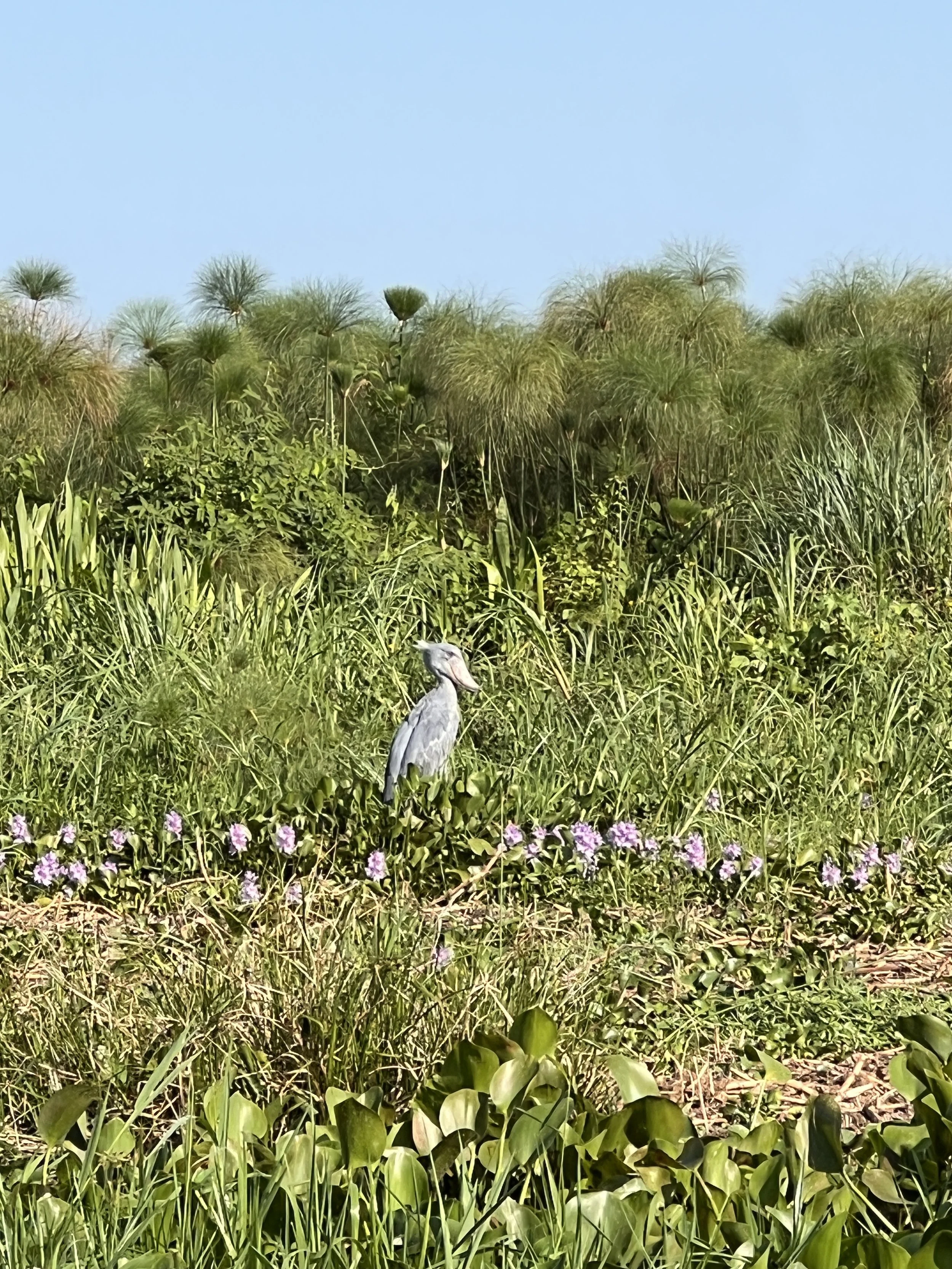
Uganda's largest national park, Murchison Falls straddles the Victoria Nile as it descends from Lake Victoria to Lake Albert. The falls themselves — where the entire force of the Nile is compressed through a seven-metre gap in the rock in a thundering white torrent — are one of the most dramatic natural spectacles in Africa. A boat cruise to the base of the falls, past hippos and crocodiles and Nile monitor lizards on the banks, is one of the great African wildlife experiences.
The park's northern bank is excellent savannah safari territory: lion, elephant, giraffe, buffalo, and oribi in open grassland with the Nile as backdrop. For birdwatchers, Murchison holds a particular prize: the Shoebill stork. One of the most sought-after birds in Africa, this extraordinary prehistoric-looking creature — standing over a metre tall with its distinctive boat-shaped bill — is found in the papyrus-lined channels of the Albert Nile Delta, where the river fans out into Lake Albert. An early morning boat cruise into the delta is the most reliable way to find one, and a sighting is genuinely memorable whether you consider yourself a birder or not.
The southern bank's Budongo Forest offers chimpanzee tracking as discussed above. Murchison is a full-day drive from Kampala or accessible by charter flight, and works well as the northern anchor of a Uganda circuit, combined with Kibale and Queen Elizabeth to the south.
Kidepo Valley National Park
Remote, rarely visited, and quite extraordinary, Kidepo sits in Uganda's far northeast corner, near the borders with South Sudan and Kenya. The landscape is completely different from the rest of Uganda — semi-arid savannah ringed by mountains, with a dry-season drama that concentrates wildlife around the Narus and Narus River valleys. Kidepo holds species not found elsewhere in Uganda: cheetah, caracal, bat-eared fox, and the aardwolf, alongside excellent lion, elephant, and buffalo.
Access is by charter flight from Entebbe (around an hour) or a long day's drive on increasingly rough roads. The inaccessibility keeps visitor numbers extremely low — it is not uncommon to spend a full game drive without seeing another vehicle. For clients who prioritise remoteness and rarity, Kidepo is one of the most exciting destinations in Uganda
When Is the Best Time to Visit Uganda?
Uganda's equatorial climate means gorilla trekking is possible year-round — the gorillas are always there. But the two dry seasons offer better trekking conditions, and timing matters for the rest of the wildlife circuit too.
| Region | Jan–Feb Dry / Low Season | Mar–May Long Rains | Jun–Oct Peak Season | Nov–Dec Short Rains |
|---|---|---|---|---|
| Bwindi (Gorilla Trekking) | Good trekking conditions. Quieter than Jun–Oct. Lower permit rates. Excellent value. | Long rains (Apr–May heaviest). Trails wet and slippery. Fewer visitors. Lush forest and lower prices. | Peak season. Best trekking conditions — drier trails, clearer views. Book permits 6–12 months ahead. | Short rains (Nov). Dec drier and popular. Good gorilla sightings year-round regardless of rain. |
| Kibale (Chimpanzees) | Dry and good. Chimp sightings reliable. Quieter with good availability. | Wet season. Chimps active and vocalising. Trails muddy but forest lush and atmospheric. | Peak season. Excellent chimp tracking. Combine with Queen Elizabeth for a classic Uganda circuit. | Short rains. Still good sightings. Queen Elizabeth game drives remain excellent. |
| Queen Elizabeth NP | Dry and excellent. Tree-climbing lions in Ishasha. Kazinga Channel boat cruise superb. | Green season. Some roads challenging. Wildlife present but vegetation thick. | Peak season. Excellent game viewing — lion, elephant, buffalo, hippo. Kazinga Channel at its best. | Short rains. Still very good. Fewer visitors than peak. Good value. |
| Murchison Falls NP | Dry season — best game viewing. Nile boat cruise spectacular. Prime time for Shoebill sightings in the Albert Delta. | Green season. Roads can be difficult after heavy rain. Birding exceptional. | Peak season. Lions, elephants, giraffe, hippos. Falls most dramatic. Good Shoebill sightings. | Short rains. Good wildlife. Combine with Budongo chimpanzee tracking. |
| Kidepo Valley NP | Dry season — remote and spectacular. Cheetah, lion, and rare species. Very few visitors. | Wet season. Dirt roads can be impassable. Most visitors fly in. Lush and atmospheric. | Peak season. Superb wildlife — one of Uganda's least-visited parks. Exceptional for the adventurous. | Short rains. Still accessible by air. Dramatic landscapes. Complete solitude. |
Is a Uganda Safari Right for You?
Uganda is not a destination for everyone — and that is part of what makes it special for those who do go.
Uganda is ideal if you want to...
Trek mountain gorillas — the most profound wildlife encounter most people will ever have
Combine gorillas with chimpanzees for an extraordinary primate-focused safari
Experience genuinely uncrowded parks with a real sense of discovery
Go beyond the well-worn East African circuit to somewhere most people have never been
Combine wildlife with dramatic landscapes — the Nile, the Rift Valley, the Virunga volcanoes
Support conservation directly — permit fees fund both gorilla protection and local community programmes
You might consider alternatives if...
You want classic open plains game viewing with high big cat density — Kenya or Tanzania is better
You are travelling with children under 15 (the minimum age for gorilla trekking)
You have very limited time — Uganda's parks are spread across the country and a good itinerary needs at least 8–10 days
Physical fitness is a concern — gorilla trekking involves steep forest hiking that can be strenuous
Combining Uganda with Other Destinations
Uganda + Kenya
A natural combination for those who want to pair the intimacy of Uganda's primate experiences with Kenya's classic open-plains wildlife. Fly from Entebbe to Nairobi (under two hours) and connect to the Masai Mara or the conservancies. Its also possible to do this circuit in reverse — starting with the Mara migration and finishing with the gorillas.
Uganda + Tanzania
For those who want the most comprehensive East African wildlife experience, Uganda's primates and Tanzania's plains safari are an outstanding combination. Most routing goes via Nairobi or Dar es Salaam, and the contrast — dense mountain forest versus vast open savannah — could hardly be more complete.
Uganda + Rwanda
Rwanda's Volcanoes National Park shares the same Virunga mountain gorilla population as Uganda's Mgahinga, and the two countries complement each other well. Rwanda's gorilla permits cost $1,500 per person — almost double Uganda's — but the infrastructure is slicker, the lodges are world class, and the country offers golden monkey tracking and Nyungwe chimpanzees alongside the gorillas. A Uganda-Rwanda combination gives you gorilla trekking in two different settings, along with Akagera National Park for classic game viewing on the Rwanda side.
Planning Your Uganda Safari with Lucie
Uganda requires a specific kind of planning — permits must be secured well in advance, the parks need to be sequenced carefully to avoid unnecessarily long drives, and the choice between Bwindi sectors can make a significant difference to the overall experience.
I have first-hand knowledge of Uganda's parks and lodges and genuine enthusiasm for this destination. Every Uganda itinerary I build is designed around you — your fitness level, your must-have experiences, your budget — with permits booked, flights coordinated, and every detail handled so that all you have to do is show up!
For a broader look at what drives safari costs across Africa, see my full safari costs guide.
Practical Information for Uganda
Visas & Entry
UK passport holders require a visa to enter Uganda. The Uganda eVisa must be applied for online in advance at visas.immigration.go.ug — visas are not issued on arrival. Cost is $50 USD for a single-entry tourist visa, valid for 90 days. Allow at least 5–7 working days for processing, though most applications are approved sooner. Your passport must be valid for at least six months from your date of entry. A yellow fever vaccination certificate is mandatory for all visitors aged one and over — you will be asked for it at immigration.
N.B: Always check the Uganda Directorate of Citizenship and Immigration Control website for the most current requirements: visas.immigration.go.ug
Health & Vaccinations
Yellow fever vaccination is a legal entry requirement for Uganda — carry your vaccination certificate (yellow card) and ensure it is valid. Malaria is present throughout Uganda, including in the parks, and antimalarial medication is strongly recommended. Consult a travel health clinic at least 6–8 weeks before departure. Other recommended vaccinations typically include hepatitis A, typhoid, and tetanus. Gorilla trekkers should note that if you show any signs of illness — cough, cold, fever — on the day of the trek, you will not be permitted to trek. This protects the gorillas from human-transmissible disease.
Getting There
Most UK flights to Uganda route via Nairobi (Kenya Airways, British Airways codeshare), Kigali (RwandAir), Amsterdam (KLM), or Doha (Qatar Airways) to Entebbe International Airport on the shores of Lake Victoria. Journey time is typically 10–13 hours. Domestic connections within Uganda are by road or charter flight — I coordinate all transfers and internal logistics as part of your itinerary.
Physical Fitness & Gorilla Trekking
Gorilla trekking is a genuine physical challenge — Bwindi's terrain is steep, the vegetation is dense, and you may be walking for several hours on uneven ground. That said, people of a wide range of fitness levels complete treks successfully every day. Porters are strongly recommended and cost around $15–20, payable locally. Trekking poles are available to borrow or hire at the trailhead. The minimum age is 15. If mobility is a concern, do discuss it with me when planning — some gorilla groups are known to range at lower altitudes and make for easier treks.
Currency & Money
Uganda's currency is the Ugandan Shilling (UGX). US dollars are widely accepted in lodges and for major expenses, but local currency is useful for tips, porters, and smaller purchases. ATMs are available in Kampala and Entebbe, but less reliable in remote areas. Most lodges accept credit cards. Gorilla permit fees are paid in USD. Tips for guides, trackers, and porters are customary and appreciated — I'll provide guidance on appropriate amounts for your itinerary.
Uganda Safari: Frequently Asked Questions
-
Gorilla trekking permits cost $800 USD per person for foreign non-residents during peak season (June–October and December–February). The Uganda Wildlife Authority introduced low-season discounts in 2026: permits are reduced to $600 USD for April, May, and November. Only eight trekkers are allowed per gorilla group per day, and peak season permits sell out months in advance — book as early as possible. N.B. Info correct June 2026.
-
Gorilla trekking involves hiking in steep, dense mountain forest and can take anywhere from 30 minutes to six hours depending on where the gorilla group is ranging that day. People of a wide range of fitness levels complete treks successfully, but a reasonable level of fitness and mobility is needed. Porters are available to carry bags and provide physical support on difficult terrain, and are strongly recommended. The minimum age for gorilla trekking is 15.
-
Gorilla trekking is possible year-round — the gorillas are always there. The dry seasons (June–October and December–February) offer the best trekking conditions: drier trails, clearer views through the forest, and more comfortable hiking. The wet season (March–May, November) means muddier trails and heavier rain gear, but also lower permit prices, fewer visitors, and a lush, atmospheric forest. The gorilla encounter itself is equally extraordinary at any time of year.
-
Absolutely — and I'd always recommend it. A classic Uganda circuit combines Bwindi gorilla trekking in the southwest with chimpanzee tracking in Kibale Forest, a boat cruise and game drives in Queen Elizabeth National Park, and the dramatic Murchison Falls in the north. This itinerary takes around 10–14 days and gives you an extraordinary breadth of experience — from dense mountain forest to open savannah and the Nile.
-
Both countries offer mountain gorilla trekking in the same Virunga ecosystem — Rwanda in Volcanoes National Park, Uganda in Bwindi and Mgahinga. Rwanda's permit costs $1,500 per person (compared to Uganda's $800 in peak season), but Rwanda offers a shorter, generally easier trek in a smaller, more accessible park with outstanding lodge infrastructure. Uganda's Bwindi is wilder, more remote, and more physically demanding, with a larger gorilla population across 17 habituated groups. Many clients choose Uganda for its better value and more immersive experience; others prefer Rwanda's infrastructure and ease. Both are exceptional.
-
Uganda is generally considered a safe destination for tourists. The national parks are well managed, the country has a well-established tourism infrastructure, and violent crime against tourists is rare. The areas bordering South Sudan and the Democratic Republic of Congo in the far north and west warrant more caution — but these are not standard safari areas. Always check the UK Foreign Office travel advice at gov.uk/foreign-travel-advice/uganda before you travel.
Ready to Plan Your Uganda Safari?
Whether the gorillas are the whole point, or the starting point for a broader East African adventure, I'd love to help you plan it.
Get in touch for a no-obligation conversation. I'll talk you through the permit booking process, help you choose the right Bwindi sector, and put together an itinerary that makes the most of every day in this remarkable country.