
The Best Places in Africa to See Elephants
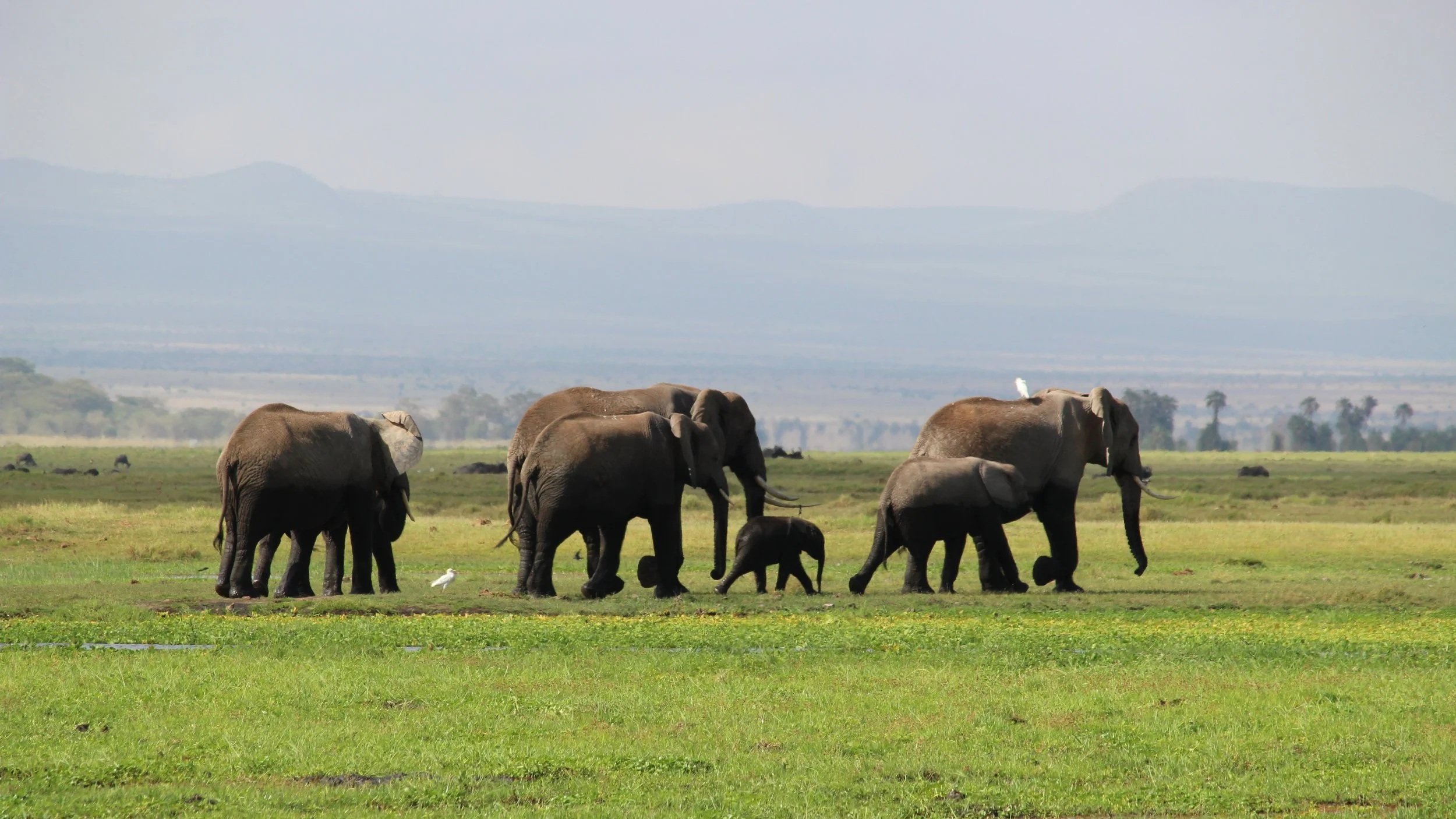
📸 A family of elephants in the marshes of Kenya’s Amboseli National Park
They stop traffic. An entire herd can walk through camp at 3am without making a sound. They appear from nowhere in the mopane bush — completely silently — and suddenly you’re five metres from an animal the size of a minibus, and everything else — the flight, the jet lag, the bumpy game drive — ceases to exist. Meeting elephants does that to you. If you’ve never been on safari before, your first close encounter with an elephant is something you’ll be talking about for the rest of your life. If you’ve been going to Africa for years, it still gets you every time.
Africa has elephant populations spread across the continent, but not all destinations are equal. Some places offer fleeting glimpses; others give you encounters so rewarding they will reframe what you thought you knew about these animals. Here are the places I’d send you for the real thing!
Botswana — The Greatest Show on Earth
If elephant watching had a World Cup, Botswana would win it. The Chobe River in the north holds one of the largest concentrations of elephants anywhere on the planet — estimates put the national population at well over 130,000 — and during the dry season (May to October), herds of hundreds congregate along the riverbanks. A boat safari on the Chobe River at sunset, watching elephant after elephant wade in to drink and bathe, is one of the best wildlife moments I can think of.
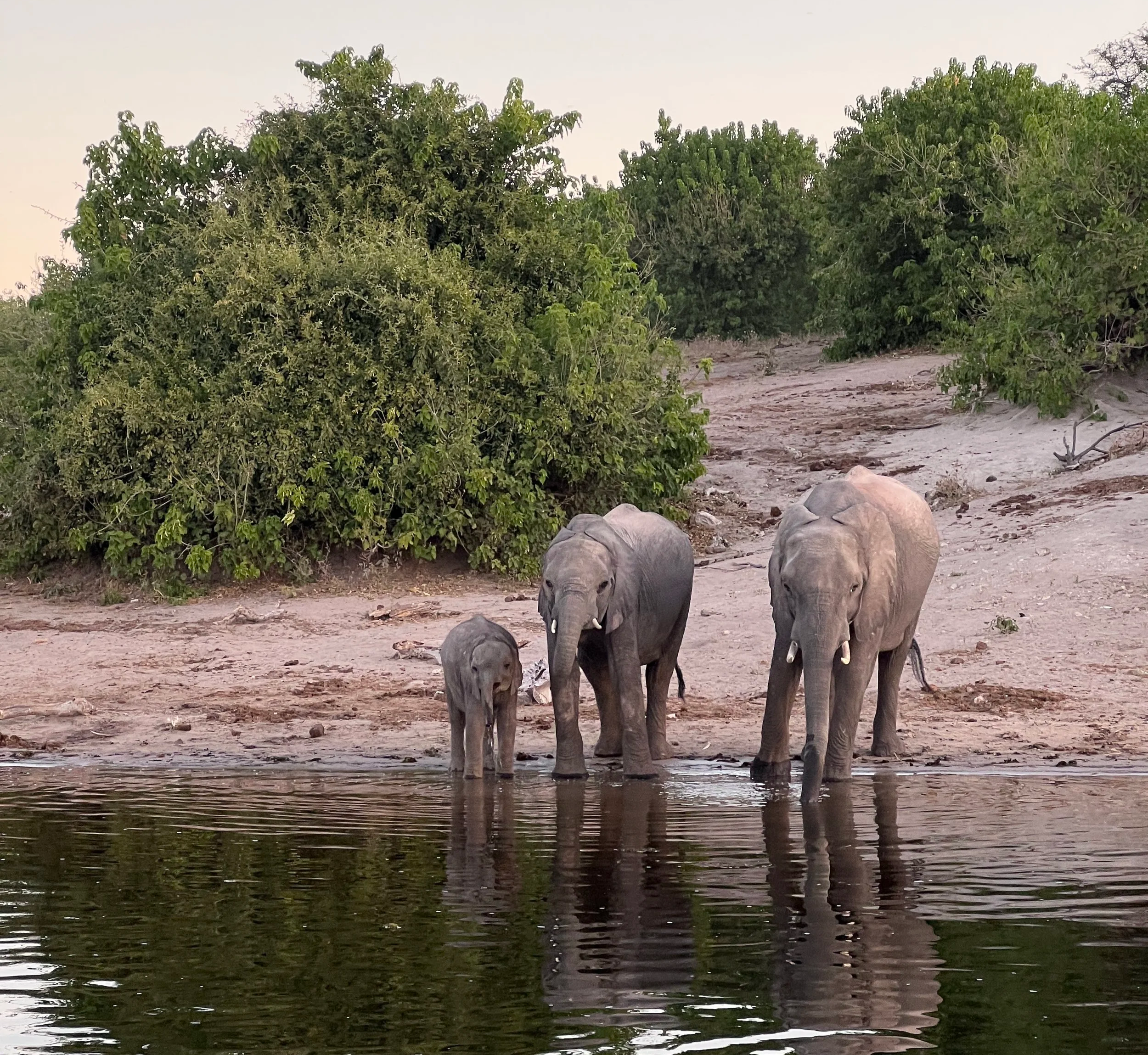
📸 Elephants are frequently seen drinking on the banks of Botswana’s Chobe River
The Okavango Delta and Linyanti add another dimension entirely: elephants moving with purpose through floodplains and papyrus channels, calves splashing in the shallows, the whole thing reflected in the water. It’s quieter, more intimate, and utterly magical.
Where to stay: Chobe Game Lodge sits inside Chobe National Park itself, giving you exclusive early morning access before day visitors arrive. In the Savute/Linyanti area Savute Safari Lodge is positioned close to the mysterious Savute Channel which flows in either direction on its own schedule. Linyanti Bush Camp is positioned right on the Linyanti waterway. This area delivers some of the most reliable elephant viewing in Botswana — huge herds, extraordinary proximity, and outstanding guiding. In the Delta, Shinde Camp and Camp Okavango both offer exceptional elephant encounters in a classic Delta setting. For more ideas take a look at my Botswana destination page.
It’s also worth mentioning Zimbabwe’s Hwange National Park, which has a well-deserved reputation for large elephant populations and some remarkable waterhole viewing during the dry season. It’s a destination that comes highly recommended by those who know it well, and one I’m happy to discuss if it’s on your radar.
Kenya — Amboseli and the Kilimanjaro Backdrop
For sheer photographic drama, nothing in Africa quite matches Amboseli: Kenya’s famous ‘tuskers’ moving through open grassland with the snow-capped summit of Kilimanjaro rising behind them. It’s an image that looks almost too perfect to be real, and then with a bit of luck, you’re sitting there watching it happen in front of you.
Amboseli is also remarkable for elephant research. The Amboseli Elephant Research Project has been running since 1972 — the longest continuous study of wild elephants anywhere in the world — and some of the guides here know individual elephants by name and family history. That depth of knowledge transforms a game drive.
Where to stay: Angama Amboseli and Tortilis Camp are both well-positioned for elephant viewing. For something more exclusive, Ol Donyo Lodge in the Chyulu Hills sits within the wider Amboseli -Tsavo ecosystem and offers a remarkable combination of elephant encounters and big-sky landscapes.
A Very Special Kenya Experience — Reteti Elephant Sanctuary
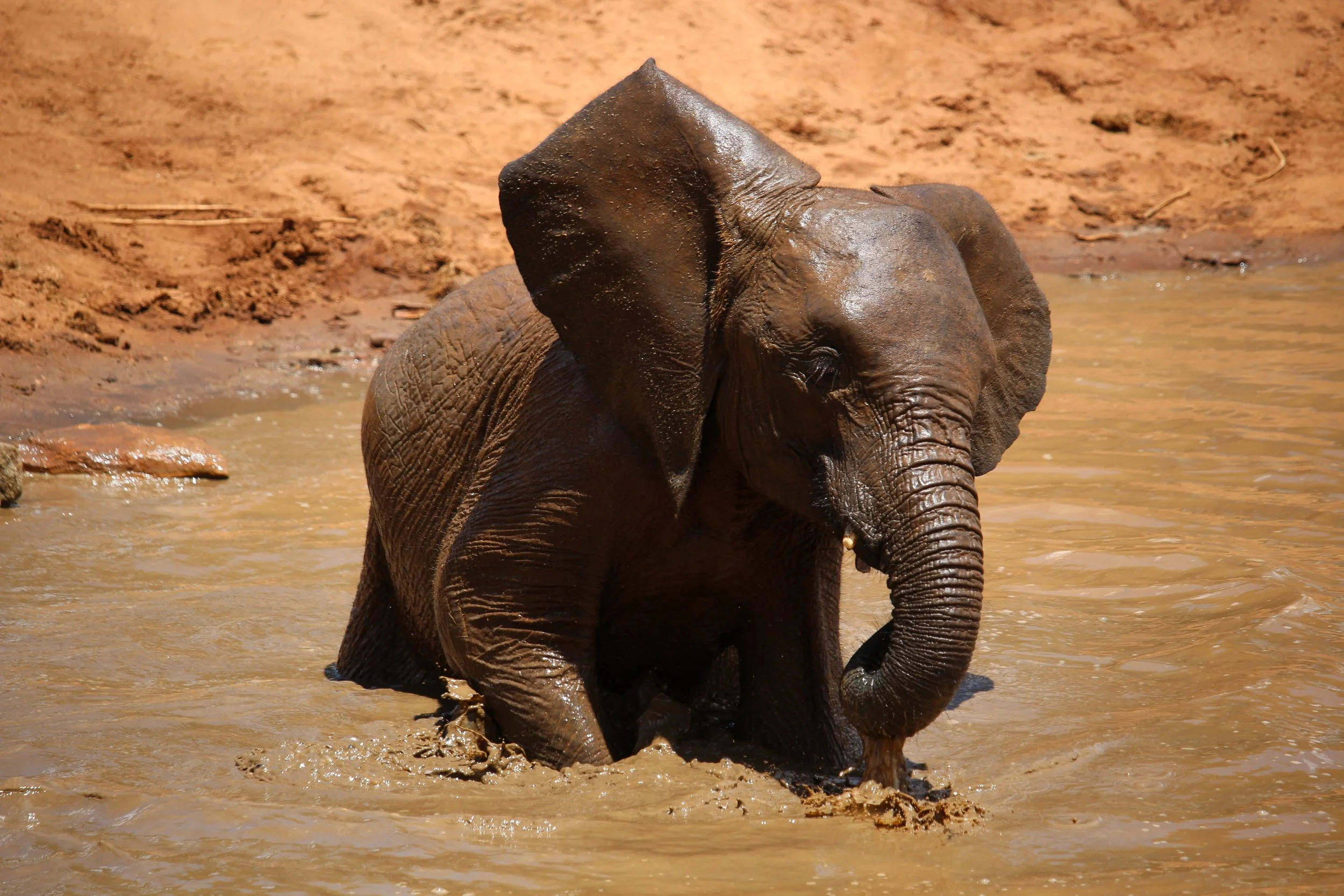
📸 A young elephant takes a mud bath at Reteti Elephant Sanctuary in Northern Kenya
If you’re travelling to northern Kenya, I’d encourage you very strongly to include a visit to Reteti Elephant Sanctuary — and not because it’s cute (although it is). Reteti is a lifeline for both orphaned animals and the community.
It’s Africa’s first community-owned elephant sanctuary, run entirely by the Samburu people in the Namunyak Wildlife Conservancy. Orphaned and abandoned elephant calves are rescued, rehabilitated, and eventually released back into the wild — and the keepers who care for them are local Samburu men and women who have created something extraordinary in one of Kenya’s most remote landscapes. There’s real meaning here. Conservation that actually benefits the communities who live alongside wildlife. That’s not as common as it should be, and when you find it, it’s worth supporting.
Watching the young elephants at feeding time while the keepers explain each animal’s story is an experience that stays with you for years. It’s also a powerful reminder of what’s at stake: these are calves that survived because people chose to act.
Where to stay: Sarara Camp is the base for a Reteti visit. It sits within the Namunyak Wildlife Conservancy — an 850,000-acre community conservancy in the Mathews Range. The landscape is wild and unmanicured, the community connection is genuine, and the wildlife encounters, both at the sanctuary and in the wider conservancy, are unlike anything you’ll experience anywhere else in Kenya. Sarara embodies the spirit of Kenyan safari. Small, personal, and completely off the beaten track.
Zambia — Lower Zambezi and South Luangwa
Zambia’s Lower Zambezi National Park offers some of Africa’s finest elephant encounters on water: boating safaris along the river with elephants crossing ahead of you, sometimes close enough to hear their legs splashing through the water. It’s an experience that feels truly wild in a way that a land-based game drive, however good, simply can’t replicate.
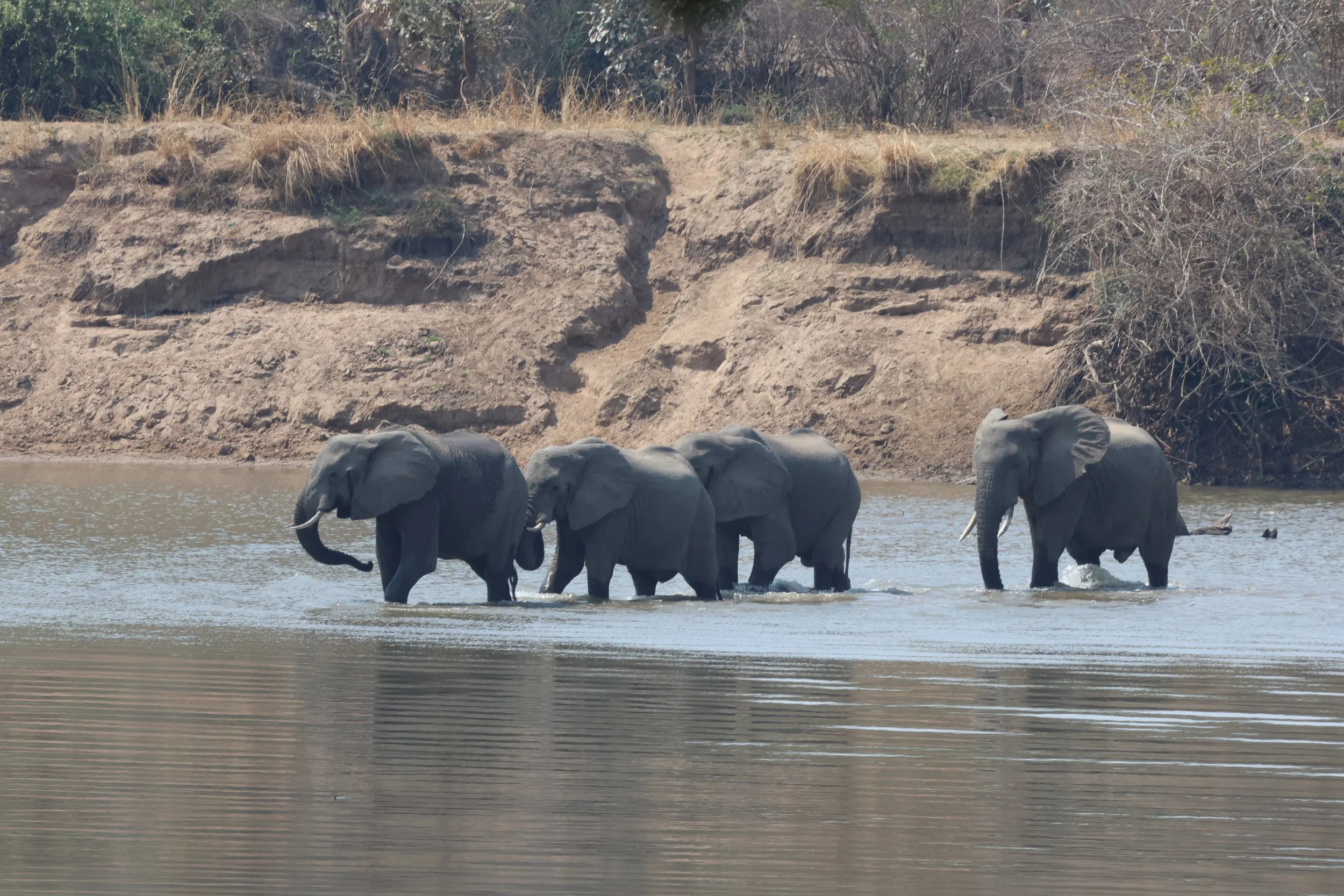
📸 Elephants wading across the Luangwa River in Zambia
Zambia’s South Luangwa Valley, meanwhile, is famous for its walking safaris — and encountering elephant on foot in the Luangwa bush, with a skilled guide reading every signal and keeping a very respectful distance, is a level of experience most people don't forget. It's worth being clear-eyed about this: walking in big game country carries real risk, and elephant in particular demand serious respect. This is genuinely wild Africa, not a managed experience — and that's precisely what makes it so powerful. Which is also why the quality of your guide matters above everything else.
Where to stay: Dulini Anabezi Luxury Tented Camp in the Lower Zambezi is beautiful and well-positioned for both water and land-based elephant encounters, as are Chiawa’s Old Mondoro and Time + Tide’s Chongwe River Camp. In South Luangwa, Time + Tide Chinzombo and Robin Pope Safaris’ camps — particularly Nkwali and Tena Tena — offer superb guiding and reliable elephant sightings throughout the season. My favourite mid range option, Flatdogs Camp, frequently has eles visiting camp.
Tanzania — Tarangire’s Ancient Giants
Most people planning a Tanzania safari focus on the Serengeti and the wildebeest migration — understandably. But if elephants are your priority, Tarangire National Park is the place. During the dry season (June to October), elephants congregate around the Tarangire River in numbers that rival anywhere else on the continent, and the park’s ancient baobab landscape gives the whole thing a timeless, slightly otherworldly quality.
Tarangire’s elephants are also notably relaxed around vehicles — you can get extraordinarily close.
Where to stay: Asilia’s Oliver’s Camp is excellent option, combining exceptional guiding with walking safari opportunities in this underrated park.
The Other Side of the Story
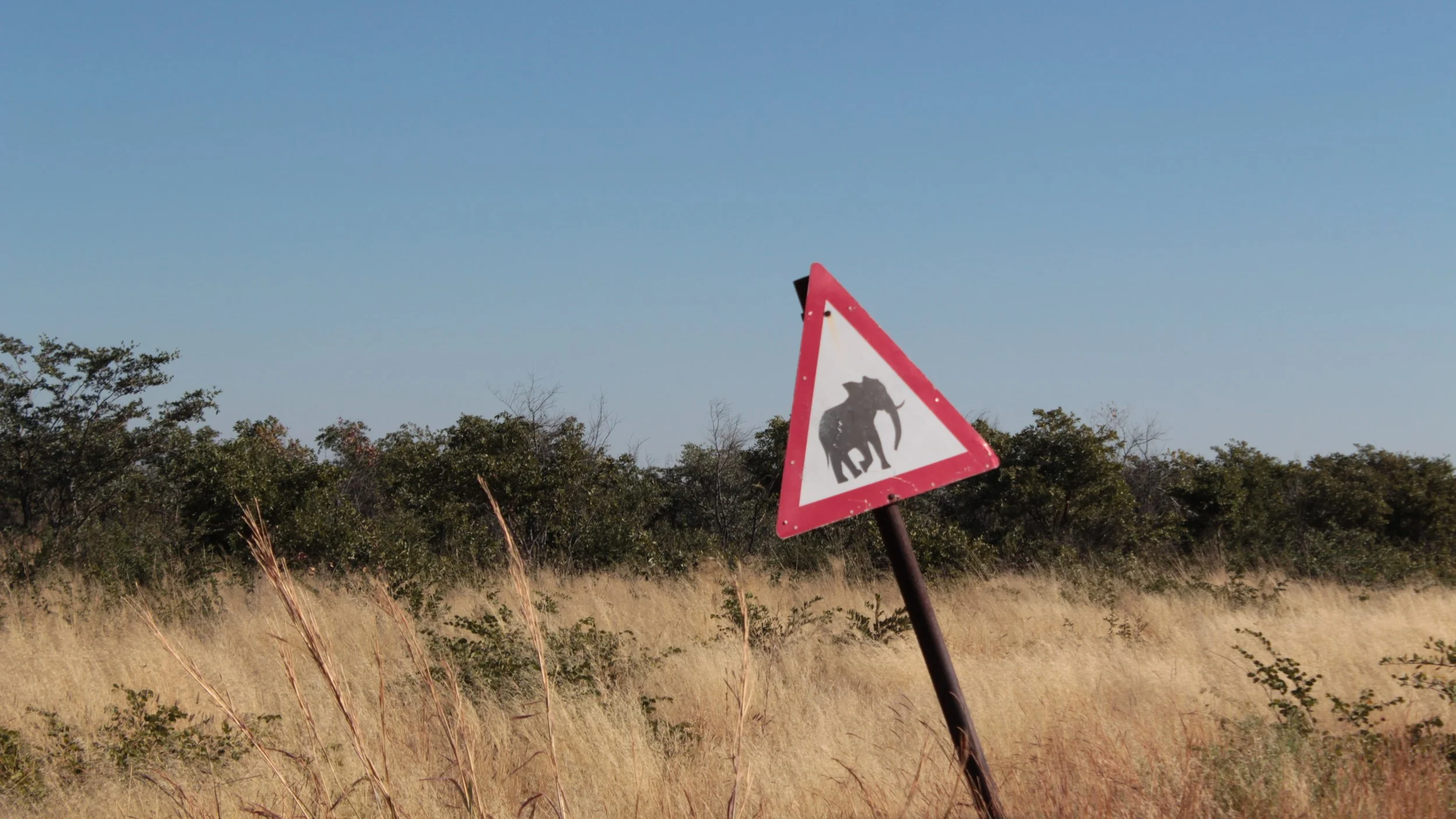
📸 Elephants are a road hazard in large parts of Botswana
Africa’s elephant population has declined catastrophically over the last century — from an estimated 10 million to fewer than 415,000 today — and the threats from poaching and habitat loss haven’t gone away. But there’s a less-talked-about issue that’s just as pressing: human-wildlife conflict.
Elephants are extraordinary animals, but they are also large, hungry, and entirely indifferent to the boundaries between national parks and the farms and villages that surround them. For communities living on the edges of wildlife areas across Botswana, Kenya, Zambia and beyond, a herd of elephants moving through a smallholder’s crops overnight isn’t a wildlife encounter — it’s a livelihoods crisis. That tension is real, it’s serious, and it doesn’t have an easy answer. But people are working on it.
One initiative worth knowing about is the Natural Selection Foundation, the charitable arm of safari operator Natural Selection, which runs a dedicated human-wildlife coexistence programme across Botswana and Namibia. Their work includes funding safe transport for schoolchildren through elephant corridors (the rather brilliantly named “Elephant Express”), researching plant-based elephant deterrents, supporting elephant-proof fencing for subsistence farmers, and collaring elephants to track movement and identify conflict hotspots before they escalate. It’s practical, community-led conservation — exactly the kind of work that makes a genuine difference on the ground. You can read more at naturalselectionfoundation.org.
Every responsible safari booking plays its part — the conservation model that keeps these landscapes intact depends on tourism revenue. But it’s worth knowing that the story is more complicated than the one you see from the game vehicle, and more people than you’d think are working hard to find a way through it. That’s worth remembering every time an elephant moves past your tent at 3am, completely silent until a branch snaps or a canvas panel shifts in its wake.
If you’d like help planning an elephant-focused itinerary — whether that’s a single-destination trip or a multi-country journey combining several of the above — please get in touch, I’d love to hear from you.
Frequently Asked Questions
Where is the best place in Africa to see elephants?
Botswana is widely considered the finest destination in Africa for elephant viewing. The Chobe River in northern Botswana holds one of the highest concentrations of elephants on the planet, with the national population estimated at over 130,000. During the dry season (May to October), herds of hundreds gather along the riverbanks — a wildlife spectacle unlike anything else on the continent. The Okavango Delta and Linyanti offer a more intimate experience, with elephants moving through floodplains and waterways in smaller herds.
What is the best time of year to see elephants in Africa?
The dry season is almost always the best time to see elephants across Southern and East Africa, as animals concentrate around permanent water sources and vegetation thins out, making sightings easier. In Botswana and Zambia, this typically runs from May to October. In Tanzania’s Tarangire, June to October is the peak elephant season. Kenya’s Amboseli is one of the few destinations where elephants are reliably visible year-round, as the swamps fed by Kilimanjaro’s snowmelt provide water even in the dry months.
Which African country has the largest elephant population?
Botswana has the largest elephant population of any country in Africa, with an estimated 130,000 or more animals — roughly a third of the continent’s entire savannah elephant population. Zimbabwe, Tanzania, Kenya and Zambia also hold significant populations. Across Africa as a whole, elephant numbers have fallen dramatically over the past century, from an estimated 10 million to fewer than 415,000 today, largely due to poaching and habitat loss.
Can you see elephants on a walking safari?
Yes — and encountering an elephant on foot is one of the most visceral wildlife experiences Africa offers. That said, skilled guides maintain a very respectful distance and read elephant behaviour carefully at all times. Walking in big game country carries real risk, and elephants in particular demand serious respect. South Luangwa in Zambia is the spiritual home of the walking safari and offers some of the finest on-foot elephant encounters anywhere, guided by people who genuinely know what they’re doing. The quality of your guide matters above everything else.
Is Amboseli good for seeing elephants?
Amboseli is outstanding for elephants, and uniquely so. The elephants here are among the most studied in the world — the Amboseli Elephant Research Project has been running since 1972 — and experienced guides can identify individuals by name and family history, which transforms a game drive into something altogether richer. Add the backdrop of Kilimanjaro and the open marshland setting, and it’s one of the most photographically dramatic elephant destinations in Africa. For many visitors it becomes the most emotionally resonant wildlife experience of their entire trip.