Where to See Hyenas on Safari (and Why They're Worth It)
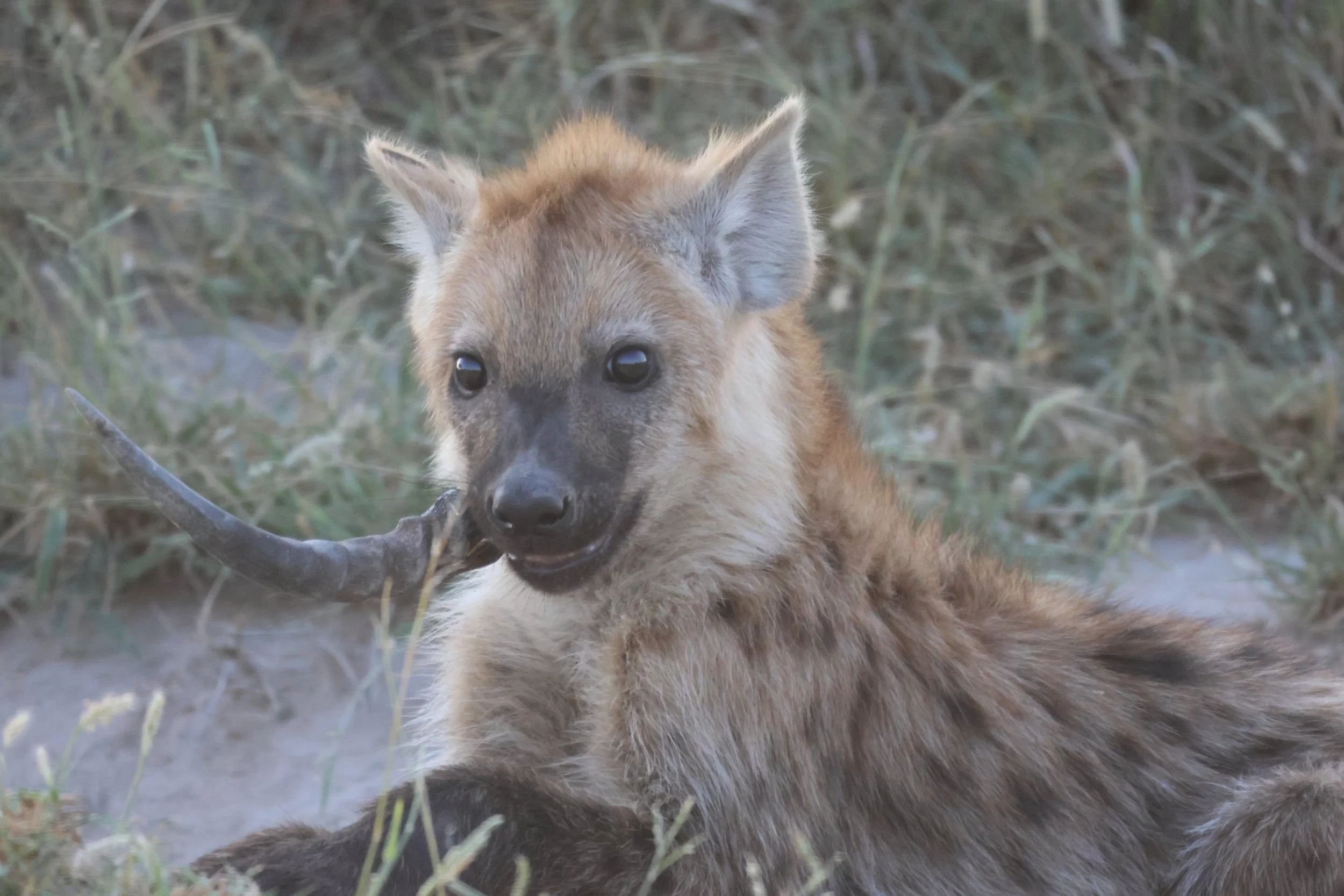
📸: A young hyena munching on an antelope horn
Lions and leopards get most of the attention on safari, but hyenas are one of my favourite animals, and I think they're the most underrated. They hunt most of their own food, they clear the bush of carcasses, and their clans are run by females. Once you've spent some time watching a clan properly, you stop seeing Disney’s baddy scavengers and start seeing a predator that deserves some love.
The good news is that spotted hyenas are among the most common large carnivores in Africa, so you have plenty of choice of where to see them. As with all carnivores your best odds are at early mornings, dusk or on a night drive, and a den with cubs is the surest (and cutest) sighting of all. The table below shows where I'd look first, from Ngorongoro to Liuwa Plain, and the sections after it add the detail
| Where to go | Why it works | Night drives |
|---|---|---|
| Ngorongoro Crater and the Serengeti, Tanzania | High numbers on an open crater floor, often seen in daylight. Good numbers across the Serengeti, often around kills | Not allowed in the crater. Serengeti: private concessions only |
| Maasai Mara and conservancies, Kenya | Guides often know where the active dens are, and hyenas are most active around dawn and dusk | Conservancies, not the national reserve |
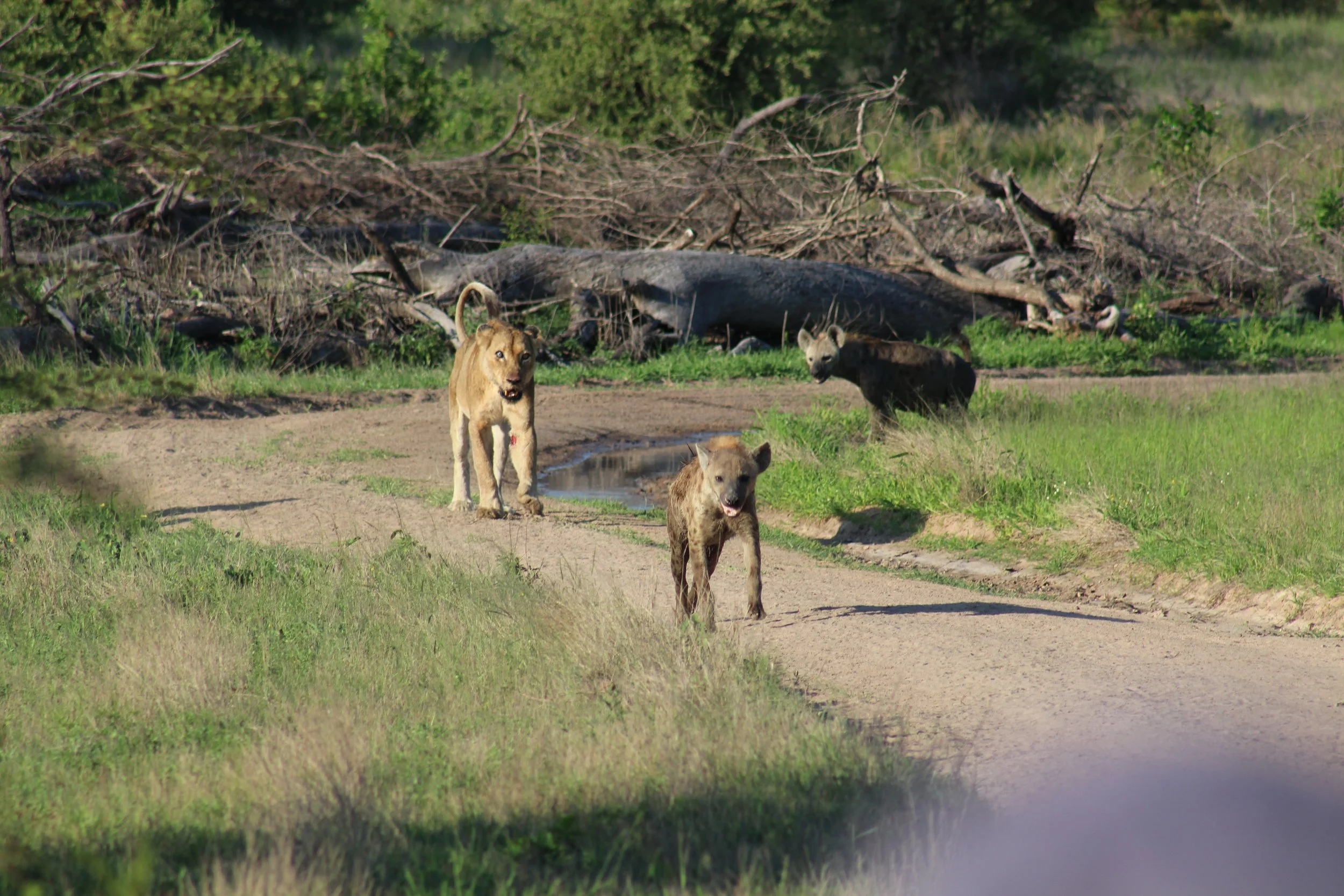
| Savuti and the Mababe Depression, Botswana | Lion and hyena clashes over kills | Private concessions, not Chobe National Park |
| Etosha, Namibia | Floodlit waterholes at the rest camps | Not needed, you watch from camp |
| South Luangwa, Zambia | A strong area for night drives | Yes, in the national park |
| Liuwa Plain, Zambia | Large clans and very few lions, so hyenas are the top predator | Yes |
| Kruger and private reserves, South Africa | Good numbers across the region | Private reserves and guided drives in Kruger |
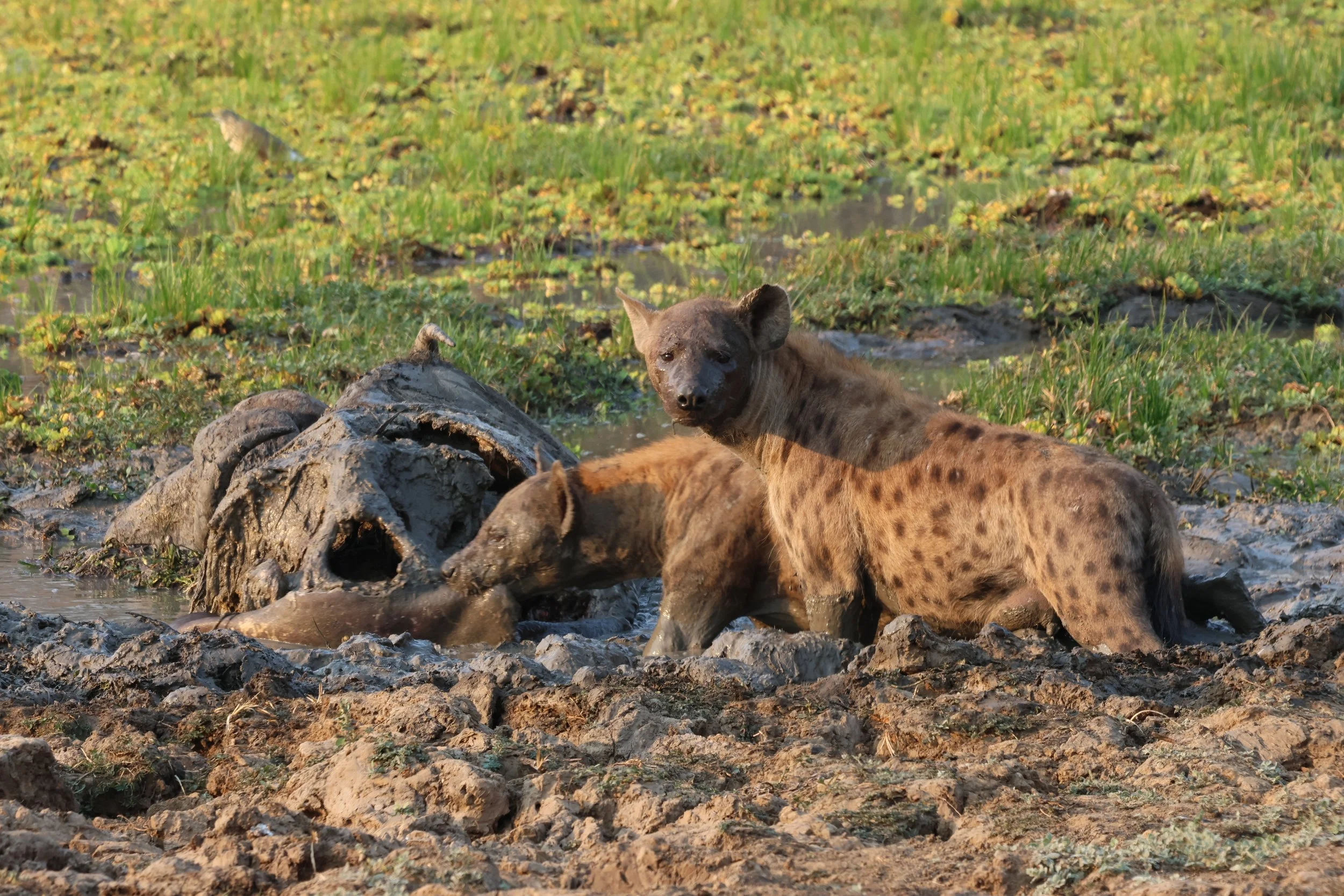
Where to GoNgorongoro Crater and the Serengeti, Tanzania: Clans in the OpenIf you only have one morning to look for hyenas, I'd spend it in the Ngorongoro Crater. The floor is open, hyena numbers are high and clans are often out in daylight, so you can sit and watch rather than hunt for them. Night drives aren't allowed in the crater. In the Serengeti, hyenas are spread right across the park and often can be found around lion or leopard kills. Night drives aren't allowed in the national park itself, so choose a camp in a private concession if you want them. Lucie's recommendation: A day in the Ngorongoro is a key part of Northern Circuit safaris, and I recommend staying as close as possible to the crater rim to ensure an early start before the crater gets crowded. Nomad’s Entamanu Camp is a good option. Where to stay in the Serengeti depends on migration timing - I can help you pick the right place and time! My Tanzania destination page has more on Ngorongoro and the Serengeti. Maasai Mara and the Conservancies, Kenya: Dens and Night DrivesDen sites at dawn and dusk deliver some of the most reliable sightings in the Mara. Night drives aren't allowed in the national reserve but are in the conservancies, which is one more reason to stay in one. Lucie's recommendation: One of my personal favourites in the Mara area is Naboisho Conservancy which has several really good lodges including Naboisho Camp. My Kenya destination page has more on the Mara and the conservancies. Savuti and the Mababe Depression, Botswana: Lion and Hyena RivalrySavuti has a reputation for lions and hyenas contesting kills, a rivalry made famous by the National Geographic documentary ‘Eternal Enemies’. Night drives aren't allowed in Chobe National Park, so if night sightings matter to you, pair Savuti with a private concession such as Linyanti or Selinda. Lucie's recommendation: Put yourself at the heart of the action by staying at Selinda Explorers in the private Selinda reserve. My Botswana destination page has more on Savuti and the rest of northern Botswana. 📸: Lions & hyenas are ancient enemies Etosha, Namibia: Floodlit WaterholesEtosha is the easiest place to watch hyenas without leaving camp. The rest camps have floodlit waterholes, and spotted hyenas come in to drink after dark. Take a jumper in the cooler months, because you'll be sitting still for a while. Lucie's recommendation: Onguma The Fort has sunset views over a waterhole and Fischer’s Pan and is situated on Onguma Private Reserve, bordering Etosha so you get the best of both worlds during a stay here. My Namibia destination page has more on Etosha. South Luangwa, Zambia: Hyenas Night and DaySouth Luangwa is rich in predators, and hyenas are frequently sighted. It’s possible to have night drives in the national park, where hyenas are often seen. Lucie's recommendation: South Luangwa is one of my very favourite destinations for it’s density of wildlife, beautiful scenery and great range of accommodation, from the lovely Flatdogs Camp through to the luxury of Lion Camp deep in the park’s interior. Liuwa Plain, Zambia: Where Hyenas Are the Top PredatorLiuwa Plain is the odd one out, because it's one of the few places where hyenas are the top predator. Poaching and trophy hunting wiped out all but one of the park's lions in the 1990s. African Parks has managed the park since 2003 and has brought lions back, but there are still only around 16 to 20. A peer-reviewed study of the area from 2010 to 2019 found hyena numbers high and stable, and put it down to the lack of lions and plenty of prey. Operators report clans of 50 or more. It's remote, and most guests fly in from Lusaka. The wildebeest arrive with the first rains, usually from late October or November, but timings vary, so check with the camp before you pick your dates. Night drives are allowed. Lucie's recommendation: Liuwa Plains has just one luxury lodge - King Lewanika - the place to enjoy the space and solitude of this off the beaten track location. My Zambia destination page has more on South Luangwa and Liuwa Plain. Kruger and the Private Reserves, South Africa: Night Drives and Off-RoadThe private reserves bordering Kruger, such as Sabi Sand, allow night drives and off-road driving, which makes a big difference to your chances of a good sighting. Tswalu, an immense private reserve in the South African Kalahari, is the place I'd choose for brown hyenas, which are shy and hard to see elsewhere. Night drives are allowed there. Lucie's recommendation: Tswalu Kalahari is an huge expanse of desert wilderness with ultra luxurious accommodation, and a hotspot for rare wildlife such as Brown Hyena. The private reserves that make up the Greater Kruger area are all excellent options for spotting hyena as well as the Big 5. My personal favourite in this area is Dulini River on the banks of the Sand River in the Sabi Sand Game Reserve. My South Africa destination page has more on Kruger and the private reserves. When to Look: Time of Day and Time of YearSpotted hyenas are most active around dusk, through the night and at dawn. You can see them in daylight, but if hyenas are high on your list, a night drive will improve your odds more than anything else. The surest sighting during the day is a den with cubs. Guides usually know where the active dens are, so it’s worth asking on your first drive. Cubs are born with their eyes open and dark fur, they are seriously cute, playful and curious, and they're very hard to leave once you've started watching them. Hyenas are resident in the bush all year, but the dry season makes them easier to find because wildlife gathers around water. That's roughly May to October in much of Southern Africa and June to October in the Serengeti and Mara. Hyenas also tend to appear near lion kills, so if your guide hears of one, it's worth the detour. If you find a hyena loping along a track during your game drive it’s always worth following them, you’ll likely find a kill or a den. The Four Types of HyenaThere are four species, and only one of them is a safe bet. Spotted hyenas are the largest and by far the easiest to see, and everything above is about them. Brown hyenas are shy and nocturnal and live in drier country such as the Central Kalahari, the Kgalagadi, Tswalu and the Namibian coast. A sighting is a bonus rather than something to book a trip around, though Tswalu is where I'd go to give yourself the best chance. Striped hyenas are rarer still, found across North and East Africa including northern Kenya, and a sighting is always a lucky surprise. The fourth is the aardwolf, a small hyena that eats mostly termites. You may see one on a night drive in Southern or East Africa, but it's luck rather than planning. Hyenas aren't related to dogs, by the way. They are closer to cats and mongooses. Hyenas Are Hunters, Not ScavengersThe first thing most people assume about hyenas is that they're scavengers. They do scavenge, but so does almost every other predator, lions included. The idea that hyenas live off other animals' kills is a myth, helped along by documentaries that show hyenas mobbing lions at a carcass. Studies in several parts of Africa find that spotted hyenas kill most of what they eat. Published figures range from about 60 to 95 per cent, depending on the area and how many lions are around. When the biologist Hans Kruuk began studying hyenas in Tanzania in the 1960s, he found that when hyenas and lions shared a carcass, it was the hyenas who had made the kill more than half the time. Lions stealing from hyenas is common. Hyenas hunt alone or in groups of up to about five, and the bigger the group, the bigger the prey. A single adult has been seen bringing down a full-grown wildebeest, and groups take zebra and even buffalo. They rely on stamina and teamwork rather than a short sprint. The Bush's Clean-Up CrewHyenas do eat carrion, and they're very good at it. Their jaws and large premolars are built to crack bone, and they digest skin, hooves and bone that other predators leave behind. Very little is wasted. Alongside vultures and small carnivores such as jackals hyenas play a crucial role in clearing carcasses and preventing the spread of disease. 📸 : Hyenas cleaning up in the South Luangwa A Society Run by FemalesSpotted hyena clans are matriarchal. Females are larger than males, and even the lowest-ranking adult female outranks the highest-ranking male. Rank is inherited from the mother, so a cub born to a high-ranking female can outrank adults from lower-ranking families before it's fully grown. Males leave the clan they were born into as adolescents and join another, starting at the bottom. Females stay for life. Research suggests social support, rather than size or strength, decides who wins a dispute, and cubs appear to inherit their mother's network of allies as well as her rank. A clan can number several dozen animals and occasionally up to around 80, but its members are rarely all in the same place. That's why you usually see a handful at a time, and why a den or a kill is the best place to watch them interact. Listen as well as look. The whoops carry across a long distance and help clan members find each other, and the giggle is more often a sign of excitement or stress than amusement. How to Give Yourself the Best Chance of Seeing HyenasAsk for night drives: choose a camp in a private reserve, conservancy or concession where night drives and off-road driving are allowed. Those areas also tend to give you more time with a sighting, because the vehicle can stay with the animals. Stay at least three nights in a good area: hyena sightings build up over several drives, and you'll learn more from your guide with each day. Ask about dens: on your first drive, ask whether there's an active den and where the clan was last seen. Stay safe: stay in the vehicle at a sighting, never feed or approach a hyena, and follow your camp's rules after dark. Most camps escort guests between their tents and the main area at night, and hyenas do occasionally wander through, so follow the escort rules. Frequently Asked Questions
Planning a Hyena SafariHyenas are a bonus on almost any safari, but a few itineraries put them front and centre. Northern Tanzania combines the Ngorongoro and the Serengeti, Kenya's conservancies add night drives to the Mara, Savuti paired with a private concession in Botswana covers both daytime sightings and night drives, and in Zambia, South Luangwa and Liuwa Plain show you hyenas in two very different settings. In South Africa, the private reserves around Kruger are strong for spotted hyenas, and Tswalu is the place for brown hyenas. I only recommend areas I've visited myself, so I can tell you what to expect before you book. Previous
Previous
Where Is Best for Boating Activities on Safari?Next
Next
Where to find Rhino in Africa |