
Safari Through the Seasons - When's the Best Time to Go?
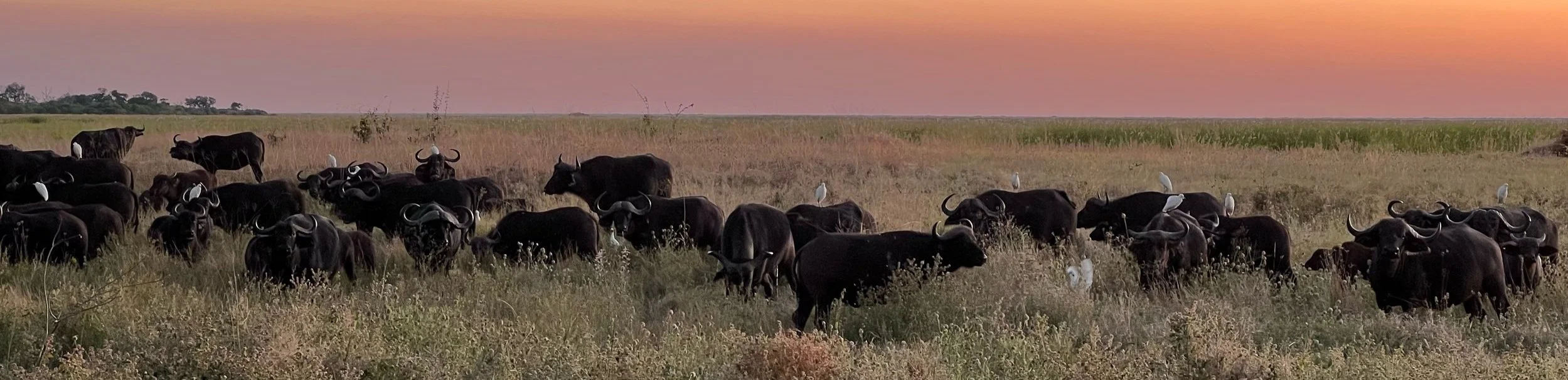
📸: Buffalo grazing in Linyanti Marsh, Botswana
Safari Through the Seasons - When's the Best Time to Go?
I really believe there is no bad time for a safari, however some seasons are definitely better than others - it all depends on what you want to see and your budget. Africa's huge range of diverse ecosystems offer year-round wildlife viewing opportunities, but each season brings its own unique magic to the safari experience.
The Big Picture: Africa's Safari Year
November - December: Green Season Magic
Central & Southern Africa come alive as afternoon thunderstorms transform the landscape into fifty shades of green overnight. This is a brilliant time to visit places like Zambia and Botswana. Mopane trees spring into leaf, baby animals start appearing, and the bird watching is superb!
Plus, here's my top tip: you'll often find amazing deals at some really luxurious camps during this time.
January - March: Dramatic Landscapes
During these months there's no getting away from the fact that you might get a bit wet! But watching a pride of lions against a backdrop of wildflowers, or photographing elephants with moody storm clouds rolling in is pretty special. The landscapes are at their most dramatic and you're more than likely to have them practically to yourself.
April - May: Shoulder Season Bargains
This is when East Africa gets its main rains, and some camps do close. BUT if you're willing to work around some rain showers, this is another good time to get lower rates - you can get incredible value for money. The end of May is also a good time to get shoulder season rates in Botswana.
June to October: Peak Season Perfection
This is Peak Season for a good reason! As the African bush dries and transforms into hues of gold and brown, this time presents premier game-viewing opportunities. With vegetation thinning out and water sources becoming scarce, wildlife congregates around remaining waterholes, creating nature's own theatre.
During these months, the Serengeti-Mara ecosystem stages one of Earth's most dramatic spectacles - the river crossings of the Great Migration. Over two million wildebeest, zebra and gazelle brave crocodile-infested rivers in their relentless search for fresh grazing. For predator sightings, this period is unmatched; lions, leopards and cheetahs are easier to spot against the sparse landscape.
My Month-by-Month Safari Recommendations
January - South Serengeti, Tanzania
The wildebeest herds gather in the nutrient-rich plains around Lake Ndutu, with thousands of calves being born. It's magical watching these wobbly little ones take their first steps! The short-grass plains become a natural nursery, and with all those vulnerable babies around, the predator action is absolutely spectacular.
February - Ngorongoro Crater, Tanzania
The crater floor is lush and green, teeming with wildlife. You'll find black rhinos emerging to enjoy the fresh foliage, and the flamingos on the lake create the most incredible pink spectacle. February also brings the peak of the calving season in the Serengeti, making it one of the best months for witnessing nature's cycle of life.
March - Sabi Sands, South Africa
The end of the summer rains means everything is gloriously green, and the predator viewing is exceptional. The leopards seem to be particularly active at this time of year, and look brilliant photographed against the fresh green leaves and grass. March is also excellent for Hwange National Park in Zimbabwe, where the landscape transforms into an emerald paradise.
April - Samburu & Northern Kenya
While many areas of East Africa experience rains at this time of year, Samburu and Northern Laikipia remain relatively dry and offer incredible sightings of unique species like Grevy's zebra and reticulated giraffe. Plus, the camps offer great low-season rates. April is also a lovely time for the Okavango Delta in Botswana, where you'll find fewer travellers and lower prices before the peak season rush.
May - Madikwe Game Reserve, South Africa
This malaria-free reserve is perfect for families, and the mild winter days make for comfortable game viewing. The thinning vegetation means better chances of spotting the reserve's predators including the famous wild dog packs. May is also excellent for Tanzania's parks, which start drying out after the long rains, making wildlife easier to spot.
June - Okavango Delta, Botswana
The annual flood waters start to arrive in June, filling the channels and transforming the delta into a wildlife paradise. Taking a mokoro (traditional canoe) through the clear water while elephants splash nearby is simply unforgettable. Travel in the early part of the month to grab shoulder season rates! June also marks the beginning of the best time for the Great Migration in Tanzania's Western Corridor.
July - Masai Mara, Kenya
This is prime time for the Great Migration, with wildebeest herds crossing into Kenya from the Serengeti. The grass is short, making big cat spotting particularly rewarding. July is also superb for South Luangwa in Zambia, where the dry season intensifies and wildlife concentrations around the river become extraordinary.
August - Etosha National Park, Namibia
The dry season concentrates wildlife around the park's famous waterholes, creating natural arenas for wildlife viewing. If you're self-driving you can literally set up at one spot and watch the drama unfold as zebras, giraffes, and elephants come to drink - sometimes even black rhinos if you're lucky! The stark white salt pan creates an otherworldly backdrop that makes for incredible photos.
September - South Luangwa, Zambia
The walking safaris here are justifiably legendary, and September offers the perfect combination of comfortable temperatures and concentrated wildlife. Tracking a leopard on foot is the most exhilarating way of taking a stroll! Combine South Luangwa with the Lower Zambezi for the ultimate Zambia safari. September is also excellent for most of Southern Africa, with dry conditions bringing superb game viewing across the board.
October - Ruaha National Park, Tanzania
One of Africa's best-kept secrets, Ruaha offers incredible predator viewing at this time, with large prides of lions and plenty of wild dogs. Plus, you'll hardly see another vehicle! October marks the end of the main dry season in much of East and Southern Africa, so it's your last chance for those classic safari conditions before the rains arrive.
November - Chobe National Park, Botswana
The first rains bring baby impala by the hundreds, and the elephants are in their element. Taking a sunset boat cruise along the Chobe River as thousands of animals come to drink is spectacular. November is also brilliant for the South Serengeti, where the herds begin returning from Kenya and the landscape starts greening up beautifully
December - Lower Zambezi, Zambia
The start of the green season brings dramatic skies perfect for photography, and you can combine game drives with tiger fishing. December is also wonderful for Southern Tanzania and parts of Botswana, where the transformation to emerald-green landscapes is simply breathtaking.
Understanding the Great Migration
The wildebeest don't exactly follow a calendar, but roughly speaking:
January-March: They're in the Southern Serengeti having their babies - this is calving season and it's absolutely magical
April-May: They start heading north through the Serengeti
June: The herds reach the Western Corridor - river crossings at the Grumeti River
July-September: This is when you might catch those dramatic river crossings as the herds move into the Masai Mara in Kenya
October-December: They head south again back into Tanzania through the Eastern Serengeti
My Top Tips for Any Season
Book early for peak season - I cannot stress this enough! The best camps fill up over a year in advance
Consider combining regions for different experiences - perhaps a classic dry-season safari paired with a green-season destination
Ask about special offers in shoulder seasons - some camps offer amazing deals like stay 4, pay 3
Remember your anti-malarials whatever the season except in malaria-free reserves like South Africa's Madikwe and Eastern Cape
Pack for temperature extremes - even in peak season, early morning game drives can be surprisingly chilly
Think about photography - if you're keen on dramatic skies and lush landscapes, green season is unbeatable; if you want classic safari shots with golden light and sparse vegetation, dry season is your friend
The Verdict?
If you're flexible with your dates, I'd honestly look at the shoulder seasons. You'll get better value, fewer vehicles at sightings, and some really special experiences. But if you're set on seeing those river crossings or have specific dates in mind, we can absolutely make it work - that's what safari planning is all about!
The truth is, Africa rewards visitors year-round. Every season has its own character, its own beauty, and its own wildlife spectacles. It's about matching your interests, budget, and travel dates with the right destination at the right time.
Want to know more about a specific region or time of year? Just ask - I could talk about this stuff for hours! 🙄