
Walking Safaris in Africa: A Complete Guide
There is a moment, somewhere in the middle of the African bush, when everything shifts. You’ve stepped out of the vehicle, the engine noise has died, and suddenly you’re not a spectator any more. You’re part of it. The heat, the smell of dry grass and distant rain, the crack of a twig twenty metres away that your guide has already clocked and assessed before you’ve even registered it. This is what a walking safari does to you. And once you’ve experienced it, nothing else quite measures up.
Game drives are wonderful, I’ll never tire of them. But walking in the African wilderness with an expert guide is a fundamentally different experience — slower, sharper, more visceral. It engages all your senses in a way that sitting in a Land Cruiser simply cannot. It also demands something of you. A little nerve, a little patience, and a willingness to find wonder in the small things as much as the large.
If you’ve been on safari before and want to go deeper, a walking safari is almost certainly the next step. Here’s what you need to know, and where I’d send you.
What Makes a Walking Safari Different?
On a walking safari, you move through the landscape on foot, typically for two to four hours at a time, guided by a highly trained and usually armed professional guide. The pace is entirely different to a game drive — slower, more deliberate. Your guide is reading tracks, identifying insects, explaining the medicinal properties of a plant, pointing out a lion’s paw print pressed into the dust. You stop. You listen. You look properly.
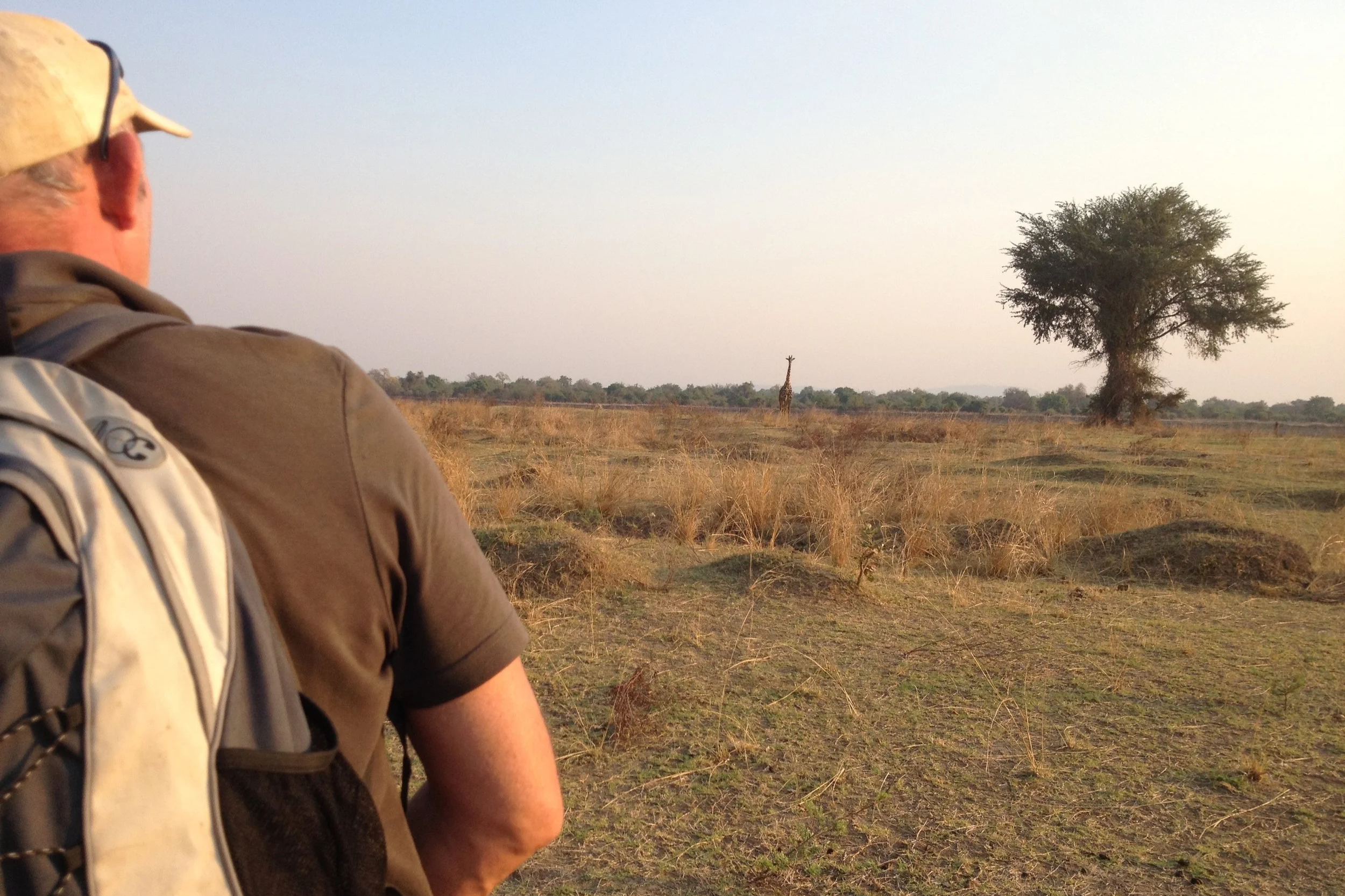
📸 On foot in Zambia’s South Luangwa
The wildlife encounters feel entirely different too. Coming across an elephant on foot — close enough to hear its subsonic rumbling — is one of the most extraordinary things you can experience in Africa. There’s an immediacy and an electricity that no vehicle window can replicate. Your guide will read the elephant’s body language and make the call. Most of the time, you stand still, you breathe, and you watch in absolute awe. Occasionally, you back away slowly and quietly. Both are unforgettable.
Walking safaris also reveal the Africa that most visitors never see: the dung beetle rolling its ball with extraordinary purpose, the termite mounds that are essentially underground cities, the spoor of a leopard that passed through an hour ago. It’s the detail of the ecosystem that transforms a good safari into a truly profound one.
Is a Walking Safari Right for You?
Walking safaris are generally best suited to clients who have already been on at least one game drive based safari — not because you need any specialist wildlife knowledge (that’s entirely your guide’s job), but simply because you’ll get so much more from the experience. When you already have a feel for the rhythms of the bush, the sights and sounds of Africa around you, a walking safari layers an extraordinary new dimension on top of that foundation. First-time safari visitors are often so focused on spotting the big names that the subtler magic of a walking safari — the tracks, the insects, the plants, the silence — can be harder to absorb. Come back for it on your second trip, and it will blow you away.
In terms of fitness, you don’t need to be an athlete. The walks are not challenging in a hiking sense — the terrain is generally flat and the pace is gentle. You do need to be comfortable walking for two to three hours in heat, and agile enough to move quietly and quickly if required. Most walking safari operators set a minimum age of 16 (but some exercise discretion for younger children, please check with me), and there’s no upper age limit provided you’re in reasonable health.
Perhaps most importantly, you need to be comfortable with a certain level of exposure. Like most of the best things in life walking in big game country carries an element of risk, and your guide will brief you thoroughly before you set off. The guides who lead these walks are among the most skilled professionals in the industry — their training is rigorous and their experience is vast. But this is wild Africa, and part of its beauty is precisely that it’s not a theme park.
The Best Destinations for Walking Safaris
Zambia: The Walking Safari Capital of Africa
If you’re serious about walking safaris, Zambia is where you come. The country essentially started the modern walking safari tradition — Norman Carr pioneered the concept in the South Luangwa Valley in the 1950s, and his legacy lives on in the guides who trained under him and the operators who have carried the tradition forward.
South Luangwa National Park remains the gold standard. The wildlife density here is exceptional — elephants, buffalo, lions, leopards, hippos, and a staggering variety of birds — and the camps that operate walking programmes are some of the finest in Africa. Robin Pope, Time + Tide and Flatdogs Camp are among the operators I’d recommend with complete confidence. The guides are deeply knowledgeable, utterly calm, and brilliant communicators.
The Luangwa walking season runs from June to October, when the dry season concentrates wildlife around the river and the vegetation is lower, making for clearer sightlines and easier walking. Multi-day walking safaris, where you walk between fly camps in the wilderness, are also available for the more adventurous — sleeping under canvas with nothing between you and the African night sky is a genuinely transformative experience.
Kenya: Walking in the Laikipia Wilderness
Kenya is better known for its game drives — the Masai Mara needs no introduction — but for walking safaris, the real destination is Laikipia, the vast private conservancy plateau north of Mount Kenya. Here, on the great private conservancies like Ol Pejeta, Lewa, Loisaba and Borana, walking is not just permitted but celebrated.
What makes Laikipia special for walking is the combination of extraordinary wildlife — including critically endangered black and white rhino — with a landscape that feels ancient and vast. The Laikipia plateau rolls away in every direction, broken by acacia woodland and dry riverbeds, and the sense of space is remarkable. Walking here, you might encounter reticulated giraffe, Grevy’s zebra, lion, or elephant, with the snow-capped silhouette of Mount Kenya on the horizon.
Laikipia also has the considerable advantage of being a year-round destination — the altitude keeps temperatures manageable even in the hotter months, and the conservancies don’t close for a wet season in the way that some national parks do.
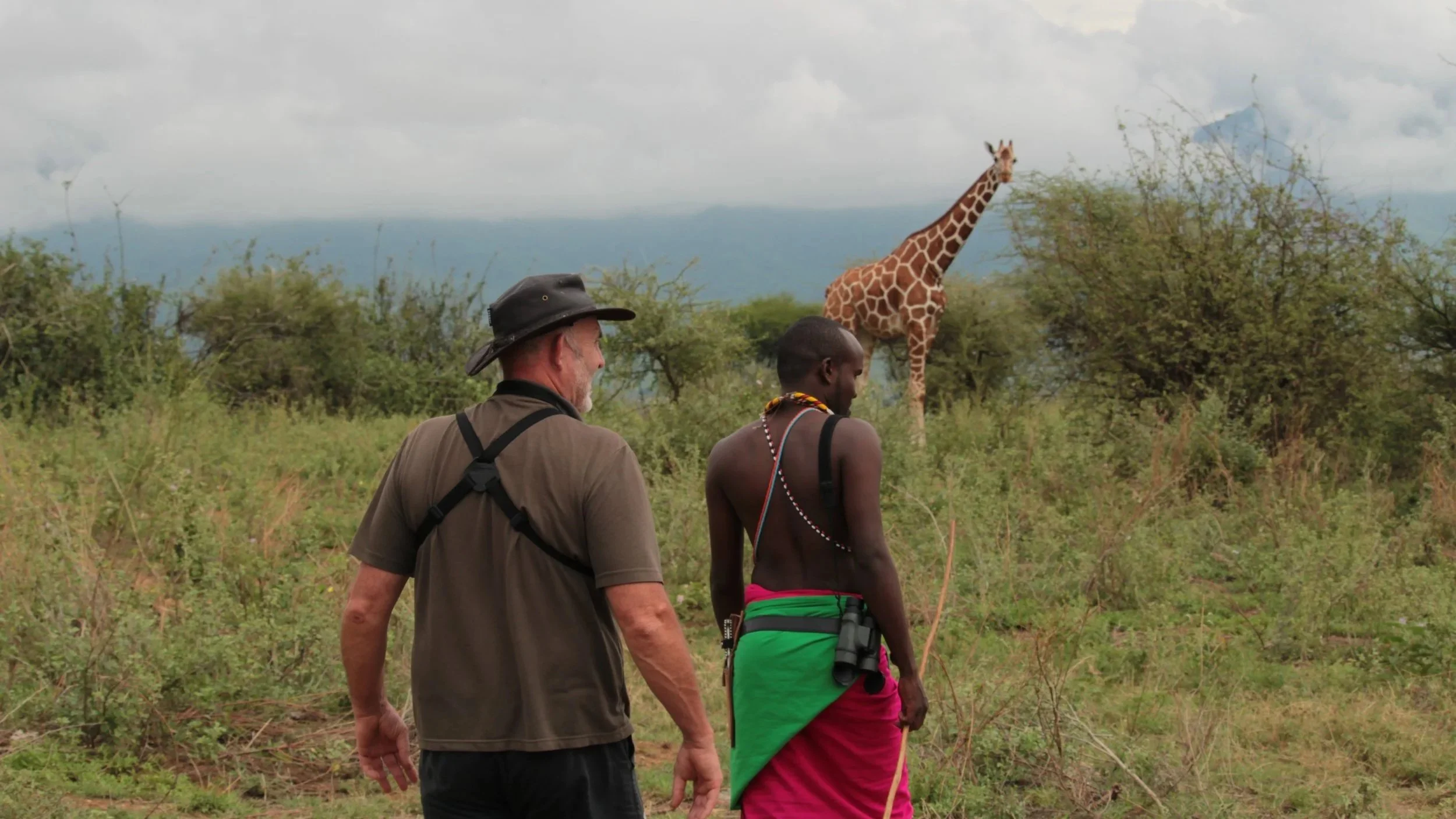
📸 Walking with Samburu Guide in Northern Kenya
South Africa: The Kruger Concessions
Kruger National Park itself does not permit private walking safaris in the same way as Zambia, but the private reserves that border and adjoin it — Sabi Sand, Timbavati, and Klaserie — are a different matter entirely. These private concessions operate under their own rules, and several of the lodges within them offer outstanding walking safari programmes.
Singita Boulders, Singita Ebony in the Sabi Sand are particularly well regarded for their walking offering, as is Singita Lebombo in a private concession in the Kruger. What you gain in the Kruger concessions is the full Big Five walking experience in a landscape that, for many clients, feels more approachable than Zambia — shorter flights and the option of excellent wine at the end of the day!
Walking in big five country in South Africa is an entirely serious proposition. The guides are highly trained, and the wildlife is just as wild as anywhere else in Africa. But the infrastructure — the camps, the food, the general standard of comfort — can be a little higher than you’ll find in the more remote Zambian bush. For clients who want the walking experience but aren’t quite ready to go entirely off-grid, this can be the perfect introduction.
Botswana: Walking the Okavango
Botswana is better known for its extraordinary mokoro trips and game drives through the Okavango Delta, but for those willing to look slightly beyond the traditional itinerary, some of the finest walking in Southern Africa is quietly available here. The Delta is not typical walking safari terrain — seasonally much of it is water — but the islands and floodplains of the permanent Delta offer something genuinely different: a landscape that shifts with the seasons, where game is concentrated on islands of high ground and the birding is world-class.
Delta Camp and Camp Okavango - Camp O to those who know it well - both sit in the heart of the permanent Delta and offer guided walks as part of their activity programme. Delta Camp in particular has a strong walking tradition — the surrounding island system and mopane woodland lend themselves beautifully to exploring on foot, with elephant, red lechwe and sitatunga among the wildlife you might encounter. Neither camp is a dedicated walking property in the Zambian sense, but the walking here has a character entirely its own: quieter, more intimate, with a landscape that feels like the edge of the world.
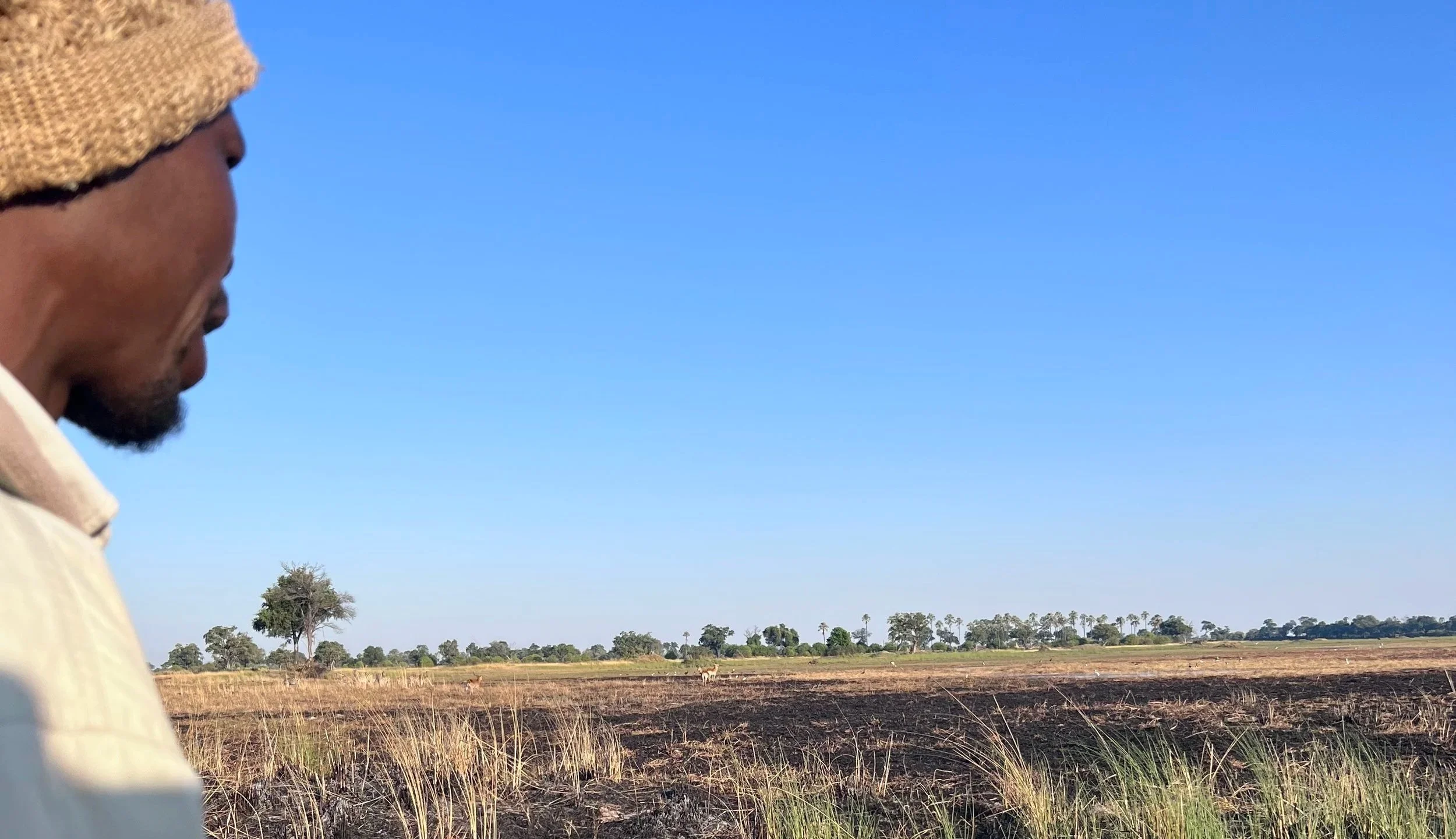
📸 Watching letchwe on a walk in the Okavango Delta
Tanzania: The Undiscovered Walking Safari
Tanzania’s name conjures the Serengeti, the Great Migration, Ngorongoro — and rightly so. But in the world of walking safaris, it has long been overshadowed by its neighbours, which is precisely what makes it interesting. Away from the famous northern circuit, Tanzania has some genuinely excellent walking on offer.
Ruaha National Park is the place to start. Remote, vast, and dramatically under-visited relative to its wildlife density, Ruaha is one of Africa’s great wilderness areas — and one that rewards the walking safari approach particularly well. Ikuka Camp, perched high on the Mtembere Escarpment with sweeping views across the park, offers guided walks through terrain that ranges from open miombo woodland to seasonal riverbeds thick with game. Elephant, lion, leopard, wild dog and greater kudu are all resident; the sense of space and solitude is remarkable.
In the Serengeti ecosystem, WAYO Africa — now part of the Wilderness portfolio — has been pioneering walking safaris for years and remains one of the most respected operators on the continent for this style of travel. Their walking camps sit in exclusive areas of the Serengeti, and their guides are exceptional: deeply knowledgeable, brilliantly engaging, and operating in a landscape that most visitors only ever see from a vehicle. Walking here, with the great plains stretching away in every direction, is an experience in a different league entirely from the classic game drive.
Tanzania suits clients who have a genuine appetite for the less-trodden path — those who want serious wildlife and serious wilderness without following the well-worn itinerary. It pairs beautifully with Zanzibar for a post-safari beach stay, and the flight connections via Dar es Salaam or Arusha are straightforward enough from the UK. It is, in short, a destination whose walking safari credentials are well overdue a wider audience.
Going Further: Multi-Day Walking Trails
For those who want to take the experience further still, multi-day walking trails offer something in a different league entirely. Rather than returning to a lodge at the end of each morning walk, you move through the wilderness continuously — sleeping in fly camps or bush camps and covering new ground each day. These represent walking safari at its most elemental. They’re not for everyone, but for the right person, they can be genuinely life-changing.
Remote Africa Safaris: The Chikoko Trails, Zambia
Remote Africa Safaris operate one of the most special walking experiences in Zambia. The Chikoko Trails in South Luangwa comprise two small bush camps — Chikoko Tree Camp and Big Lagoon — tucked into a remote concession on the west bank of the Luangwa River that is accessible only on foot. No vehicles, no roads, no other camps. You walk in, you walk between them, and you walk out. Everything else — your luggage, your meals, your bed — is taken care of by the camp team.
The trails follow well-worn elephant and hippo paths through Cathedral Mopane woodland, lagoons and open floodplains — the same routes, as it happens, that David Livingstone walked in the 1860s. The wildlife is exceptional: a buffalo herd that can swell to over a thousand animals in the dry season lives in the area between the camps, alongside elephant, giraffe, lion and leopard. The camps themselves are beautifully simple — built each season from natural materials, open to the bush, with proper beds, excellent food and just enough comfort to make the adventure sustainable. The recommended minimum is seven nights: three at the base camp Tafika followed by two or three at each Trails camp. Open from late May to October.
Karisia Walking Safaris: Camel-Supported Trails, Kenya
Karisia, a small family-run operation based on Tumaren Ranch in Northern Laikipia, offers something genuinely unlike anything else on this list. Their multi-day walking safaris are camel-supported — meaning that while you walk, a team of Laikipia Maasai guides and handlers move alongside you with camels carrying all the gear, the food and the camp equipment. You carry nothing heavier than a day pack. A new fly camp is set up in a different location each night, so every morning you wake up somewhere entirely new.
The landscape Karisia walks through is ancient and dramatic — geological formations along the Rift Valley edge, dry riverbeds, open savannah — and the wildlife of Northern Laikipia includes elephant, lion, leopard, cheetah, reticulated giraffe, Grevy’s zebra and, notably, wild dog. The cultural dimension is exceptional too: your guides are deeply knowledgeable about Samburu and Maasai traditions, and the connection to community and landscape is woven through the whole experience. Trips run from two nights up to six nights, and the whole thing is designed around you — your fitness, your interests, your pace. This is a year-round operation, which gives it a flexibility that few walking safari operators can match.
It’s worth noting that Karisia also welcomes adventurous families with children — the camels mean that younger legs can hop on and off when needed, which makes multi-day walking in the African bush genuinely accessible for older children who might otherwise struggle with the distances.
Simbavati Trails Camp: Timbavati Private Nature Reserve, South Africa
I stayed at Simbavati Trails Camp last year, and I’ve had clients there too — most recently last November, when they came home absolutely raving about it. It’s one of those camps that delivers on every promise. Set in a remote corner of the Timbavati Private Nature Reserve within the Greater Kruger ecosystem, it is entirely off-grid — no electricity, no Wi-Fi — and holds just eight guests in four Meru-style canvas tents. It feels genuinely intimate, in a way that the larger lodges simply can’t replicate.
The day revolves entirely around walking: a three-hour guided walk at dawn, then a long, languid middle section of the day spent around the plunge pool or under canvas while the bush heat peaks, followed by an afternoon walk and sundowners in the bush. The guides are exceptional — deeply knowledgeable, calm under pressure and brilliant at bringing the smaller details of the ecosystem to life. The food, cooked over open fire, is remarkable for a camp this remote. The whole thing has an “Out of Africa” atmosphere that feels earned rather than manufactured. Minimum stay is two nights, though three is strongly recommended. Open March to November; children must be 16 or over.
Plains Camp at Rhino Walking Safaris: Kruger National Park, South Africa
Plains Camp, operated by Rhino Walking Safaris, sits on an exclusive 12,000-hectare private concession within Kruger National Park — an area not previously open to the public — and is one of the very few places in Kruger where walking is the primary focus rather than an add-on. The camp is small and deliberately simple: four en-suite tented suites shaded by knobthorn trees, with a maximum of eight guests per walk accompanied by two armed guides. Morning walks depart at sunrise; afternoons combine a shorter walk with a game drive and sundowners in the bush.
For those who want to push the experience further, Plains Camp also offers Sleep-Out decks — elevated wooden platforms where guests walk out with their guide, cook dinner over an open fire, and spend the night under the stars with nothing between them and the sounds of the African night. It’s the only place in Kruger offering this, and it’s extraordinary. Plains Camp pairs beautifully with a stay at the adjacent Rhino Post Safari Lodge for clients who want to combine immersive walking with more traditional game drive safari.
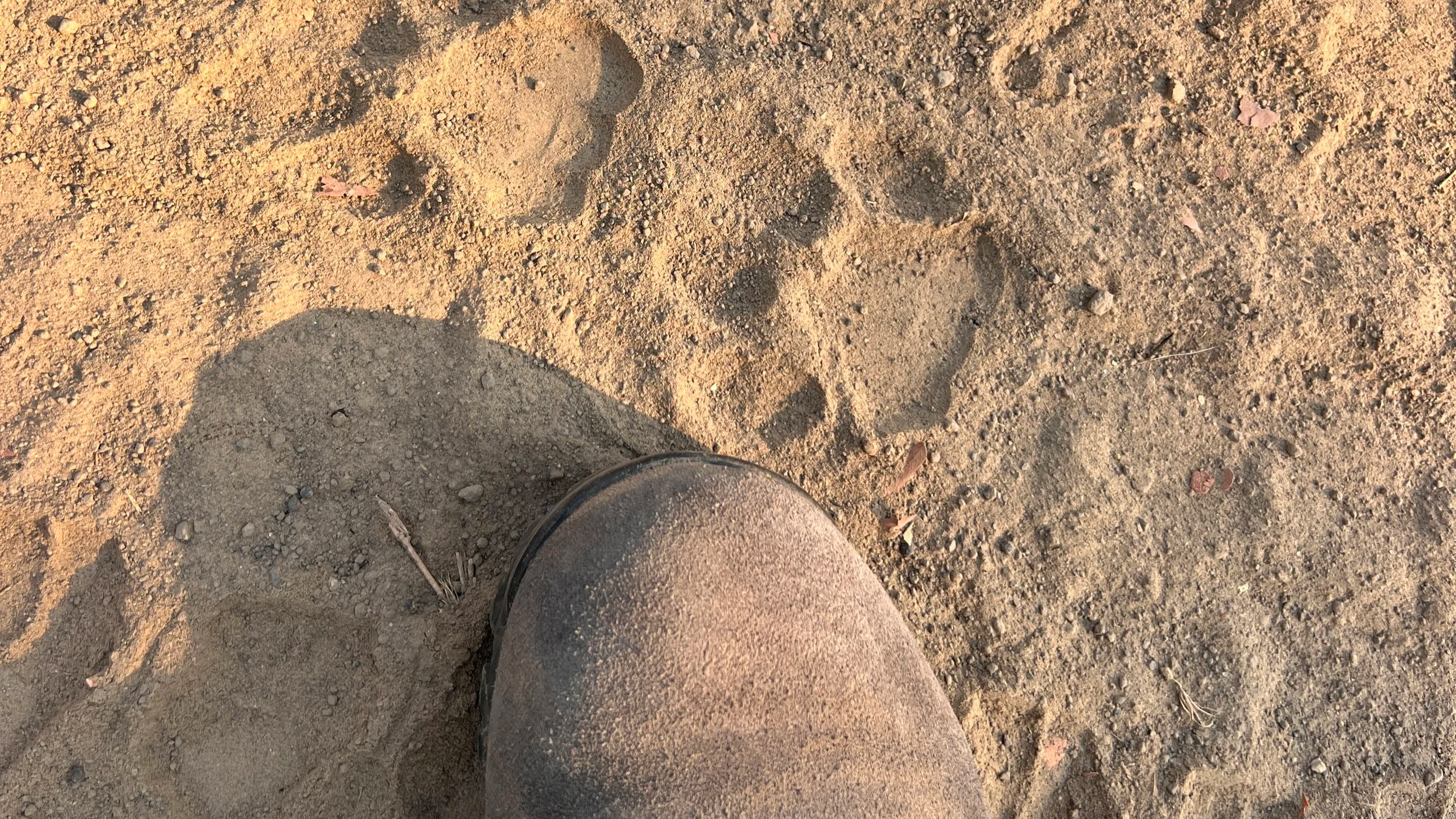
📸 Focussing on the details - a leopard print
Practical Tips for Your Walking Safari
Neutral colours are essential — khaki, olive, taupe, buff. Avoid white and bright colours entirely. Wear long, lightweight trousers and a long-sleeved shirt: thorn country makes bare skin inadvisable, and you’ll be grateful for the protection from the sun and insects. Good, broken-in boots are non-negotiable. Don’t turn up in new footwear; walking three hours on blistered feet in the African bush is a miserable business.
Silence is your guide’s greatest tool, and yours. The walks depart in the early morning, and the quiet of those first hours — the light coming up through the trees, the birds beginning to call, the air still cool — is part of the magic. Leave your phone on silent and resist the temptation to take photographs of everything. Some of the most extraordinary moments will be spoiled by fumbling for a camera. Be present. Look. Listen. Remember.
Walking Safari FAQs
How fit do I need to be for a walking safari?
You do not need to be particularly fit. Walking safaris are not hikes — the terrain is generally flat and the pace is deliberately slow, governed by what your guide is finding and reading in the bush rather than a distance target. Most walks last two to three hours. You do need to be comfortable walking in heat and agile enough to move quietly and quickly if required, but there is no minimum fitness level beyond that. If you have any health concerns, it’s always worth checking with your operator in advance.
What is the best time of year for a walking safari?
It depends on the destination. In Zambia, the walking season runs from June to October, when the dry season concentrates wildlife around the river and vegetation is lower. Kenya’s Laikipia is a year-round destination thanks to its altitude, which keeps temperatures manageable even in hotter months. South Africa’s Kruger concessions are generally open for walking from March to November. As a rule, the dry season is preferable across most destinations: clearer sightlines, easier underfoot conditions, and wildlife that is easier to track and observe.
Is a walking safari safe?
Walking in big game country carries an inherent risk — that is part of its nature, and part of what makes it so compelling. But the guides who lead these walks are among the most rigorously trained professionals in the safari industry. They will brief you thoroughly before you set out, and their ability to read the bush, the wildlife, and the situation around them is extraordinary. Incidents are genuinely rare. The key is choosing a reputable operator with properly qualified, experienced guides — which is exactly where a specialist can steer you right.
Do I need previous safari experience for a walking safari?
Not strictly, but it helps. Walking safaris tend to reward guests who already have a feel for the rhythms of the bush — the sounds, the sightlines, the wildlife behaviour. First-timers are often so focused on spotting the big names that the subtler magic of a walking safari can be harder to absorb. For most clients, I would recommend at least one game drive safari before a dedicated walking trip. Come back for it on your second visit, and it will blow you away.
Can children go on a walking safari?
Most walking safari operators set a minimum age of 16, and this is a hard rule at the majority of camps. The requirement exists for good reason: walking in big game country demands a level of composure, patience and the ability to follow a guide’s instructions quickly and without question. There are exceptions — Karisia Walking Safaris in Kenya, for instance, welcomes adventurous families with older children, and the camel support means younger legs can ride when needed, and some other camps take children 12 and above. If you are planning a family trip with teenagers, it is always worth discussing options with a specialist.
How does a walking safari differ from a standard game drive safari?
On a game drive, you are a spectator — moving through the landscape in a vehicle, observing wildlife from a distance. On a walking safari, you become part of the ecosystem. You move at the pace of the bush, not the road. Your guide reads tracks, explains plants, identifies insects, and interprets the landscape in real time. Wildlife encounters feel entirely different when you are at ground level — more immediate, more visceral, and far more memorable. The two experiences are complementary rather than competing, and the best itineraries often combine both.
Ready to Walk in the Wild?
A walking safari is not for everyone, and that’s part of what makes it special. If you’re ready to step out of the vehicle and into the landscape — to experience Africa at walking pace, on its own terms — I’d love to help you plan it properly. Get in touch to start the conversation about which destination and which operator is right for you.