
The Savvy Traveller's Guide to Africa's Green Season: November to April
Most people planning a safari think in familiar terms: Botswana in the dry season, the Masai Mara in August, South Africa in winter. And those are genuinely brilliant times to travel. But from November through to April, a different Africa reveals itself — one that rewards the traveller who is willing to look beyond the conventional calendar.
The green season is not a single event. It is a six-month arc that moves across the continent in waves, and the destinations that shine within it change month by month. What connects them is a set of qualities that peak season simply cannot offer: space, value, extraordinary photography, and wildlife behaviour that you will not see at any other time of year. Newborn animals. Breeding birds. Predators working harder and more visibly. Landscapes so lush they barely resemble the same places you see in dry-season photographs.
This is a guide to which destinations work best, and when — written with my usual honesty. Not every corner of Africa is at its best when it rains. But the ones that are, are really very good.
Understanding the Green Season Calendar
Africa’s rainy seasons are not uniform, and this matters enormously when planning a green season safari. Southern Africa — Botswana, Zambia, Zimbabwe, South Africa — experiences a single wet season running roughly from November to April, with the peak of the rains in January and February. East Africa operates on a different rhythm: the short rains (‘vuli’) fall in November and December, while the long rains (‘masika’) arrive from March through May. These are meaningfully different phenomena — the vuli tends to produce the dramatic-storm-then-sunshine pattern that makes East Africa so photogenic in November, while the masika can be persistent, grey and genuinely disruptive.
The practical implication: green season travel requires knowing not just that it rains, but where, when, and what that actually means on the ground. The destinations in this guide have been chosen because they genuinely deliver in the green season — not despite the rain, but in many cases because of it.
Kenya: November and the Short Rains
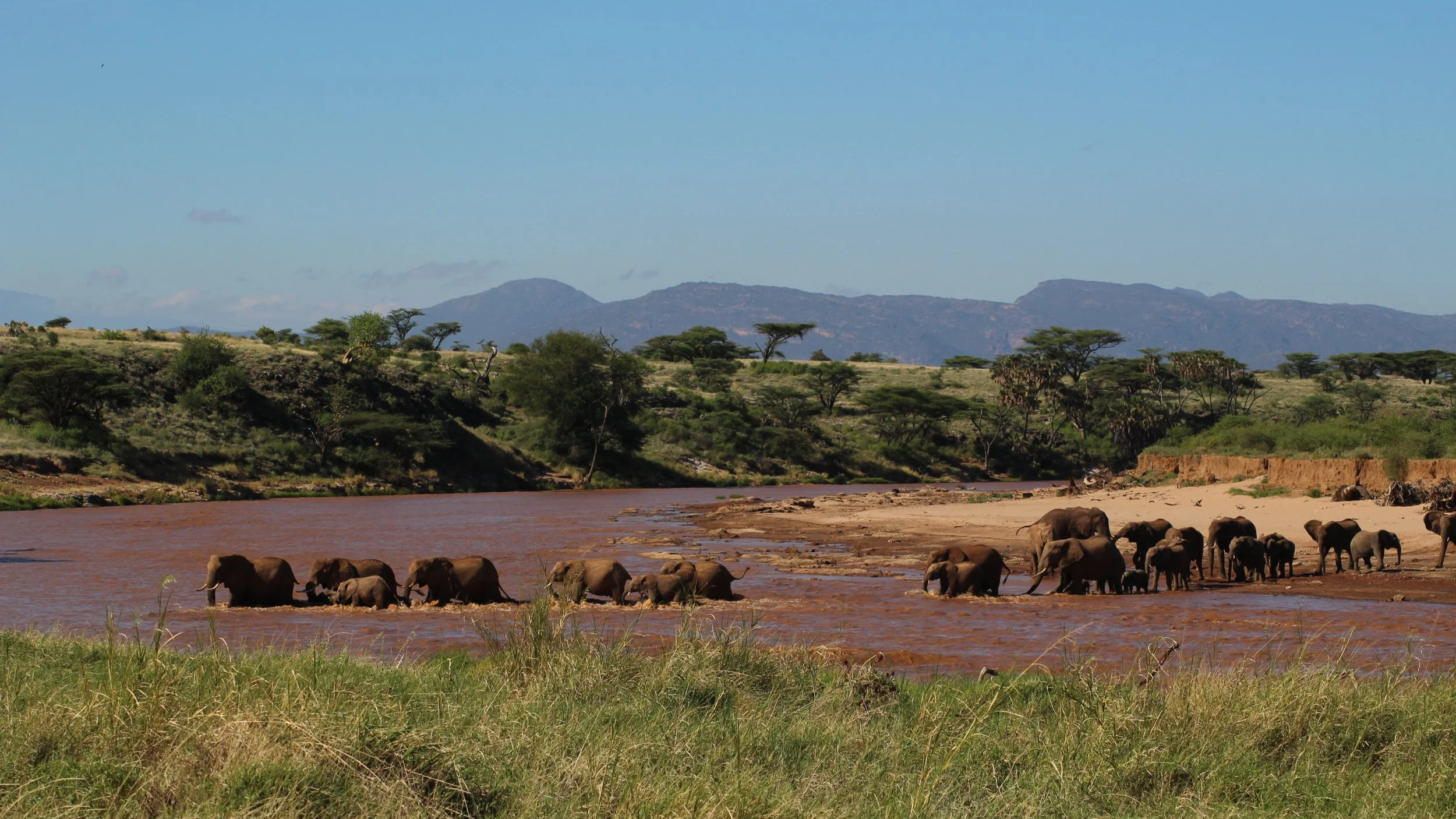
📸 November’s rains bring life to Kenya’s Samburu region
Kenya in November is one of East Africa’s most underrated experiences. The short rains arrive, the plains turn green almost overnight, and the country empties of visitors. The Masai Mara, which can feel genuinely crowded at the peak of the migration in August, becomes a different place entirely: the same landscape, the same guides, the same extraordinary game — but with a fraction of the vehicles.
The short rains in November are characteristically benign: afternoon showers that clear quickly and leave behind extraordinary light. For photographers, this is the Mara at its most beautiful. The grass is green, the skies are dramatic, and the resident lion prides, leopard and cheetah are all active. The Great Migration has moved on, but the resident game is often overlooked by those who only associate the Mara with the migration.
Laikipia and the northern conservancies — including Lewa, Ol Pejeta, Borana — are particularly good in November. The conservancies receive enough rainfall to green up without becoming inaccessible, and the combination of rhino, wild dog, elephant and the special northern species makes for a compelling itinerary. Rates across Kenya’s better camps drop noticeably in November, making it one of the best-value months in the East African calendar.
A note on timing: Kenya’s green season window is November and December — the short rains. The masika long rains that follow from March through May are a very different proposition: persistent, often overcast, and genuinely disruptive to game viewing. Kenya is best experienced in the green season during the vuli window; for March onwards, Southern Africa is the stronger choice.
Zambia: Drama, Boats and Almost Nobody Else
South Luangwa is one of Africa’s finest safari destinations at any time of year, but the green season reveals a side of it that the dry-season visitor never sees. From November onwards, the Luangwa River rises and the floodplains transform: the vegetation becomes vivid, the skies are theatrical, and the birdlife — with over 400 species in the park — reaches its annual peak as summer migrants arrive and breeding activity intensifies.
Game drives on the park’s all-weather road network remain productive throughout the green season, and the wildlife is abundant: large herds of impala, puku and waterbuck attract lion and leopard, while the park’s wild dog population is often exceptionally active from November through to March. Pre-denning, the packs are free-roaming and guides report that sightings can be very reliable — the rising waters concentrate the dogs’ hunting territory, making their movements more predictable rather than less.
One of the green season’s distinctive pleasures in South Luangwa is the boat safari. As the Luangwa River swells, boat trips become possible — offering a completely different perspective on the park, with hippos, crocodiles and elephant encountered from the water. It is an activity simply not available in the dry season, and one of the green season’s genuine exclusives.
A number of South Luangwa’s camps remain open year-round — among them Norman Carr Safaris’ Nsolo and Kakuli. These camps operate through the rains deliberately, and the emerald season experience they offer is intimate, atmospheric and available at some of the lowest rates in the park’s calendar. For a destination of this calibre, the value is exceptional.
Botswana: The Green Season Proposition
Botswana in the green season — November through to April — is a genuinely different experience from the dry-season Botswana that most people know, and it is worth being precise about what that difference is. The Okavango Delta’s famous annual flood, which creates the iconic water-world images of mokoros gliding through lily-covered channels, is a dry-season phenomenon: the Angolan floodwaters typically arrive at the panhandle around April and reach the main Delta in May, peaking in June and July. The green season visitor is not experiencing the flood. What they are experiencing is something different, and in its own way equally compelling.
From November, local rains transform the Botswana landscape almost overnight. The dry, dusty browns of the peak season give way to vivid greens; the pans fill with water; wildflowers carpet the floodplains. Elephant, buffalo, lion and leopard are all resident year-round, and with water now available across the landscape rather than concentrated at a few dry-season sources, animals are well-distributed and in superb condition. For photographers, the green season offers a Botswana that looks entirely different from the images most people associate with the country — rich colours, dramatic skies, and the extraordinary quality of light that follows an afternoon storm.
The green season Okavango is also a birding destination of the highest order. Breeding colonies of herons, storks and egrets create spectacular spectacle, summer migrants swell the species list, and the diversity across the whole Delta system is at its annual peak. For serious birders, this is arguably the best time to visit.
Chobe in the green season offers the same extraordinary elephant numbers as any other time of year — Chobe’s elephants are resident year-round and the riverfront remains productive throughout. With a fraction of the peak-season vehicles and rates that reflect the quieter calendar, Chobe from November to April represents some of the best value in Botswana safari travel.
South Africa: Kruger and the Private Reserves
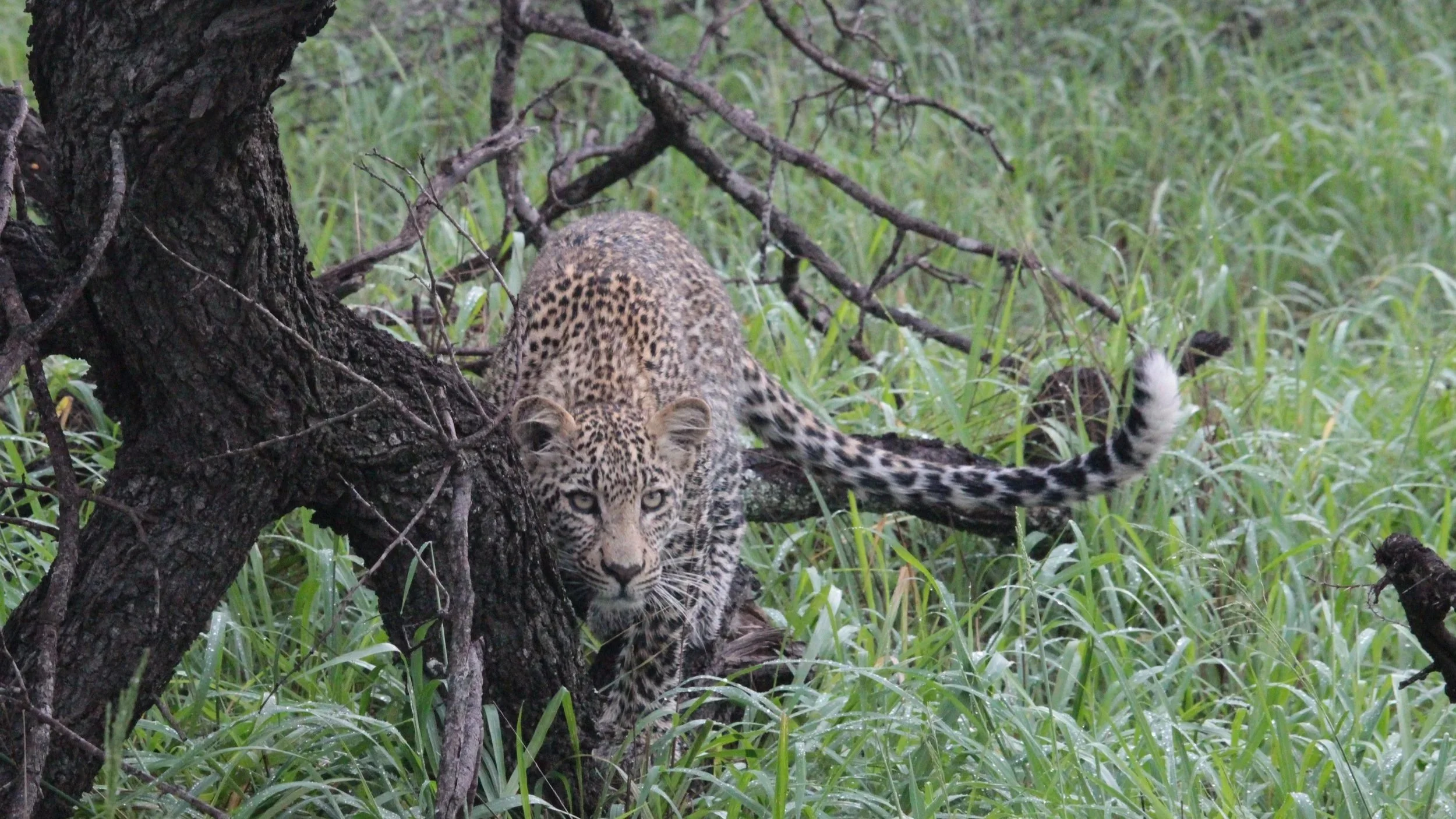
📸 A leopard in South Africa’s Sabi Sands Reserve
Kruger and the private reserves that border it enter their green season from around October, and it runs through to March. The bush fills out, the landscape becomes genuinely beautiful, and the camps are quiet. This is the season when South Africa’s private reserves — Sabi Sand, Timbavati, Klaserie — offer their most compelling value: the quality of guiding, the lodges and the wildlife remain exactly the same as at peak season, while rates at some properties drop by 30–40%.
Leopard, lion and wild dog are all present and active, and the summer breeding season means there are young animals across many of the resident herds — impala lambs from October, lion cubs, elephant calves. The bush is denser, which does make spotting slightly more challenging, but it also creates a different kind of encounter: more immersive, more atmospheric. For photographers, the combination of green landscape, dramatic afternoon light and lower rates makes January and February in the South African bush one of the continent’s most rewarding green season propositions.
South Africa’s green season is also its best for birding. Summer migrants are present from October through to March, raptors are breeding, and the diversity of species in and around the private reserves is at its annual peak. For the birder who also wants exceptional big game, the green season Sabi Sand or Timbavati is hard to beat.
Uganda and Rwanda: Gorilla Trekking Year-Round
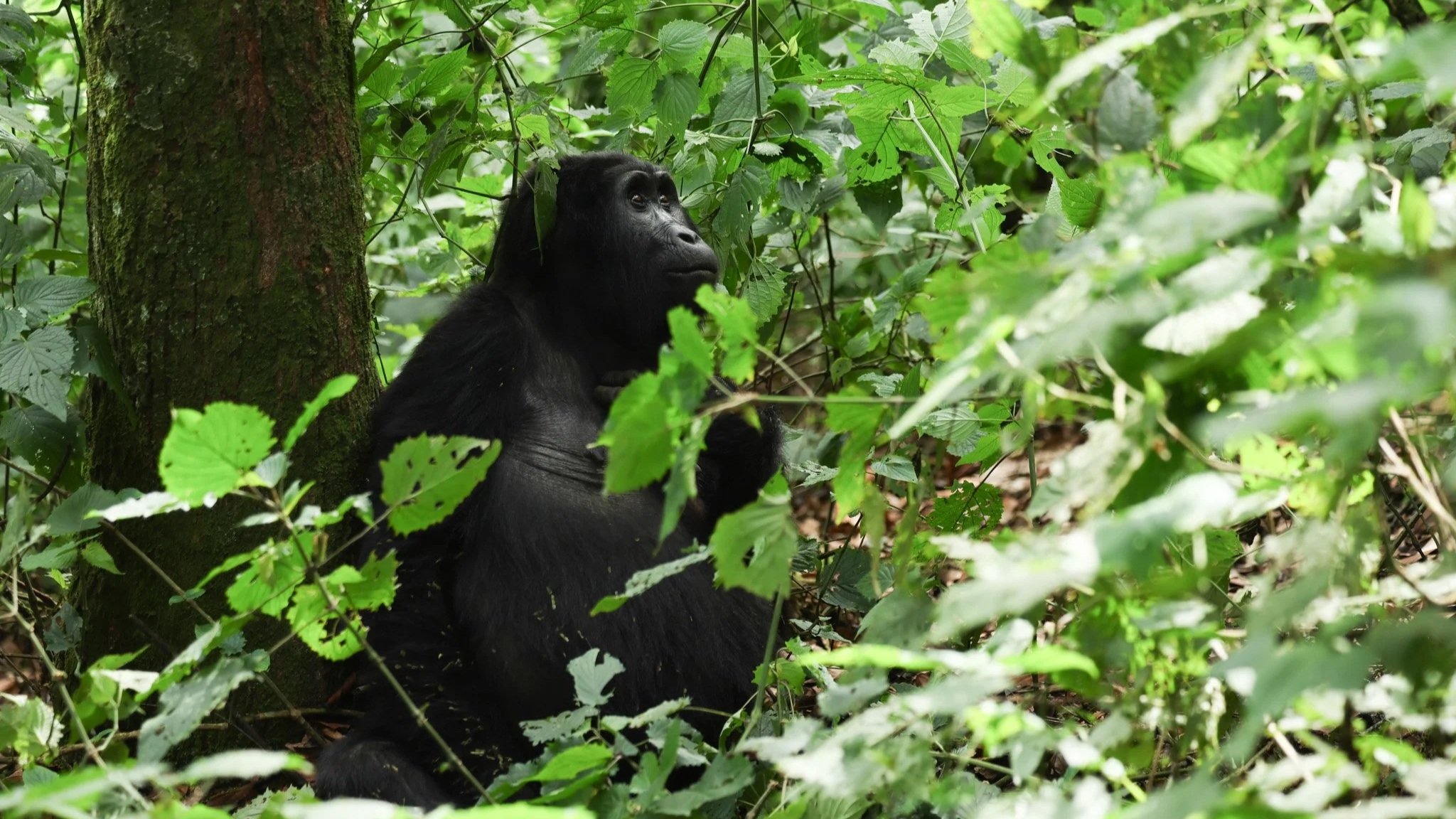
📸 A gorilla in Uganda’s Bwindi Forest
Mountain gorilla trekking operates on different terms from savannah wildlife tourism. The gorillas are present year-round, and the experience of spending an hour with a habituated family group in Uganda’s Bwindi Impenetrable Forest is as profound in any green season month as in any other. The montane forest environment of Bwindi has its own relationship with rainfall — it is a rainforest, and moisture is part of its atmosphere rather than a disruption to it. While much of East Africa is best avoided in the masika months of March to May, gorilla trekking remains entirely viable throughout.
What changes in the green season is permit availability and price. Between the peak booking periods, permits — always limited — are more readily available, and some of the lodges around Bwindi and Rwanda’s Volcanoes National Park offer their best rates of the year. The forest in the wetter months is vivid and lush, the gorillas are active and feeding well, and the experience has an intimacy that the busier dry-season periods struggle to match.
For anyone combining gorilla trekking with a broader Southern African itinerary, the green season window offers a genuine opportunity: a richer forest experience at a lower price, pairing beautifully with Zambia, South Africa or Botswana in the same trip.
Namibia: A Different Kind of Safari Entirely
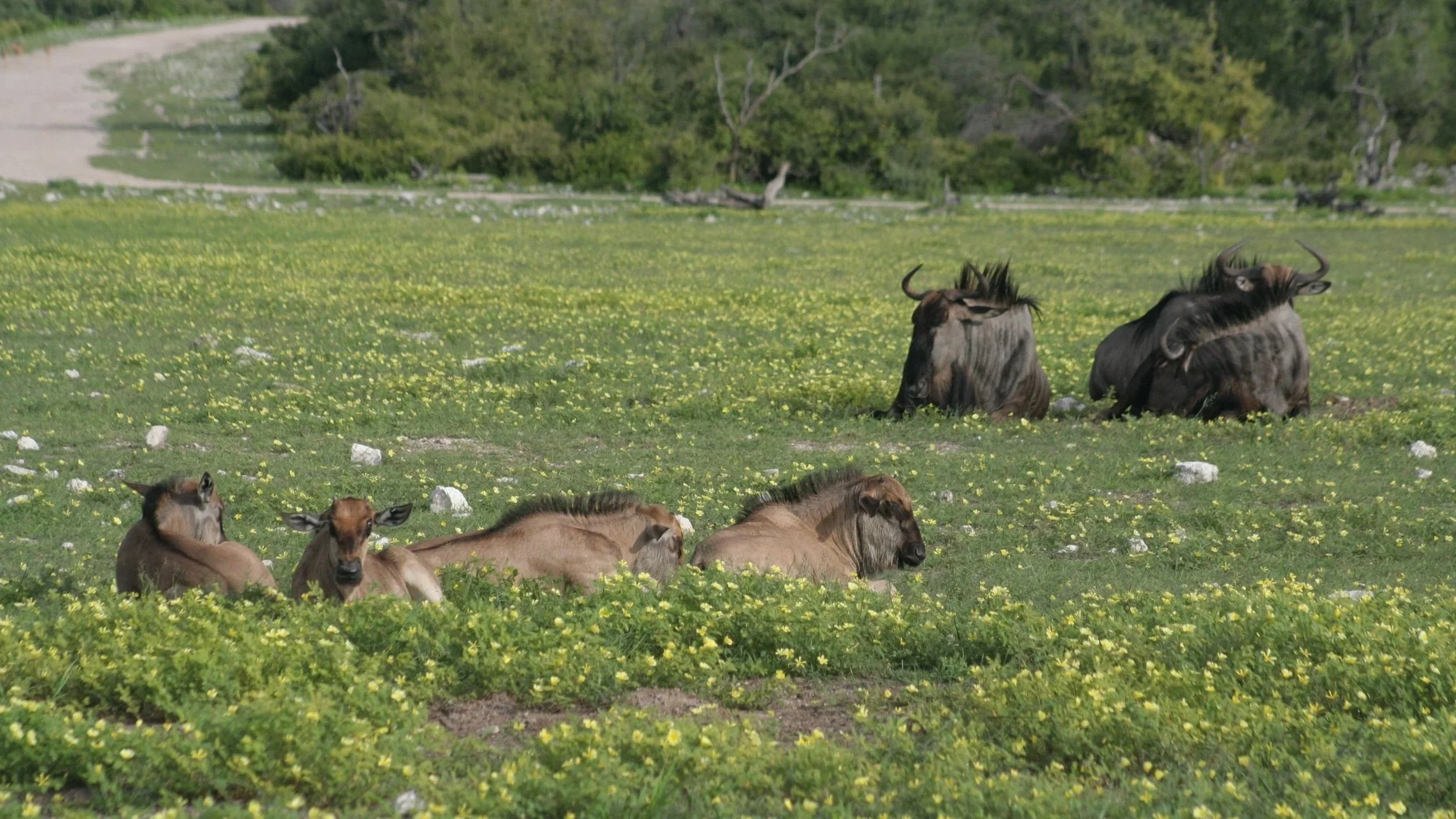
📸 Babies & blooms in Namibia’s Etosha National Park
If the green season isn’t your thing — or you want to contrast a lush Southern Africa safari with something entirely different — Namibia offers a compelling counterpoint. While much of the continent is experiencing its summer rains, Namibia’s desert landscapes are largely unaffected. Damaraland and the Skeleton Coast are spectacular in any month, and the desert-adapted wildlife — elephant, black rhino, oryx, lion — is present year-round.
Etosha remains productive throughout the green season. Water is available across the landscape rather than concentrated at the dry-season waterholes, and while the classic dry-season drama of hundreds of animals converging on a single pan is absent, the park is green, atmospheric and very quiet. Combined with Damaraland’s timeless rocky wilderness and the eerie grandeur of the Skeleton Coast, a Namibia itinerary in the November–April window is both uncrowded and competitively priced.
Namibia is the one destination in this guide where the green season is almost beside the point. Come for the desert landscapes, the remarkable desert-adapted wildlife and the extraordinary sense of space. The quieter calendar and lower rates are simply a bonus.
The Case for Travelling Out of Season
The green season is not a compromise. It is a different kind of safari — one that prioritises space, value, photography and the kind of wildlife encounters that only happen when the crowds have gone home. The animals are not lesser in the rains. The guides are not less skilled. The lodges are not less beautiful. What is different is that you will often have them more to yourself, at a price that reflects the quieter calendar rather than peak demand.
The key is knowing which destinations to choose and when — and being honest about the ones that don’t work. The green season arc from November to April spans an enormous range of experiences: from the photogenic short rains of the Masai Mara to the flooded Luangwa River, from the vivid green Okavango to the timeless desert landscapes of Namibia. Getting it right requires the kind of detailed, destination-specific knowledge that turns a good safari into an exceptional one.