
The Mara vs. Serengeti: Which to Choose for your Safari and Why
When planning an East African safari, one question dominates: should you choose Kenya's Masai Mara or Tanzania's Serengeti? Both rank among Africa's greatest wildlife destinations, yet they offer distinctly different experiences. As someone who's spent nearly three decades exploring Africa's finest safari areas, I'm often asked this very question by clients planning their dream safari.
The truth is, there's no single right answer—but there is likely a perfect choice for your safari. Let me walk you through what sets these two legendary ecosystems apart.
One Ecosystem, Two Countries
First, an important clarification: the Masai Mara and Serengeti form part of the same vast ecosystem. The Mara River flows through both, and wildlife moves freely across the Kenya-Tanzania border. The Great Migration—that famous spectacle of wildebeest and zebra—traverses both areas seasonally. This shared landscape means you'll find exceptional game viewing in either destination.
So why choose one over the other?
The Masai Mara: Concentrated Wildlife and Easier Access
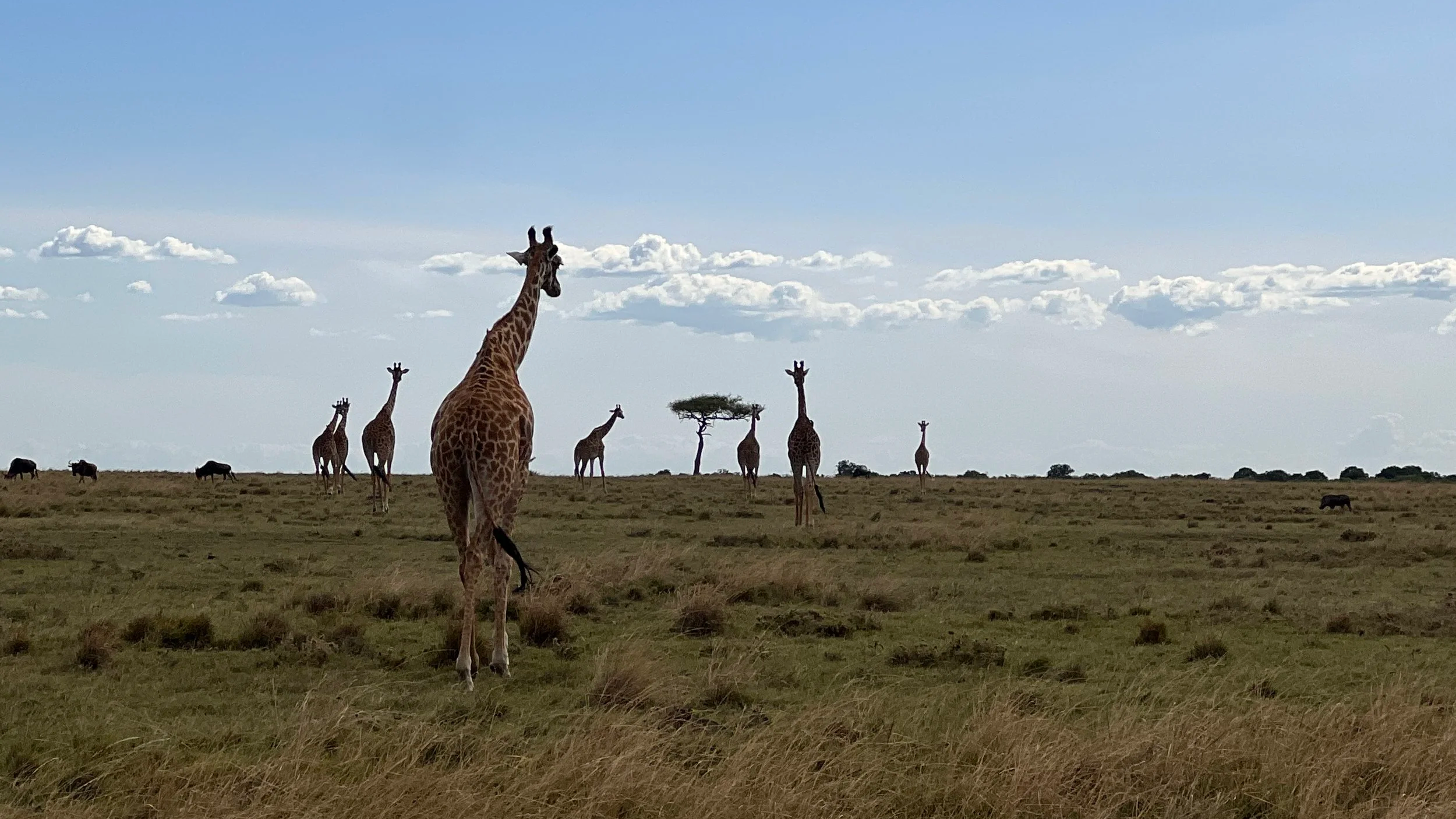
📸 : A journey of giraffe traverse the Mara’s open plains
Kenya's Masai Mara covers roughly 1,500 square kilometres—relatively compact compared to the Serengeti's sprawling 30,000 square kilometres. This concentrated area means wildlife densities can feel remarkably high, particularly during peak seasons.
The migration in the Mara occurs roughly from July through October, when massive herds cross from Tanzania. The dramatic river crossings—wildebeest plunging into crocodile-infested waters—typically happen in the Mara between July and September, though nature never guarantees precise timing.
The real advantage for UK travellers? Logistics. Direct flights from London to Nairobi run daily with British Airways and Kenya Airways, taking around 8-9 hours overnight. From Nairobi, you're just a short light aircraft flight to the Mara, or a scenic 5-6 hour drive if you prefer. You can realistically arrive in Nairobi one morning and be on safari that same afternoon.
Kenya also offers tremendous flexibility with safari camps and lodges. The Mara's conservancies—private wildlife areas bordering the main reserve—provide exclusive game viewing with far fewer vehicles. Properties like Naboisho Camp or Mara Nyika offer luxurious, intimate experiences where you might be the only vehicle at a sighting.
The Serengeti: Space, Solitude, and Year-Round Migration
Tanzania's Serengeti delivers something different: a sense of wilderness scale that's increasingly rare. The sheer vastness means you can drive for hours across golden plains dotted with acacia trees, watching weather systems roll across an endless horizon.
The migration here is accessible year-round, just in different areas. From December to March, herds gather on the southern Serengeti plains for calving season—an extraordinary time when thousands of wildebeest give birth daily, attracting predators in huge numbers. From April through June, the herds move north and west. The northern Serengeti, particularly around the Mara River, sees crossings from June onwards.
The Serengeti's size allows for more varied safari experiences. You might spend days in the central Seronera area for resident wildlife, then move to the remote western corridor or northern reaches for a completely different atmosphere. Each zone has its own character and wildlife concentrations.
However, reaching the Serengeti requires more travel time. There are no direct flights from the UK to Tanzania's safari hubs. You'll typically connect through Nairobi, Addis Ababa, or European cities to reach Kilimanjaro International Airport or Dar es Salaam, then take a scheduled or charter flight into the Serengeti. Budget at least a full day for travel.
Predator Viewing and Big Cat Action
Both destinations excel for big cat sightings, but with different emphases. The Mara's higher tourist concentration—particularly in the main reserve—means sightings get shared via radio quickly. You're almost guaranteed excellent lion, leopard, and cheetah encounters, though you may share them with other vehicles unless you're in a private conservancy.
The Serengeti's kopjes (rocky outcrops) are legendary for leopard and lion sightings, while the central Seronera area hosts exceptional year-round predator viewing. Lions are abundant throughout, and the vastness means dramatic hunts often unfold with fewer spectators. Cheetah thrive on the open plains and are frequently found in the Namiri Plains area, close to Asilia’s gorgeous camp of the same name.
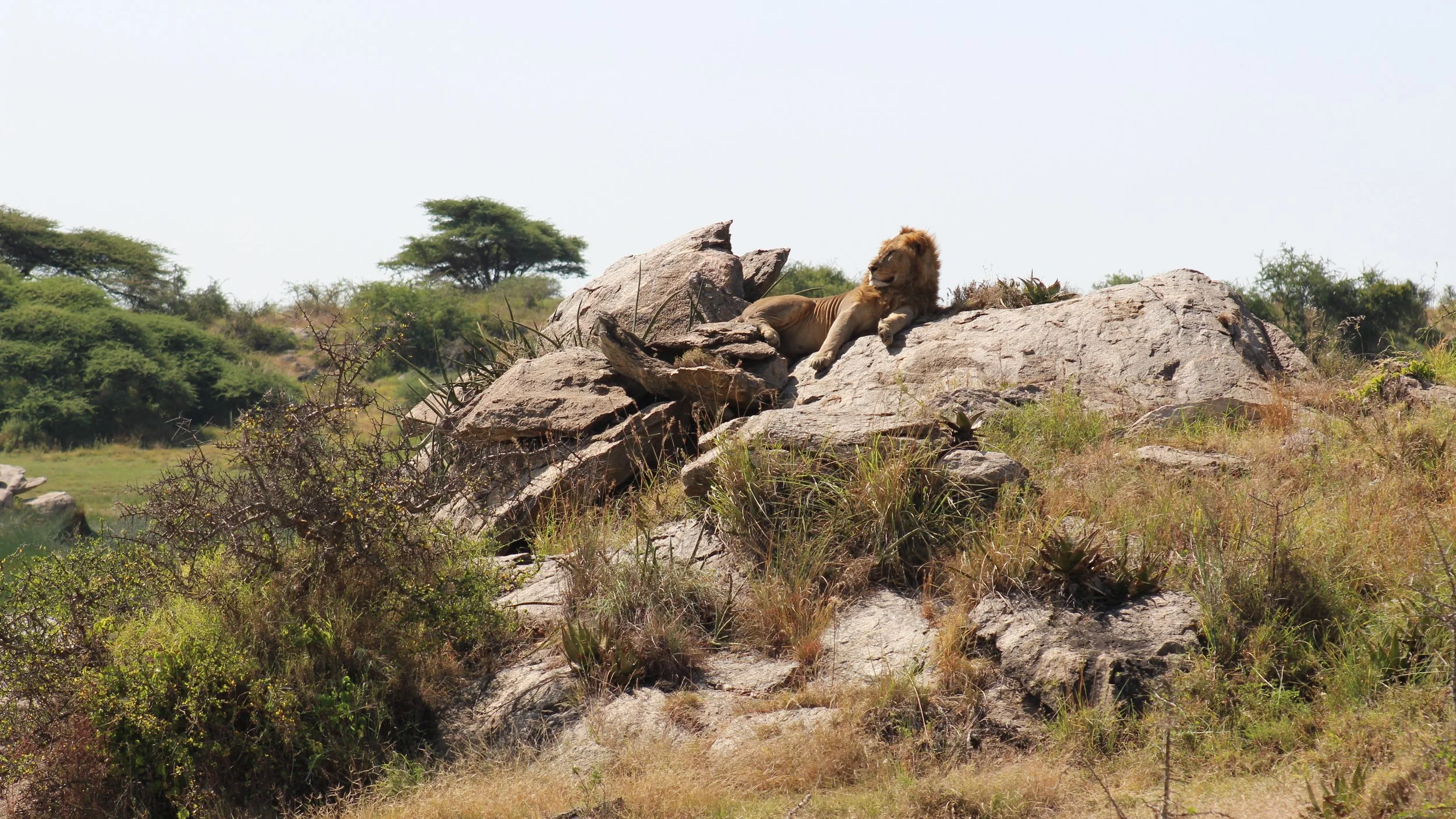
📸 : Lions are often found on the Serengeti’s Kopjes
Safari Costs and Value
Generally speaking, Kenya safari packages tend to be slightly less expensive than Tanzania equivalents, though luxury properties in both countries command premium rates. The Mara's easier access from the UK can also mean shorter, more cost-effective itineraries if you're working with limited holiday time.
Tanzania usually requires a longer commitment—ideally 7-10 days minimum—to justify the additional travel time and truly appreciate the Serengeti's scale, especially if you’re seeing it as part of a Northern Circuit Safari.
Cultural Experiences
Both destinations offer opportunities to visit Maasai communities, though approaches vary. Kenya has more established cultural tourism programmes, while Tanzania's Maasai experiences can feel more integrated into safari itineraries. The quality depends entirely on your chosen safari operator and their local partnerships.
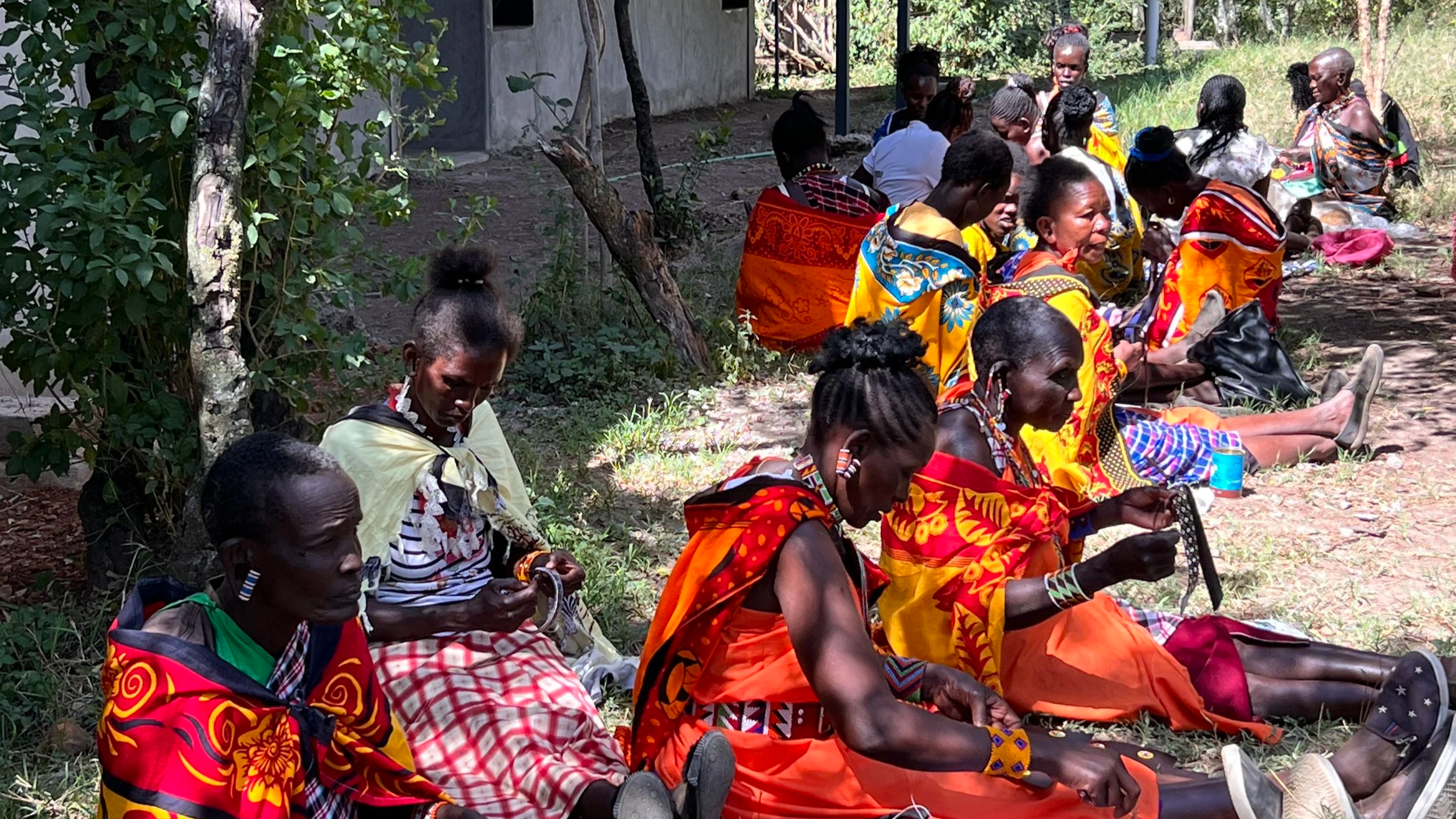
📸 : Masai cultural experiences include visiting community crafting initiatives
Making Your Choice
Choose the Masai Mara if:
You want the easiest access from the UK with direct flights to Nairobi
You're planning a shorter safari (4-6 days)
You want guaranteed river crossing opportunities between July and September
Private conservancy exclusivity appeals to you
You're combining your safari with beach time on the Kenyan coast
Choose the Serengeti if:
You want that profound sense of wilderness space
You're planning a longer safari (7+ days) and can explore multiple areas
The calving season (January-March) interests you
You want to combine Tanzania's other attractions like Ngorongoro Crater or Zanzibar
You prefer fewer tourists and more remote safari experiences
Or choose both. Many of my clients combine the two on a single East Africa safari, typically starting in Tanzania's Serengeti before moving north into Kenya's Mara. This gives you the best of both worlds, though it requires more time and budget.
The Bottom Line
There's no wrong choice between these two magnificent destinations. The Masai Mara offers easier logistics for UK travellers, concentrated wildlife, and exclusive conservancy experiences. The Serengeti provides unmatched wilderness scale, year-round migration access across different zones, and that intangible sense of untouched Africa.
Both will deliver extraordinary wildlife encounters, spectacular landscapes, and memories that last a lifetime. The decision ultimately comes down to your travel style, available time, and what matters most in your perfect safari.