
Madagascar: Africa’s Other World - Luxury Travel Guide
I have loved Africa for nearly three decades. I have watched lion cubs trot across the Maasai Mara, tracked gorillas in Bwindi, driven myself the length of the continent — from Henley-on-Thames to Cape Town, through seventeen countries over six months. Africa, in all its forms, has never stopped astonishing me. And yet when I stepped off the plane in Madagascar, I felt something I hadn’t quite felt before. The faint, slightly giddy realisation that I was somewhere that played by entirely different rules.
Madagascar broke away from the African mainland roughly 88 million years ago. In the time since, it has been doing its own thing — and the results are extraordinary. Around 90% of the species found here exist nowhere else on earth. It is the same continent, the same ocean, the same general latitude. And yet it is a completely other world.
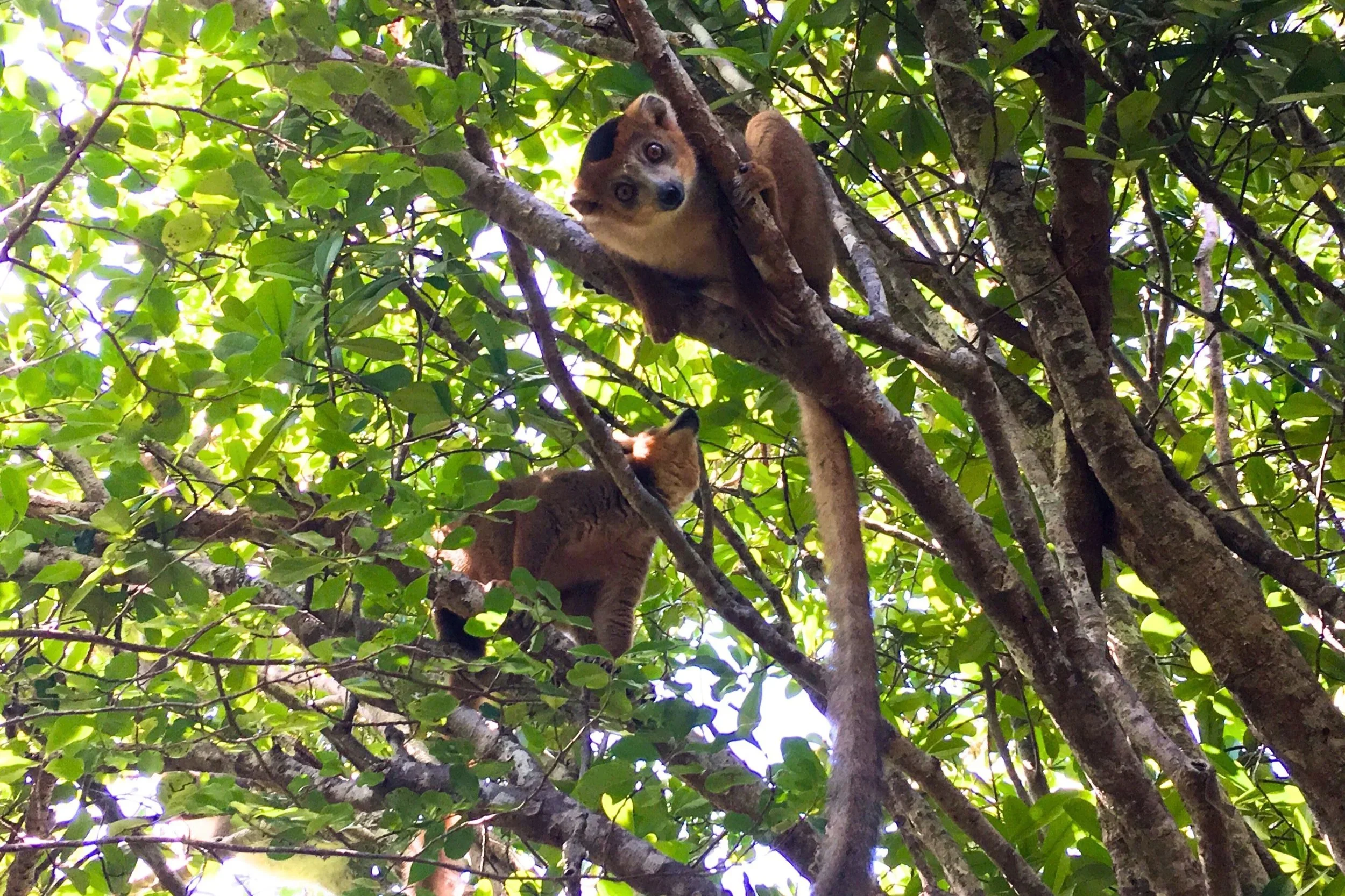
📸 Crowned Lemurs on Nosy Ankao
What Makes Madagascar Unique as a Wildlife Destination
The lemurs are the rock stars, obviously. These wide-eyed primates — found only in Madagascar — range from the mouse lemur, the world’s smallest primate, to the indri, whose haunting, almost whale-like call echoes through the eastern rainforests at dawn. On my visit I encountered Crowned Lemurs, the delightfully named Sportive Lemur and Sifaka, some of Madagascar’s largest lemurs, completely unbothered by our presence, casually munching leaves in the trees directly above our heads.
Beyond the lemurs, the island hosts over 300 species of chameleon, including some so small they could balance on your fingertip, and others that grow to half a metre in length. The birdlife is exceptional — over 300 species, the vast majority endemic. The flora is extraordinary too: baobabs, spiny forests of cactus-like euphorbia, orchids, and plants that look as though they belong on another planet entirely. Madagascar is, without question, one of the most biodiverse places on earth.
Best Places to Visit in Madagascar: My Personal Itinerary
I travelled in June, which is an excellent time — dry season, manageable temperatures, and wildlife highly active. Here is what we covered, and what I’d recommend you don’t miss.
Antananarivo. Most itineraries begin and end in Madagascar's capital — Tana, as everyone calls it — and it rewards a little more than the usual one-night layover treatment. Perched across a series of dramatic hills in the central highlands, the city has a distinctly un-African feel: steep cobbled alleyways, crumbling French colonial facades, and a skyline punctuated by the turrets of the Rova, the ancient royal palace complex that watches over everything from the highest ridge. The lower town's covered market, the Zoma, is a riot of colour and noise, and the stalls selling vanilla, spices, and zebu horn crafts make for excellent pre-departure souvenir shopping. For dinner, the restaurant scene is considerably better than you'd expect — French-influenced cooking done with real care. I'd allow at least one full day here at the start of a trip: it sets the tone for Madagascar beautifully, and that hill-top view of the city at dusk, with the terraced rice paddies shimmering in the valley below, is quietly unforgettable.
The Avenue des Baobabs, near Morondava. This is the image most people associate with Madagascar — ancient baobab trees, some over a thousand years old, lining a red dust track in the golden western light. I’d seen the photographs a hundred times. The reality is better. In spite of its popularity it was quiet when we visited, and standing among those extraordinary trees — enormous, bottle-shaped, impossibly old — is very cool. But the baobabs were only part of the story that day. We also took a canoe trip through the mangroves to visit a local community participating in a WWF-supported mangrove restoration project. I fell in en route. The birdlife did not seem bothered. Once we’d squelched our way to shore and been issued with seedlings, we spent a happy hour poking young mangroves into the deep, crab-infested mud — the tiny, furious crabs with disproportionately large pincers doing their best to make the exercise more interesting. It was genuinely wonderful and hilarious in equal measure: hands in the mud, a real contribution to a critically important ecosystem, and an insight into the delicate balance between mangrove conservation and the local subsistence fishing industry that depends on it. Afterwards, the village laid on lunch and treated us to dancing — spontaneous, joyful, completely unexpected. One of those travel moments that you simply cannot engineer.
The Tsingy de Bemaraha. Nothing prepares you for the Tsingy. This UNESCO World Heritage Site — the first in Madagascar, designated in 1990 — is a landscape of razor-sharp limestone pinnacles, formed over millennia by erosion into spikes and deep gullies. We spent a full day in climbing harnesses on a via ferrata, clambering between the pinnacles, peering into the chasms below. It was breathtaking in every sense of the word. I am not particularly young, not particularly agile, and I loved every vertiginous minute of it. A visit to the Tsingy should be non-negotiable on any Madagascar itinerary.
The Manambolo River. The canoe trip on the Manambolo River, near Bekopaka, is one of the most unexpectedly moving experiences of the whole trip. Drifting along the river, the canyon walls rise on either side — and built into the cliff face are ancestral tombs of the Sakalava people. The dead are interred in the rock above the river, watching over the water below. Our guide explained the complex relationship between the living and the ancestors in Malagasy culture. It is the kind of moment that reminds you that travel is about more than wildlife and landscapes.
Nosy Be. After the intensity of the Tsingy and the western wilderness, Nosy Be offers a completely different gear. This island off the northwest coast is Madagascar’s most established beach destination — French colonial architecture, a bustling market in the fabulously named Hell-Ville, and some of the clearest water in the Indian Ocean. The marine life is the draw: whale sharks, manta rays, dolphins, and turtles are all possible.
Miavana by Time + Tide. And then there is Miavana. Fourteen incredibly chic villas strung along a pristine beach on Nosy Ankao — a private island off Madagascar’s northeastern coast, accessible only by helicopter from Diego Suarez. Operated by Time + Tide, this is one of the most extraordinary properties I have visited anywhere. The villas step directly onto powder-white sand, lemurs inhabit the island itself and the surrounding islands and ocean are perfect for a huge range of activities and exploration. It is, by any measure, among the very finest private island experiences in the Indian Ocean. Should I ever win big on the lottery I’m heading back here and staying till the money runs out.
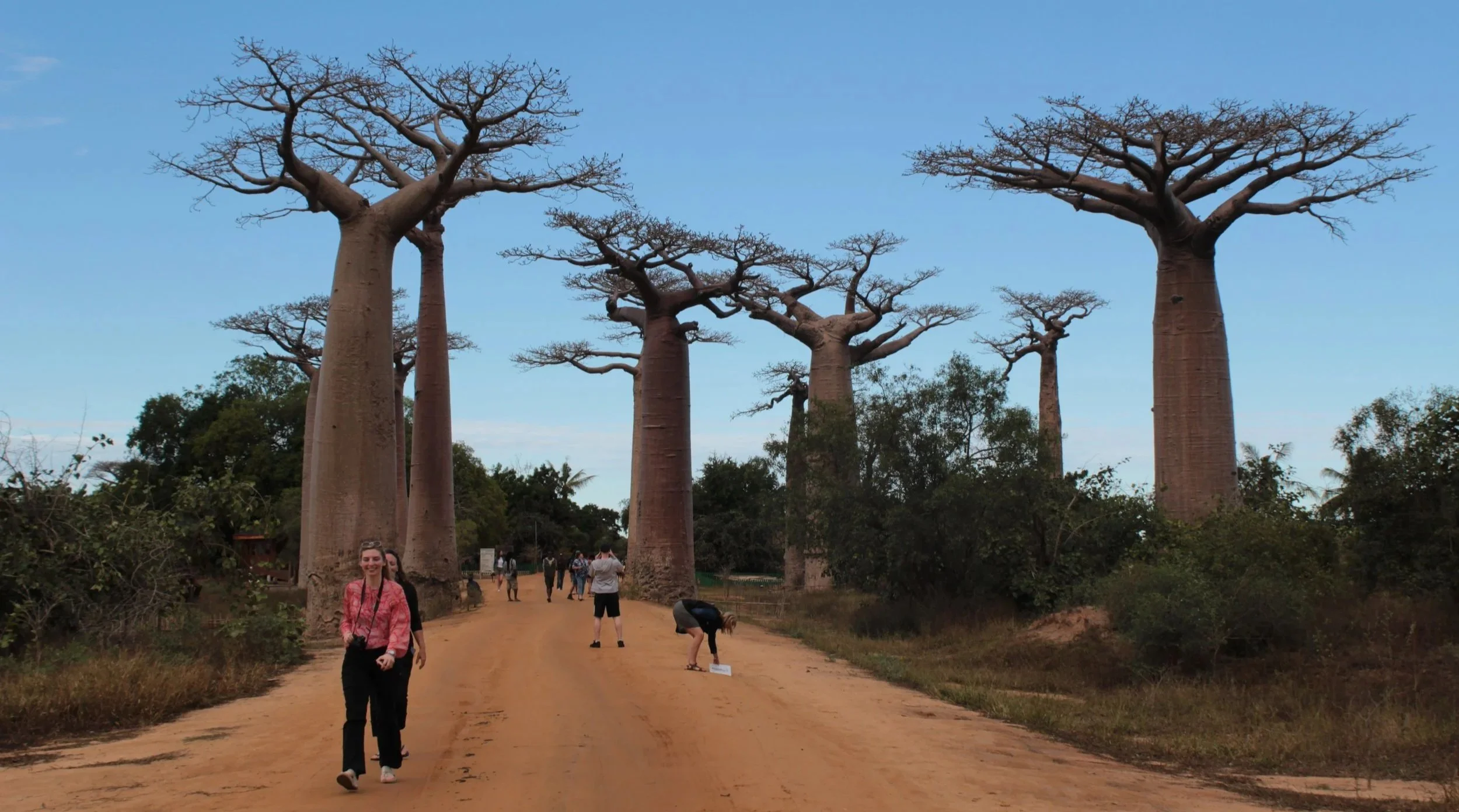
📸 The iconic Baobab Alley
Other Top Destinations in Madagascar Worth Knowing
My own trip covered the west and northwest. But Madagascar is the fourth largest island on earth, and there is much more to it.
Andasibe-Mantadia National Park. The most visited park in Madagascar, and for good reason — three hours east of Antananarivo and the single best place to encounter the indri. Night walks reveal chameleons, leaf-tailed geckos, and an extraordinary variety of frogs. Close to 100 species of orchid flower here between September and January.
Ranomafana National Park. Set in misty hill rainforest in the southeast and a UNESCO World Heritage Site. The best place on earth to find the golden bamboo lemur, a species only discovered in 1986. Natural hot springs in the adjacent town are a welcome end to a day on the trails.
Isalo National Park. In the southwest, 150 million years of erosion have carved sandstone into canyons, gorges, and hidden turquoise pools fringed with palms. Ring-tailed lemurs, Verreaux’s sifaka, and the rare Benson’s rock thrush are found here. It draws comparisons to the American southwest: otherworldly, beautiful, and completely unexpected.
Île Sainte-Marie (Nosy Boraha). A slender, beautiful island off the northeastern coast. Between July and September, humpback whales gather here to breed and calve — one of the great Indian Ocean wildlife experiences.
Masoala Peninsula. For the genuinely adventurous: Madagascar’s largest remaining coastal rainforest, with some of the best snorkelling and diving in the country. Getting here is not straightforward — which is, of course, precisely the point.
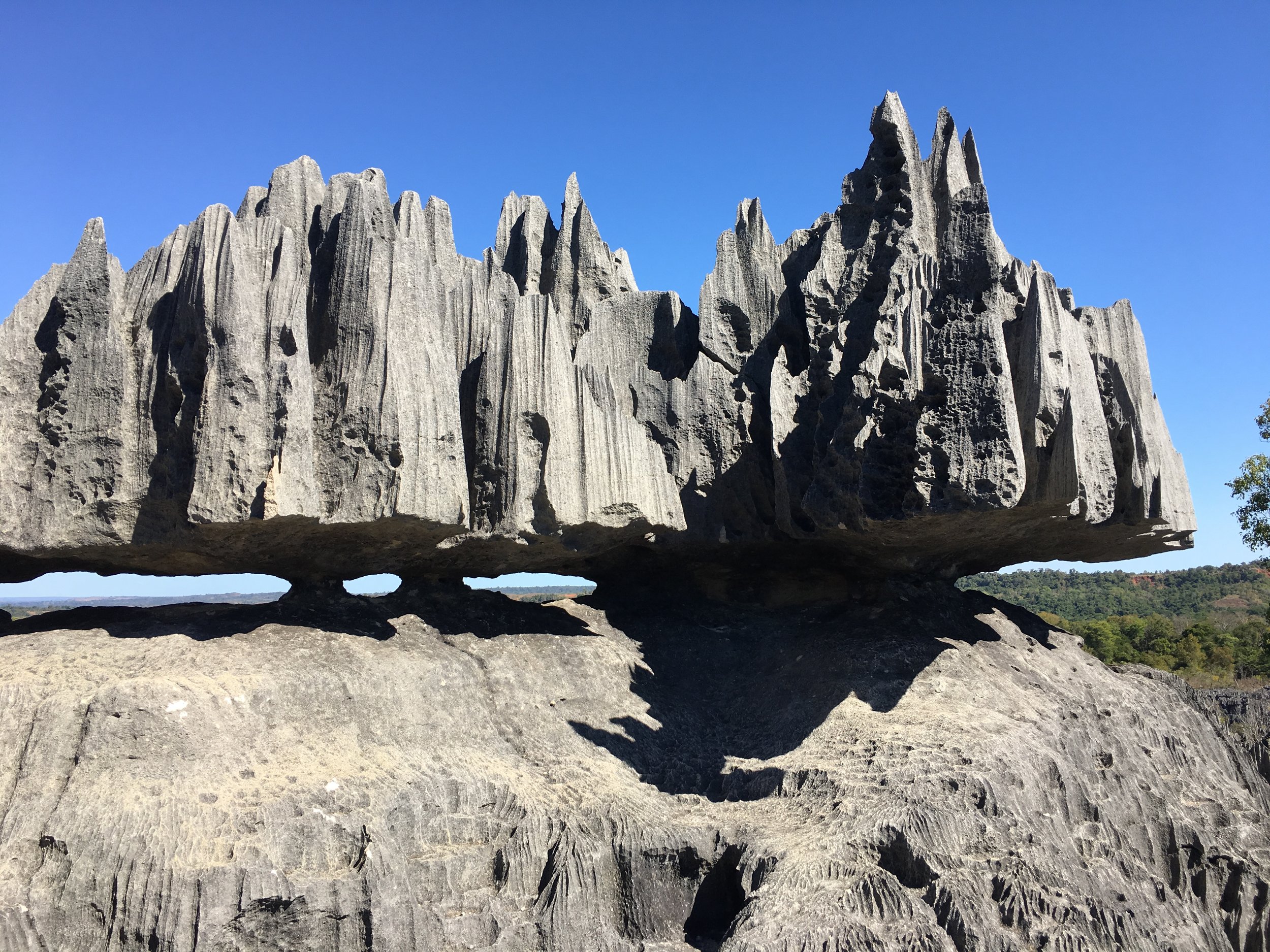
📸 A detail of the Tsingy - Madagascar's spiny limestone landscape
The French Connection: Food, Culture, and Why It Matters
Madagascar was a French colony from 1896 until independence in 1960, and the influence runs deep — French remains an official language alongside Malagasy, the café culture in the towns would not look out of place in provincial France, and the food is considerably better than most visitors expect. The French colonial legacy left behind a genuine food culture — an understanding of cooking, of sauces, of occasions. Combined with Madagascar’s extraordinary natural larder — fresh seafood, the finest vanilla in the world (Madagascar produces around 80% of global supply), cinnamon, pepper, cloves, coconut, and tropical fruits — the result is a cuisine that is genuinely distinctive and often delicious. Even at mid-range hotels and lodges, the standard of cooking tends to impress. At the upper end of the market, it can be exceptional.
Where to Stay in Madagascar: Best Lodges and Hotels
The accommodation landscape in Madagascar is broader and more sophisticated than most people assume, spanning comfortable mid-range lodges through to some genuinely world-class properties. Here is a guide to the properties most worth knowing about, organised by type.
Ultra-Luxury Private Islands
Miavana by Time + Tide (Nosy Ankao, northeast coast). Fourteen beachfront villas on a private island, accessible only by helicopter from Diego Suarez. Designed by Silvio Rech and Lesley Carstens — the same duo behind North Island in the Seychelles — using local stone, Malagasy wood, and hues of turquoise that echo the Indian Ocean. The reef beyond the beach offers world-class snorkelling and diving. Lemurs live on the island. The food is exceptional. Robb Report named it one of the 50 greatest luxury hotels on earth. I visited, and I agree. This is the benchmark by which all other Madagascar properties are measured.
Constance Tsarabanjina (Nosy Mitsio Archipelago, northwest). Twenty-five thatched beachfront bungalows on an uninhabited private island in the Nosy Mitsio Archipelago, a boat ride from Nosy Be. There is no television, limited internet, and four white-sand beaches — barefoot luxury in its purest form. The all-inclusive model works beautifully here: unlimited cocktails, fresh seafood, and a sand-floored restaurant overlooking the ocean. Superb snorkelling and diving on the Mitsio reefs, with whale sharks, manta rays, and turtles all possible. A Leading Hotels of the World member, and one of the most romantic properties in the Indian Ocean.
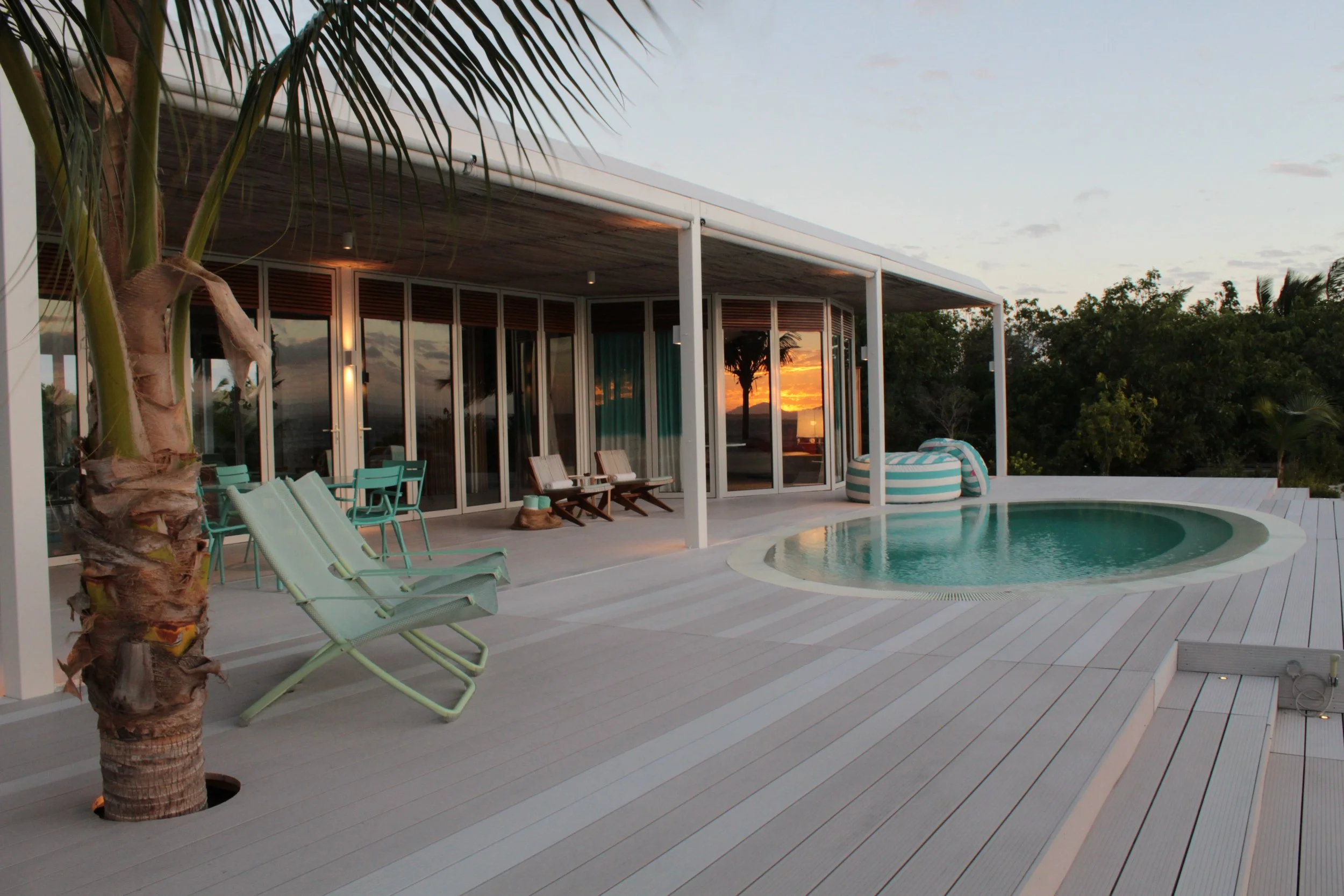
📸 The deck of a private villa at Miavana
Luxury Eco-Lodges and Relais & Châteaux
Anjajavy le Lodge (northwest coast, Relais & Châteaux). On a remote peninsula overlooking the Mozambique Channel, accessible only by light aircraft — a scenic flight that is an experience in itself. Twenty-four rosewood villas set within a 550-hectare private nature reserve, where seven species of lemur can be viewed from your terrace. The reserve contains an extraordinary 2,000 varieties of plant. The food here is a highlight: French and Malagasy cuisine prepared with the rigour you’d expect of a Relais & Châteaux property. Baobabs, tsingy formations, deserted beaches, and mangroves are all accessible from the lodge. One of the most complete Madagascar experiences available.
Tsara Komba by Time + Tide (Nosy Komba, near Nosy Be). Time + Tide’s second Madagascar property, opened in 2024, sits on the island of Nosy Komba — a volcanic island just off the coast of Nosy Be, often called the ‘forest gem of the Indian Ocean’. Eight eco-conscious suites built into the hillside above the ocean, using rosewood, Ravinala leaves, and waxed concrete. Guided nature walks through vanilla and wild pepper plantations, kayaking, fishing, and sunset cruises. Pairs beautifully with Miavana for a complete northern Madagascar experience.
Luxury Safari-Style Camps
Mandrare River Camp (southern Madagascar, spiny forest). Six luxury tents in the shade of tamarind trees on the banks of the Mandrare River, in Madagascar’s remote south. The spiny forest here — octopus trees, towering euphorbia, and extraordinary endemic flora — is unlike anything else on earth. Ring-tailed lemurs, Verreaux’s sifaka, and the nocturnal mouse lemur are all found nearby. The camp offers a rare immersion into the culture of the Antandroy people, including walks through sacred ancestral forests. Remote, intimate, and quite unlike anything else on the island.
Wilderness Lodges in the National Parks
Isalo Rock Lodge (Isalo National Park, southwest). A 60-room lodge perched high in the sandstone mountains overlooking Isalo National Park, with some of the most dramatic views in Madagascar. The contemporary design — ochre walls, glass frontages, sleek pool — feels almost incongruous against the ancient landscape, but works beautifully. The restaurant is excellent by any measure, with European and Malagasy cuisine of a consistently high standard. The best base for exploring Isalo’s canyons, natural pools, and rock formations.
Princesse Bora Lodge & Spa (Île Sainte-Marie). A boutique eco-lodge on Sainte-Marie Island, with beachfront villas featuring thatched roofs, hammocks, and direct access to the beach. Widely regarded as one of the most stylish properties in Madagascar for the price point. The lodge is particularly popular during humpback whale season (July to September) and makes an excellent base for whale watching, diving, and exploring the island.
For most clients I build itineraries that mix accommodation types — comfortable lodges through the national parks, a good beach property in Nosy Be, and one of the private island experiences as a finale. The contrast works in the itinerary’s favour: the transition from bush to an extraordinary island property feels like a very deliberate reward!
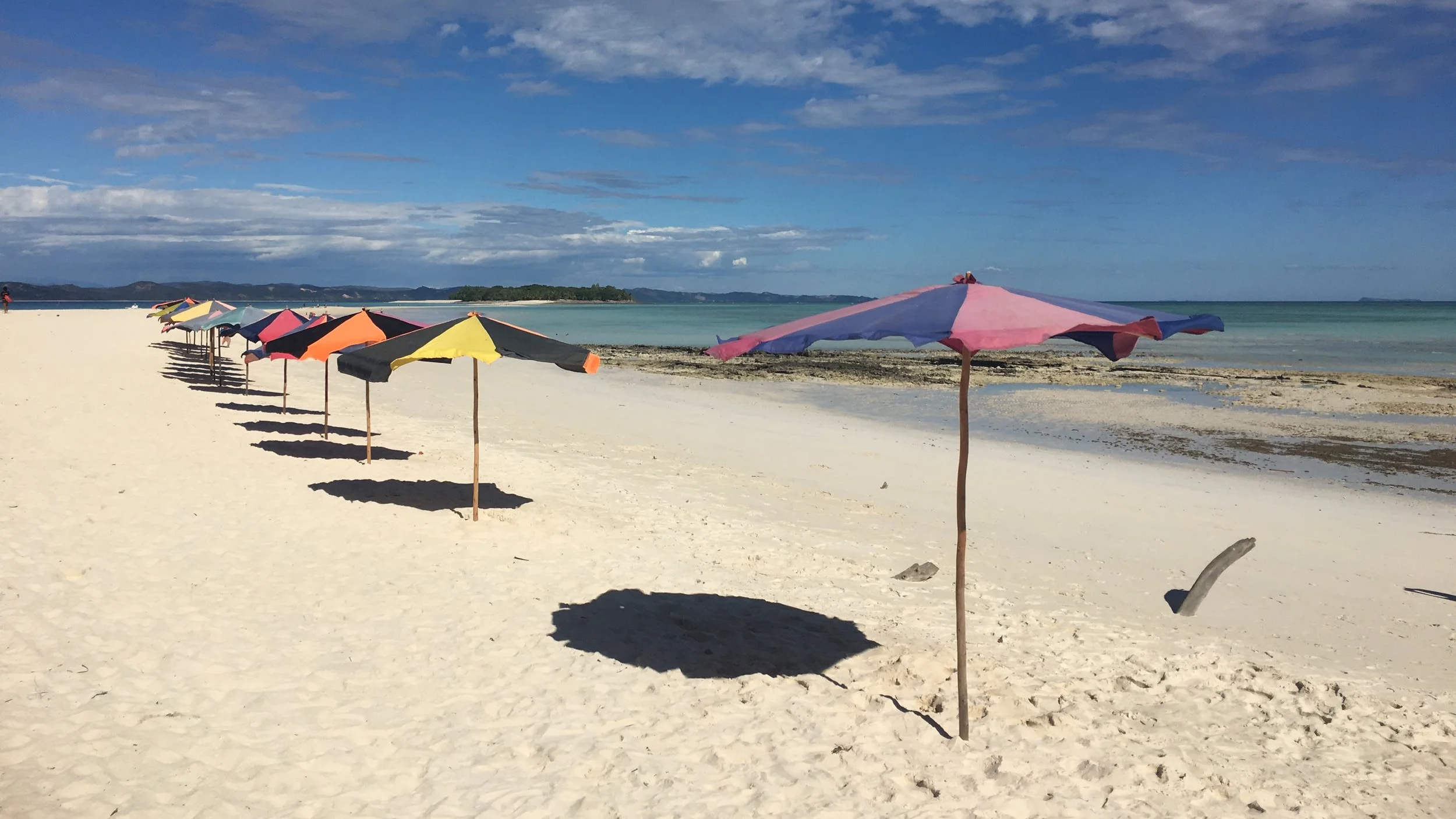
📸 Madagascar has amazing beaches!
Getting There
I flew from Heathrow with Ethiopian Airlines via Addis Ababa — straightforward, good value, and perfectly comfortable. There are no direct flights from London to Madagascar; connections via Addis Ababa or Nairobi are the most practical options and are competitively priced. Internal flights within Madagascar are essential; the distances are vast and the roads, while improving, are not designed for rushing. A well-planned itinerary threads together charter flights, boat transfers, and canoe trips to cover ground efficiently.
When to Go to Madagascar
The dry season — April to November — is the best window for most of Madagascar. June, as I experienced, is excellent: consistently dry, wildlife very active, and the landscape pleasantly green. July and August are peak season in the west, particularly around the baobabs and the Tsingy. For humpback whale watching off Sainte-Marie, July to September is the window. The wet season (December to March) brings lush landscapes and exceptional birding but can make remote areas inaccessible.
Best overall
April–November (dry season)
Peak west coast / Tsingy
July–August
Humpback whales off Saïte-Marie
July–September
Lush landscapes / birdlife
December–March (wet season — limited access to remote areas)
Is Madagascar Right for You?
Madagascar is very different from a conventional ‘safari’ holiday. There is no Big Five, no plains game, or possibility of a leopard sighting. What it offers is rarer: the sensation of exploring somewhere that most people haven’t been, encountering animals that exist nowhere else, and travelling through landscapes that have been evolving in isolation for nearly a hundred million years.
My clients who travel here tend to be adventurous families and/or experienced Africa hands — people who have done Kenya and Botswana and are ready for something completely different. They want depth. They want originality. They want to come home with a story that isn’t the same one everyone else tells.
If that sounds like you, I’d love to help you plan it. I’ve been there & I know what works.
Interested in Madagascar? Get in touch and let’s start building your itinerary.
Frequently Asked Questions About Madagascar Travel
Is Madagascar good for a luxury holiday?
Absolutely — though it’s unlike any conventional safari. There is no Big Five, but Madagascar offers something rarer: extraordinary endemic wildlife (including over 100 species of lemur), world-class private island lodges, and landscapes found nowhere else on earth. For experienced travellers seeking something genuinely different, it is exceptional.
How long do you need in Madagascar?
A minimum of ten to twelve days allows you to cover two or three regions meaningfully. A fortnight or longer is better, particularly if you want to combine the wildlife interior with a private island finale. Madagascar rewards time — the distances are large and the experiences are worth lingering over
When is the best time to visit Madagascar?
April to November is the dry season and the best overall window. June to August is peak season in the west (baobabs, Tsingy). For humpback whale watching off Île Sainte-Marie, July to September is the key period.
Is Madagascar safe to travel to?
With a well-planned itinerary and reputable operators, Madagascar is very manageable. As with all destinations, independent travel in remote areas requires care. The lodges and camps recommended here are all established, well-run operations with experienced local guides.