
Birding Will Get You in the End: A Safari Conversion Story
How Africa Turns Safari-Goers into Obsessive Birders (And Why You Should Just Embrace It)
You arrive in Africa for the big game. The lions, the leopards, the elephants – that's what you've come for, right? You've bought the camera with the impressive zoom lens specifically for those dramatic predator shots. Bird watching? That's for retirement. That's for people with binoculars and field guides and far too much patience.
Then it happens.
The Moment Everything Changes
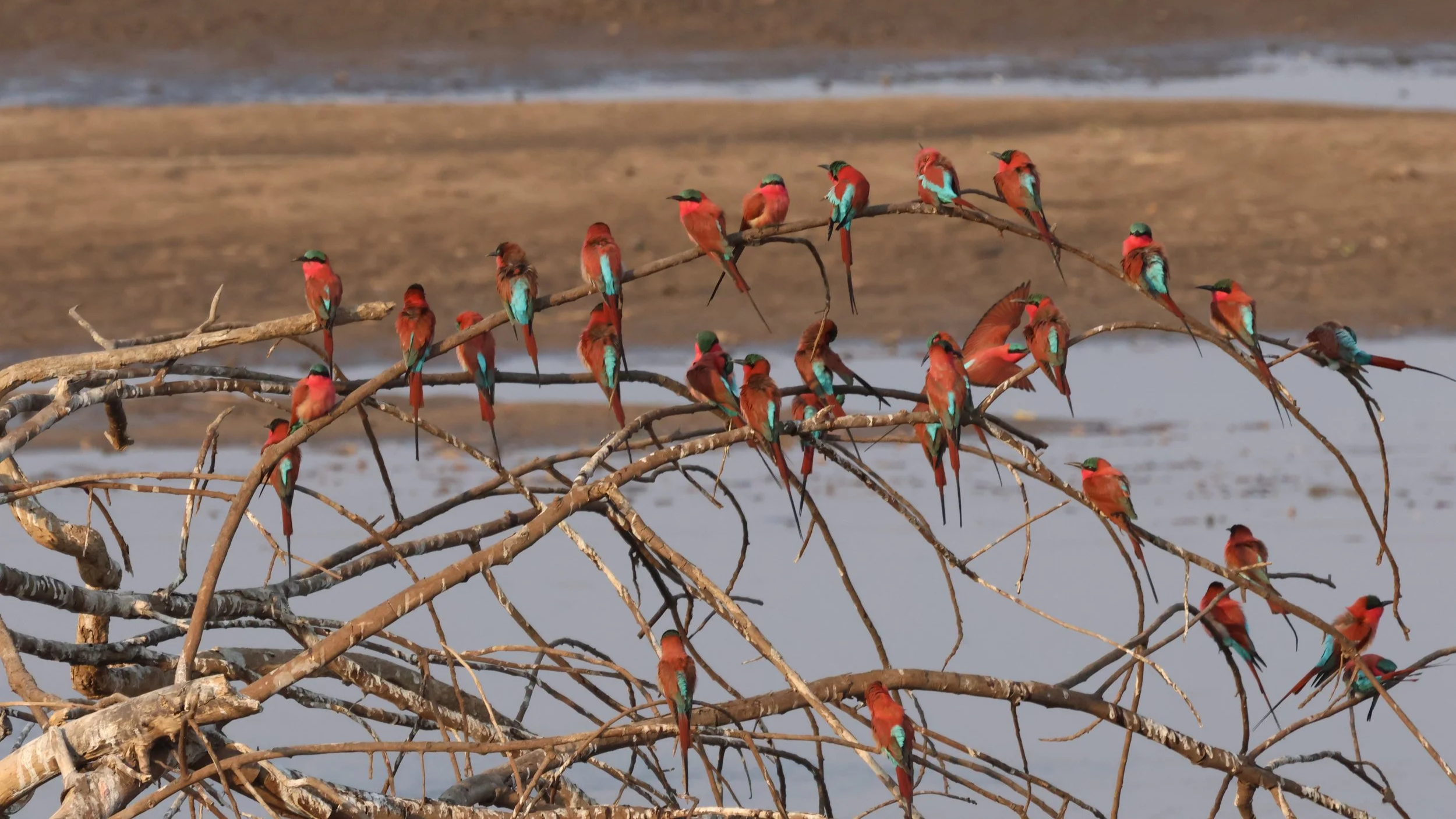
📸 Carmine Bee Eaters are seasonal visitors to Zambia’s South Luangwa Valley
I've witnessed this transformation countless times over my 28 years of African travel, but one conversion stands out. A colleague joined me on a Zambian safari a couple of years ago – her very first time in Africa. She arrived with zero interest in birds. Within 48 hours, she was utterly, completely hooked.
It wasn't a gradual thing. It was sudden, complete, and irreversible.
One moment she was politely tolerating the guide's enthusiasm for a distant flash of colour. The next, she was urgently whispering, "What's that one?" about every flutter of wings, frantically flipping through the field guide, and expressing genuine disappointment when we had to drive on before identifying a particularly elusive LBJ (Little Brown Job, in birding parlance).
Why Birding Gets Everyone in the End
Here's the thing about African birding: it ambushes you. You think you're immune, and then Africa deploys its secret weapon – birds so spectacular, so utterly implausible, that your brain simply cannot process them as real.
The gateway birds are usually the big, dramatic ones. Across East and Southern Africa, these might include:
• Lilac-breasted Rollers that look like they've been painted by someone who's never heard of subtlety
• Secretary Birds strutting across the savannah like runway models
• Southern Ground Hornbills with their funny walk and dramatic eyelashes
• Saddle-billed Storks that are frankly too large and colourful to be believed
• Shoebills in the swamps of Uganda and Zambia, looking like they've stepped straight out of prehistory
But here's where it gets dangerous. Once you've admired the showstoppers, you start noticing the others. The delicate sunbirds hovering at flowers. The impossibly long-tailed wydahs. The bee-eaters in their improbable jewel tones. Before you know it, you're feeling genuinely excited about spotting something new.
Africa's Premier Birding Safari Destinations
Zambia: Where Conversions Happen
Zambia, where my colleague's conversion occurred, is particularly treacherous for birding resistance. With over 780 bird species recorded, it's a birder's paradise – but even non-birders find themselves captivated.
The country's diverse habitats create incredible birding opportunities. In Kafue National Park's varied ecosystems – from the Busanga floodplains to miombo woodlands – you'll encounter Chaplin's Barbet (Zambia's only true endemic), the Black-cheeked Lovebird, Pel's Fishing Owl, and Wattled Cranes. The floodplains of Liuwa Plain National Park are particularly spectacular, hosting over 100,000 Black-winged Pratincoles in massive migrating flocks, plus Slaty Egrets and Whiskered Terns – species for which Liuwa provides the only breeding ground in Zambia. The South Luangwa Valley is renowned for its colonies of Carmine Bee-eaters, which nest in their thousands along the riverbanks, creating one of Africa's most spectacular avian displays.
But Zambia holds a particular ace: the Bangweulu Wetlands, one of the most important strongholds for the extraordinary Shoebill. This prehistoric-looking bird, with its enormous shoe-shaped bill, is one of Africa's most sought-after species for serious birders. The Bangweulu Swamps – where "water meets the sky" – offer excellent opportunities to see Shoebills, particularly during the nesting season from May to October.
Beyond the Shoebill, Bangweulu hosts over 430 bird species, including 10% of the world's wattled crane population. The wetlands are alive with waterfowl, herons, kingfishers, and an abundance of species that make this region a birding destination in its own right.
What makes Zambian birding special is the quality of the guides. Many have grown up in these areas, developing an almost supernatural ability to detect and identify birds. Their enthusiasm is infectious, their knowledge encyclopaedic, and their patience with beginners genuinely kind.
Uganda: A Birder's Paradise
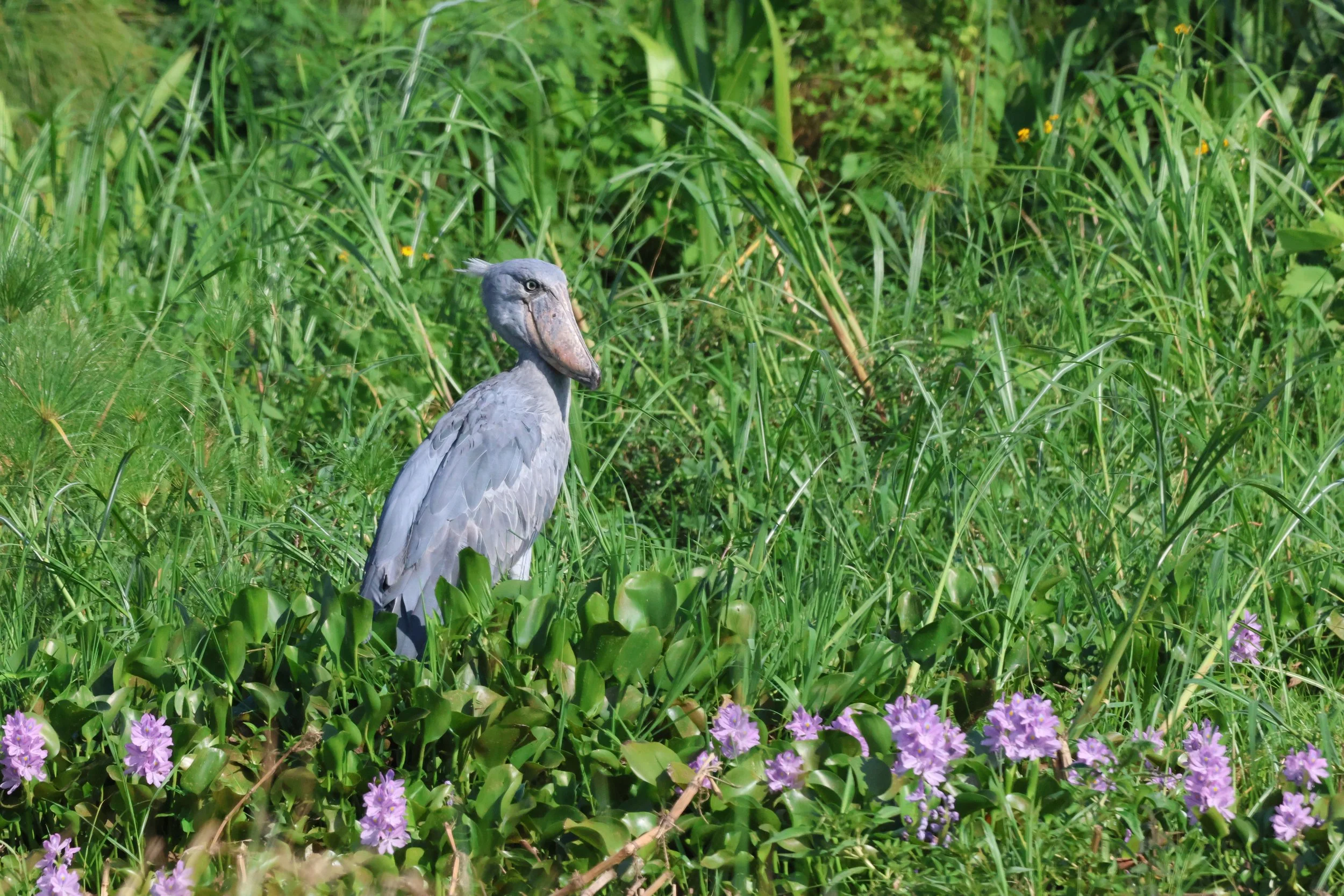
📸 A Shoebill Stork in Uganda’s Nile Delta
Uganda holds a special place in any birder's heart – over 1,000 species in a country roughly the size of Great Britain. For Shoebill enthusiasts, Uganda offers multiple exceptional viewing opportunities, each with its own character.
The most accessible location is Mabamba Bay Wetlands on Lake Victoria, just a short distance from Entebbe, where early morning canoe trips through papyrus channels offer remarkably reliable sightings. But perhaps the most dramatic Shoebill experience is at the Albert Delta in Murchison Falls National Park, where the Victoria Nile opens into Lake Albert. Here, boat safaris through the expansive wetlands offer what many consider the best opportunity to see Shoebills anywhere in Africa, often with elephants, hippos, and crocodiles as a backdrop. The dry season months (December to February and June to September) are particularly productive, when lower water levels concentrate prey and make the birds easier to spot. This is where I had my amazing Shoebill sightings!
But Uganda offers far more than just its famous Shoebill. The Albertine Rift endemics, the forests of Bwindi (yes, the same place you'll track gorillas), and the diverse wetlands create a birding experience that's simply extraordinary. With over 450 bird species in Murchison Falls alone, and the chance to combine serious birding with gorilla trekking, Uganda offers a uniquely appealing safari experience for those who want both primates and birds.
Kenya: Raptors and Open Plains
Kenya's birding is often overshadowed by its spectacular big game, which is rather unfair to the 1,100+ species recorded here. The Maasai Mara alone offers incredible opportunities: Secretary Birds stalking through the grasslands, dozens of raptor species riding the thermals, Ground Hornbills marching across the plains, a simply overwhelming abundance of species.
The diverse habitats – from montane forests to arid scrubland, coastal regions to the Rift Valley lakes – mean you can rack up an impressive species count across a single safari. And Kenyan guides are among Africa's finest, with exceptional identification skills and genuine passion for sharing their knowledge.
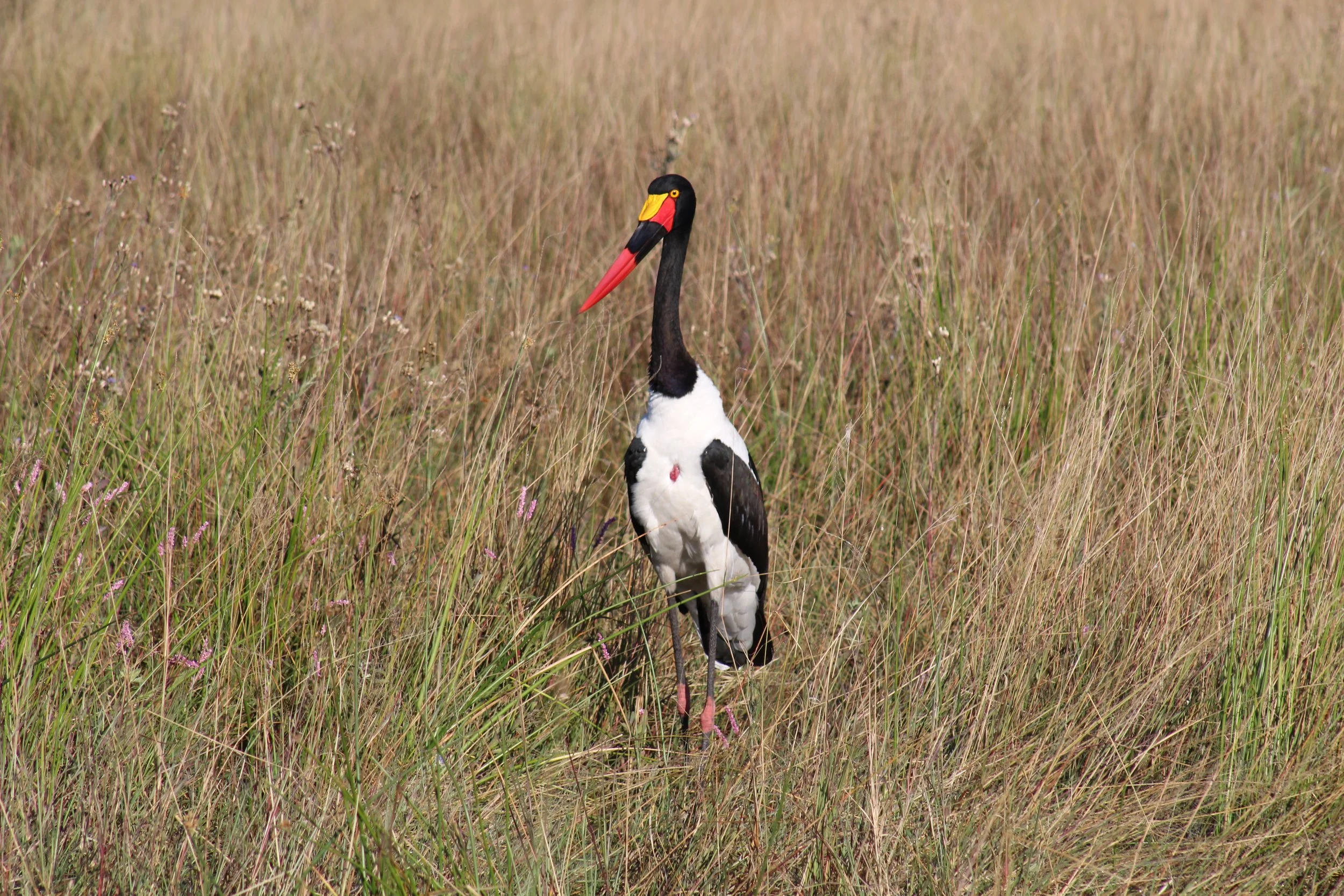
📸 A Saddle Billed Stork - one of Africa’s most colourful storks
Tanzania's Southern Circuit: The Crossover Zone
Here's something that excites serious birders: Tanzania's southern parks – Ruaha and Nyerere (formerly Selous) – sit at a remarkable ecological crossroads. The ecosystem straddles the boundary between tropical and subtropical zones, making these areas an absolute treasure for birding enthusiasts.
This unique positioning means you'll encounter species from both zones, including migrants that wouldn't normally share territory. Ruaha National Park, in particular, offers species you won't easily find elsewhere, with over 570 recorded species. The baobab-studded landscape and the Great Ruaha River create diverse habitats that attract an extraordinary variety of birds.
What makes Ruaha exceptional is this mixing of avifauna. You'll find species that are typically East African sitting alongside those more commonly associated with Southern Africa. The park is home to specialist species including the Ashy Starling, endemic to Tanzania, and both the Pale-billed and Tanzanian Red-billed Hornbills. Ruaha's diverse raptors include the magnificent Martial Eagle, Bateleur, and various snake eagles. The riverine areas attract African Skimmers, while the woodlands host numerous kingfisher species, rollers, and bee-eaters.
The miombo woodland sections are particularly important – this habitat is under-represented in most East African safari circuits but supports its own suite of specialists. Look for miombo specialists like the Miombo Pied Barbet, Spotted Creeper, and Arnot's Chat alongside the more widespread but equally spectacular species.
Nyerere Game Reserve (formerly Selous) adds yet more diversity with its extensive wetlands and riverine systems along the Rufiji River. The reserve's mosaic of habitats – from palm-studded grasslands to dense thickets and seasonal lakes – creates exceptional birding opportunities. Water-associated species are particularly well represented: Goliath Herons, African Fish Eagles, Palm-nut Vultures, and numerous stork species including the impressive Saddle-billed Stork.
Both parks remain blissfully uncrowded compared to the northern circuit, meaning you can spend proper time with your subjects without queues of vehicles. The guides here tend to be particularly knowledgeable about the crossover species, understanding the significance of these overlapping ranges and able to explain what you're seeing in the broader ecological context.
Botswana: Waterbirds and Wilderness
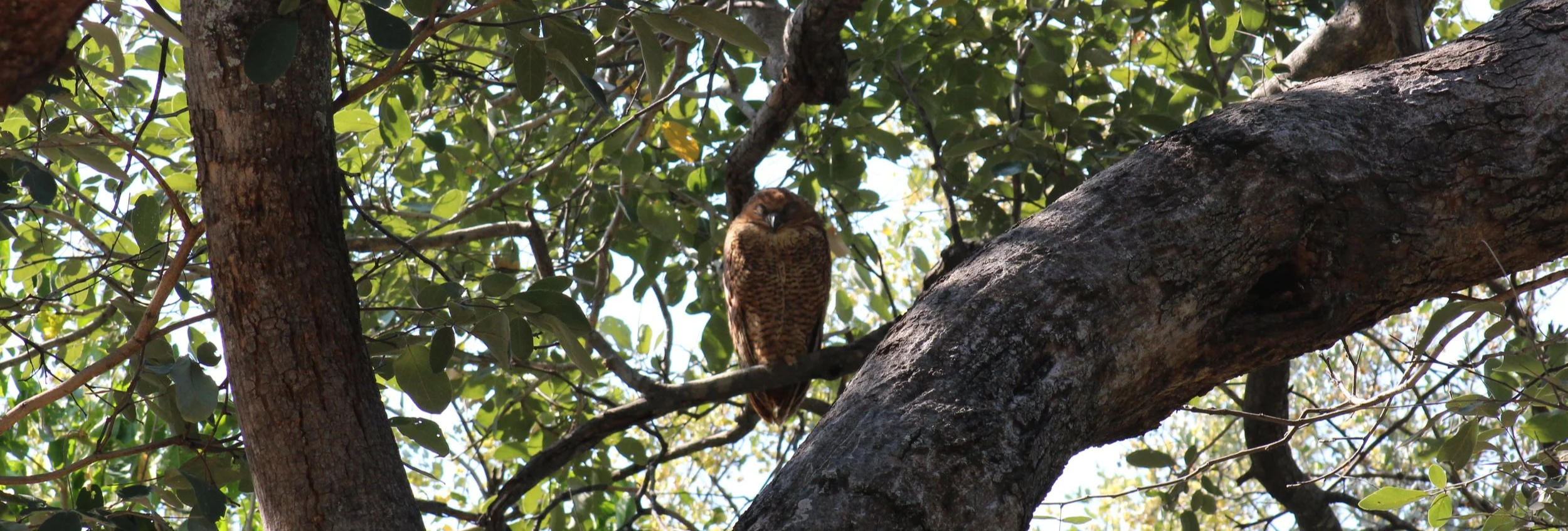
📸 A Pel’s Fishing Owl in Botswana’s Okavango Delta
The Okavango Delta's ever-changing waterways create one of Africa's most important birding destinations. The seasonal flooding brings an incredible concentration of waterbirds: African Skimmers, Pel's Fishing Owls (one of Africa's most sought-after species), myriad herons, egrets, and storks.
Botswana's approach to low-impact, high-quality tourism means you'll often have these birding experiences in genuine wilderness, with fewer vehicles and more space. The guides here are exceptional, many having grown up in these areas with intimate knowledge of where to find the Delta's specialities.
Why Birding Enhances Your Safari
Once you've succumbed to birding (and you will – resistance is futile), your safari experience transforms completely. Suddenly, every habitat becomes interesting. The "quiet" drive between big game sightings? That's now prime birding time. The afternoon rest period at camp? Perfect for watching whatever's visiting the waterhole or feeding in the trees nearby.
Birding also teaches you to really see Africa. You start noticing details: the way light catches on feathers, the relationships between different species, the subtle indicators of habitat and season. Your photographic skills improve because birds are far more challenging subjects than a sleeping lion.
And here's the secret that birders know: Africa's birds are doing genuinely fascinating things. They're not just pretty; they're dramatic. Carmine Bee-eaters nesting in their thousands in South Luangwa's riverbanks. Oxpeckers performing their symbiotic services on buffalo. Raptors executing breath-taking hunts. Secretary Birds stamping on snakes. It's wildlife drama on a smaller scale but no less compelling.
Planning a Birding-Friendly Safari
If you're already a committed birder (or suspect you might become one), certain considerations will enhance your safari:
Timing matters. The summer months (November to April) bring migrants from Europe and breeding plumage displays, but birding is superb year-round in most regions. Each season offers different species and behaviours. Tanzania's southern parks are particularly interesting during migration periods when you'll see that unique crossover of tropical and subtropical species. In Zambia's Bangweulu, the Shoebill nesting season runs from May to October, making this the prime time for sightings.
Location is everything. Consider what you want to see. Uganda for Shoebills and Albertine Rift endemics? Zambia's Bangweulu Wetlands for Shoebills and wattled cranes, South Luangwa for Carmine Bee-eaters, Kafue for Chaplin's Barbet and Black-cheeked Lovebirds, or Liuwa Plain for massive flocks of Black-winged Pratincoles? Tanzania's southern circuit for that remarkable species diversity at the tropical-subtropical boundary, including miombo specialists and endemic species? Kenya for raptors and open plains species? Botswana for waterbirds and Pel's Fishing Owls? Each destination offers something unique.
Choose your lodge wisely. Some camps and lodges are particularly well-positioned for birding, with hides, feeding stations, or locations near key habitats. As someone who personally vets every property I recommend, I can point you toward places where the birding is exceptional and the guides genuinely knowledgeable.
Allow enough time. If birding matters to you, don't rush. A more relaxed itinerary with longer stays allows for dedicated birding time rather than constantly moving between properties. This is particularly important in places like Uganda where you might want dedicated time in different habitats, Zambia's Bangweulu where Shoebill sightings require patience, or in Tanzania's southern parks where the sheer diversity rewards unhurried exploration.
Consider a multi-country itinerary. Combining destinations can dramatically increase your species count. Uganda and Kenya offer complementary habitats. Zambia pairs beautifully with Botswana for Southern African birding. Tanzania's southern parks can combine wonderfully with other East African destinations.
Ready to Plan Your Birding Safari?
Whether you're a dedicated birder seeking Africa's most spectacular species or a big-game enthusiast who doesn't yet realise they're about to become obsessed with birds, I specialise in creating bespoke safari itineraries across East and Southern Africa that deliver exceptional wildlife experiences.
After 28 years of African travel and six years designing luxury safaris professionally, I know exactly where to find the species that matter – and the guides who can spot them. From Uganda's and Zambia's Shoebills to Tanzania's crossover species and miombo specialists, Kenya's raptor diversity to Botswana's waterbirds, Zambia's Carmine Bee-eaters to the incredible variety across the region, I'll create an itinerary that matches your interests and experience level.